A compact subwoofer earns its place in a bedroom, an apartment or a desk setup, where a 12-inch box would boom and crowd the floor. The right pick depends less on size than on what you plug it into: an AV receiver, powered desktop speakers, an old stereo amp, or a Sonos system.
Start with your inputs. A receiver with a Sub Out takes almost any powered sub. Powered speakers need a sub with a line or 3.5mm input. A stereo amp with only speaker terminals needs speaker-level inputs, and a Sonos soundbar only works with a Sonos sub.
ArmorSound did not test these subwoofers. The picks below come from manufacturer spec sheets and manuals, the full reviews linked in each section, and setup guidance from Klipsch, Polk and Audioengine.
Klipsch R-8SW for receivers; Audioengine S8 for powered speakers
Pick by connection first. The R-8SW is the tidy receiver sub for small rooms, the S8 fits powered speakers and desks, the PSW10 rescues old stereo amps, and Sonos owners need the Sub Mini.
- R-8SW: small-room 5.1 receiver systems
- S8: powered speakers and desks
- PSW10: stereo amps without a sub out
- Large open-plan rooms (get a 10-inch sub)
- Bose or Sonos bars with third-party subs
Our picks at a glance
 Best for receivers
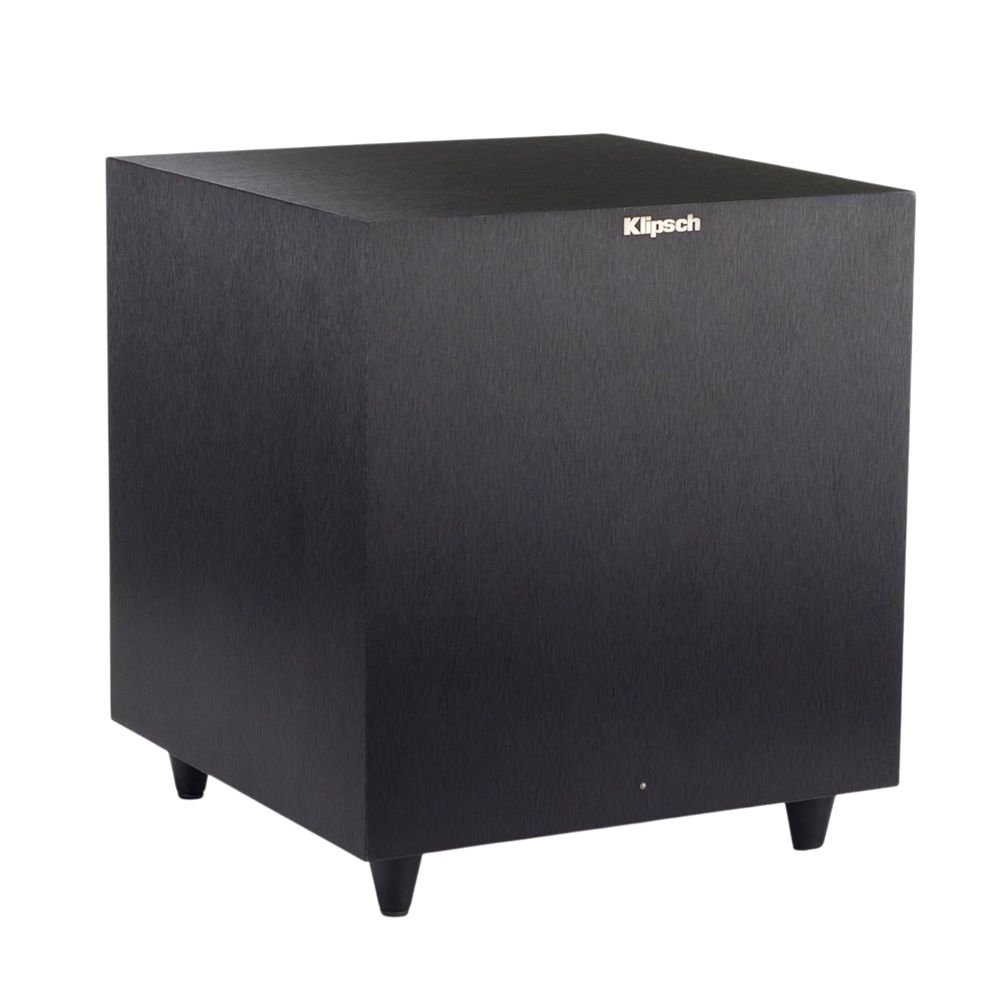
Klipsch Reference R-8SW
Best for: AV receivers in small rooms
- Driver
- 8-inch down-firing
- Rated range
- 38–120 Hz ±3 dB
- Amp
- 50W continuous
 Best for powered speakers
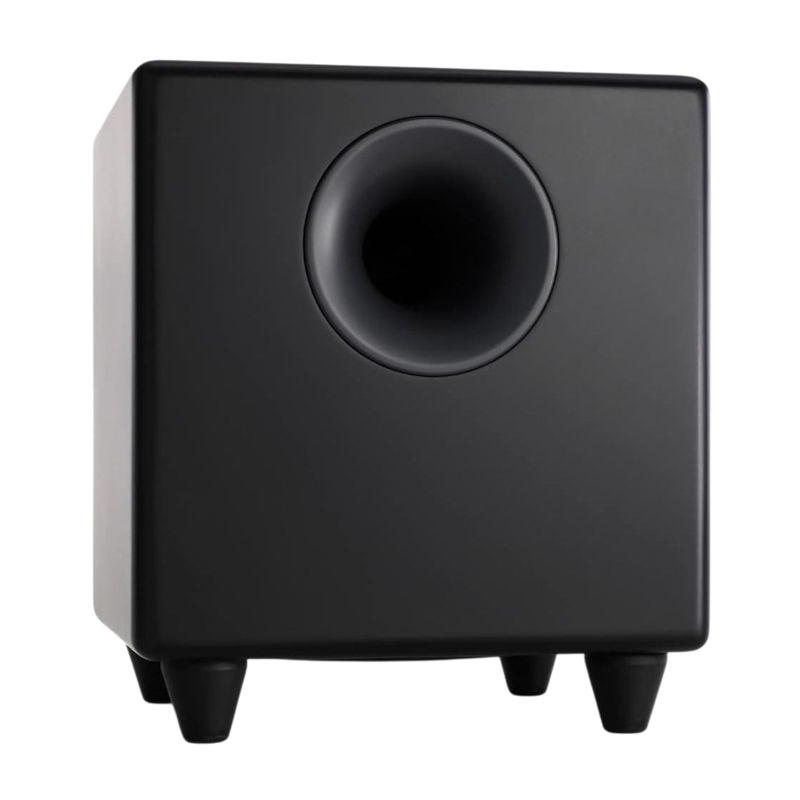
Audioengine S8
Best for: Desks and powered speakers
- Driver
- 8-inch down-firing
- Rated range
- 27–180 Hz ±1.5 dB
- Inputs
- RCA, 3.5mm
 Best budget
Polk Audio PSW10
Best for: Old stereo amps
- Driver
- 10-inch front-firing
- Rated range
- 40–160 Hz −3 dB
- Inputs
- RCA, speaker-level
How do the best compact subwoofers compare?
| Model | Driver | Rated low end | Inputs | Best match |
|---|---|---|---|---|
| Klipsch R-8SW | 8-inch down-firing | 38 Hz (±3 dB) | Line-level/LFE RCA | AV receiver in a small room |
| Audioengine S8 | 8-inch down-firing | 27 Hz (±1.5 dB) | RCA L/R, 3.5mm | Powered desktop and bookshelf speakers |
| Polk Audio PSW10 | 10-inch front-firing | 40 Hz (−3 dB) | RCA L/R, speaker-level in/out | Older stereo amps with no sub output |
| Sonos Sub Mini | Dual woofers, sealed | See Sonos specs | Wi-Fi to Sonos only | Sonos Ray, Beam and Era owners |
Is the Klipsch R-8SW the best compact sub for an AV receiver?
The R-8SW is Klipsch’s smallest Reference subwoofer. Klipsch rates it at 38–120 Hz (±3 dB) from an 8-inch down-firing woofer and a 50W continuous amplifier, in a cabinet 13.25 inches tall and 15 lb. It plugs into any receiver’s Sub Out or LFE jack.
Buy it for a bedroom, den or apartment 5.1 system. Skip it for an open-plan living room; a 10-inch sub like the Klipsch R-100SW (rated to 32 Hz) moves more air for movies.
Is the Audioengine S8 the best sub for powered speakers and desks?
The S8 takes RCA or 3.5mm input, so it connects to powered speakers with a sub or line out, including Audioengine’s own A2+, A5+ and HD6. Audioengine rates it at 27–180 Hz (±1.5 dB) from an 8-inch down-firing driver and a 140W RMS Class D amp in an 11.25-inch cube.
It suits a desk or a small living room. For loud movie bass in a large room, a 10-inch receiver sub is the better buy.
Is the Polk Audio PSW10 the best budget sub for old stereo amps?
The PSW10 is the easy answer when your amplifier has no subwoofer jack. It accepts spring-clip speaker-level connections as well as RCA, so it adds bass to a vintage receiver without an adapter. Polk rates it at 40–160 Hz (−3 dB) with a 100W-peak amp and a 10-inch front-firing driver.
It weighs 26 lb and stands about 14 inches tall, so it is compact for a 10-inch sub rather than tiny.
Is the Sonos Sub Mini the only compact sub for a Sonos soundbar?
Sonos soundbars pair only with Sonos subwoofers, over Wi-Fi. The Sub Mini is the small option for the Ray, Beam and Era speakers. It has no wired audio input, so it does nothing outside a Sonos system. Read the Sonos Sub Mini review for setup details, or the Sonos Sub 4 review if you own an Arc or Arc Ultra in a bigger room.
Where should I place a compact subwoofer?
- Corners add output. A corner boosts bass, which helps a small driver, but it can also exaggerate room booms. Pull the sub a foot out if bass sounds bloated.
- Try the subwoofer crawl. Put the sub at your listening seat, play a bass-heavy track, and walk the room; the spot where bass sounds most even is where the sub goes.
- Use the receiver’s crossover. Set speakers to Small and the crossover near 80 Hz, then turn the sub’s own low-pass knob to maximum or LFE bypass so the two filters do not stack.
- Down-firing subs need a solid floor. The R-8SW and S8 fire into the floor; keep their feet on, and avoid thick rugs that soak up output.
Frequently asked questions
Is an 8-inch subwoofer enough for a small room?
Yes, for a bedroom, office or apartment living room. Klipsch rates the 8-inch R-8SW to 38 Hz and Audioengine rates the 8-inch S8 to 27 Hz. Step up to a 10-inch sub for a larger or open-plan room.
Can I add a subwoofer to a stereo amp with no sub output?
Yes, with a sub that has speaker-level inputs, like the Polk PSW10. Run speaker wire from the amp to the sub, then from the sub to your speakers.
Can I use any subwoofer with a soundbar?
Usually not. Sonos and Bose soundbars pair only with their own wireless subwoofers. Check your soundbar’s manual for a Sub Out jack before you buy a third-party sub.
Which specs matter for a compact subwoofer in a small room?
Your inputs matter more than size. Rated low end, cabinet size and weight show how deep a sub goes and whether it fits your room.
- The Klipsch R-8SW stands 13.25 inches tall and weighs 15 lb, so it fits a bedroom or den.
- The Audioengine S8 is an 11.25-inch cube, small enough for a desk setup.
- The Polk Audio PSW10 weighs 26 lb, which is compact for a 10-inch sub but not tiny.
- The 10-inch Klipsch R-100SW is rated to 32 Hz, a better fit for an open-plan living room.
- Set the receiver crossover near 80 Hz and the sub's low-pass knob to maximum so filters do not stack.