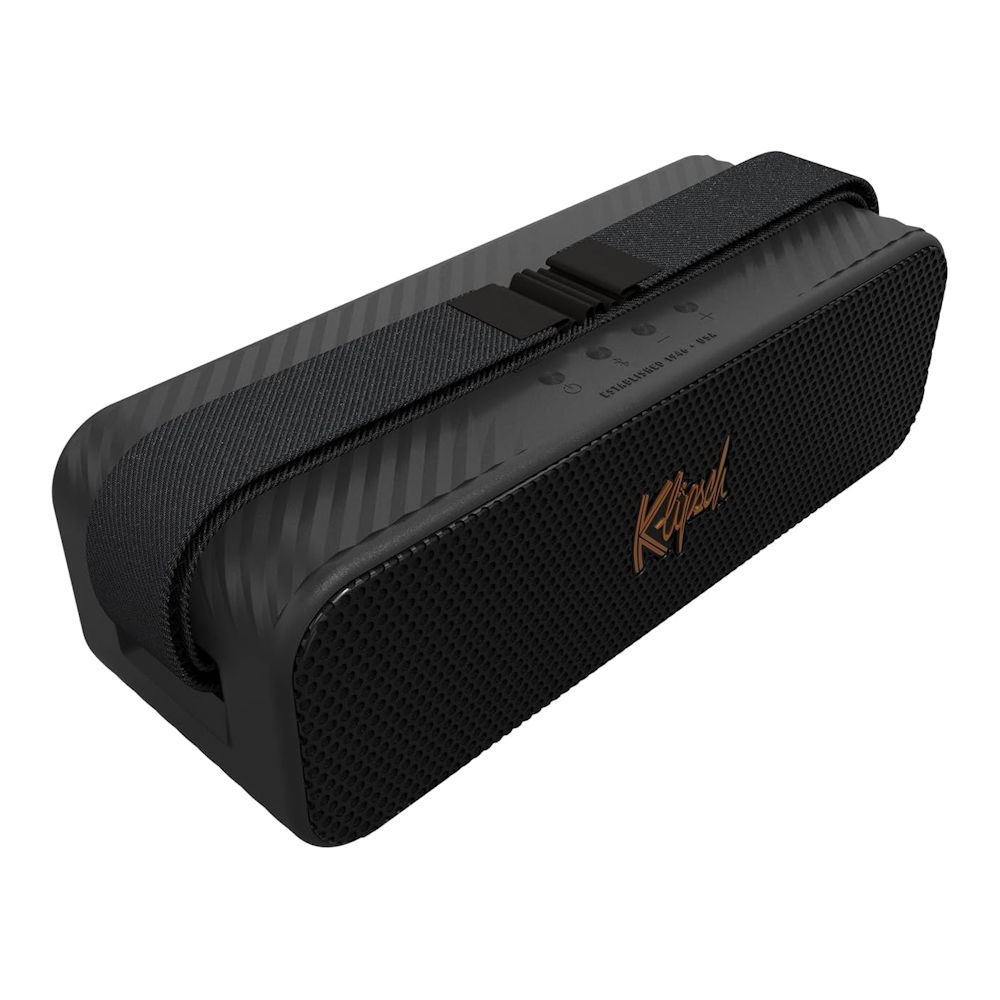
The Klipsch The Detroit is worth buying if you want a rugged, IP67 portable that sounds more like a small hi-fi speaker than a bass cannon. Skip it if you want the biggest party bass for the money, a wired aux input, or two speakers paired as a left/right stereo set.
Klipsch now sells it simply as the Klipsch Detroit, the largest model in its Music City series. It pairs two 1-inch horn-loaded tweeters with two 3-inch woofers in a true two-way stereo layout, which StereoGuide says sets it apart from its Nashville sibling and from Marshall's rival design. StereoGuide called its sound rich and transparent by hi-fi standards; Serious Insights found it a bass-heavy party companion. Both liked it.
One correction to older listings, including an earlier version of this page: Klipsch's current product page and spec sheet rate the battery at up to 20 hours, not 24. ArmorSound has not tested the speaker in person; this review draws on Klipsch's documentation and published reviews.
A clear-sounding, tough portable for people who value detail
StereoGuide found the Detroit unusually refined for an outdoor speaker, and its IP67 build and 20-hour claim suit beach and pool use. Party-bass hunters and anyone needing aux input or a stereo pair should look elsewhere.
- Pool, beach and patio listening
- Listeners who want detail over boom
- Owners of Klipsch Broadcast Mode speakers
- You want the loudest party bass
- You need an aux input
- You want two units as a stereo pair
Where to buy
 Our verdict
Klipsch The Detroit
Best for: Outdoor listening with hi-fi leanings
- Drivers
- 2 x 1in horn tweeters, 2 x 3in woofers, 4 passive radiators
- Battery
- Up to 20 hours (Klipsch)
- Rating
- IP67
- Weight
- 5.4 lb (2.46 kg)
- Charging
- 18W USB-C in, 10W out
- Detailed, balanced two-way stereo sound, per StereoGuide
- IP67 dust and water protection
- Charges your phone at 10W
- Built-in mic for calls
- Bluetooth is the only audio input
- No stereo pairing of two Detroits
- No track-skip button on the speaker
Watch for: Older listings quote 24 hours of battery, but Klipsch's current page and spec sheet say up to 20 hours.
Check price on Amazon →What are the Klipsch Detroit's key specs?
| Spec | Klipsch Detroit |
|---|---|
| Drivers | Two 1-inch horn-loaded tweeters, two 3-inch woofers, four 3-inch passive radiators |
| Amplifier | 2 x 15W RMS |
| Frequency response | 55Hz to 20kHz |
| Maximum output | 93dB (Klipsch) |
| Battery | Up to 20 hours claimed; about 2 hours to recharge |
| Charging | 18W USB-C in, 10W USB-C out to a phone |
| Bluetooth | 5.3, remembers up to 8 devices, 40-foot range claimed |
| Wired audio input | None (USB-C is for charging) |
| Durability | IP67 dust and water rating |
| Size and weight | 13.1 x 4.2 x 4.68 in; 5.4 lb (2.46 kg) |
How does the Klipsch Detroit's two-way stereo sound in a portable?
StereoGuide points out that, instead of miniature drivers propped up by digital correction, the Detroit carries two complete two-way systems, each with a horn-loaded tweeter at the outer edge of the front baffle, backed by a bank of four passive radiators. Its reviewer heard "sparkling, transparent and clean highs," natural vocals and bass that stays integrated with acoustic instruments.
StereoGuide also found it stays balanced at low volume, which many party speakers do not. The limits it noted are a narrow stereo image, a duller sound directly behind the speaker, and less impact than bigger rivals with techno and hip-hop.
Placement follows from that layout. Some advertising for the speaker mentions 360-degree sound, but StereoGuide notes both tweeters fire forward from the front baffle and could not square the claim with the hardware. Treat it as a front-facing speaker: set it at the edge of the group, pointed at the people listening, rather than in the middle of the table.
Serious Insights heard it differently, calling the Detroit "all about the bass" and a strong speaker for a Fourth of July party. Read together, the two reviews suggest a speaker with full, controlled bass for its size that favors clarity over sheer low-end shove.
Klipsch's spec sheet lists 2 x 15 watts and a 93dB maximum output. That is enough for a patio, but if raw volume is the goal, StereoGuide found the JBL Xtreme 3 louder and deeper with typical party music.
The factory tuning needed little help in StereoGuide's review. Its suggested tweaks make a good starting point for the app's three-band EQ: lower the bass one or two steps in a small room or near a wall, and raise the treble one step when listeners sit farther away.
How long does the Klipsch Detroit battery last, and how does it charge?
Klipsch rates the battery at up to 20 hours on its product page and "20+ hours" on its spec sheet, with an asterisk that battery life is subject to change. Launch-era retail listings quoted 24 hours, so treat any listing that still says 24 as out of date.
StereoGuide called 20 hours excellent for the class. Serious Insights reports that a full recharge takes about two hours, in line with Klipsch's spec, and notes that using the speaker to charge a phone shortens the playback figure.
Charging runs over USB-C at up to 18 watts, and the same port can push 10 watts back out to a phone. Klipsch lists only a 3-meter USB-C cable in the box, so supply an 18W-capable wall charger if you want the quoted recharge time.
How durable is the Klipsch Detroit, and how easy is it to carry?
IP67 means it is dust-tight and, per Klipsch, can sit under one meter of water for 30 minutes. Sand at the beach and a dunk in the pool are covered. Our IP ratings explainer breaks down what the two digits mean.
The shape is a 13-inch bar weighing 5.4 pounds. StereoGuide says the slim profile packs into a bag more easily than round rivals, but the weight is noticeable. Serious Insights wanted a longer over-the-shoulder option for the removable strap and found that the strap hides the power and charging LEDs.
How does the Klipsch Detroit connect, and what do the app and Broadcast Mode do?
Bluetooth is the only way to get audio in. StereoGuide confirms the rear USB-C port is for charging only, and Serious Insights lists the missing aux input as its main wish. If you want to plug in an old MP3 player or a laptop by cable, look elsewhere.
Multipoint works: StereoGuide connected a phone and a laptop at once, with occasional delays when reconnecting. The Klipsch Connect app adds a three-band EQ, firmware updates and the playback controls the speaker itself lacks.
Broadcast Mode sends a mono signal to 10 or more Broadcast-enabled Klipsch speakers, including the smaller Klipsch Nashville and Klipsch Austin, and the home-bound Klipsch The Three Plus. StereoGuide notes there is no stereo mode for pairing two Detroits as left and right channels.
What controls does the Klipsch Detroit have, and can it take calls?
Four buttons on top handle power, Bluetooth and volume. StereoGuide found no track-skip button and icons that are hard to read on the matte rubber, though it liked the five-segment battery gauge. Skipping songs means reaching for your phone or the app.
The built-in microphone turns it into a speakerphone, which Serious Insights called a welcome holdover at a time when many portables have dropped mics.
Who should buy the Klipsch Detroit, and who should skip it?
Buy it if:
- You want clean, detailed sound outdoors and still listen at modest volumes at home.
- The speaker will meet sand, rain or a pool.
- You already own Klipsch Broadcast Mode speakers.
Skip it if:
- You want maximum bass and volume for dance music.
- You need a wired aux input or physical track controls.
- You plan to buy two for a stereo pair.
What are the alternatives to the Klipsch Detroit?
Serious Insights reviewed the Detroit at 99.99, which puts it up against some well-known rugged portables. Here is how the specs line up.
| Feature | Klipsch Detroit | JBL Xtreme 4 | Marshall Middleton | Klipsch Nashville |
|---|---|---|---|---|
| Claimed battery | Up to 20 hours | Up to 24 hours | 20+ hours | Up to 24 hours |
| Rating | IP67 | IP67 | IP67 | IP67 |
| Weight | 5.4 lb | 4.63 lb | 4.0 lb | Not listed |
| Amplifier power | 2 x 15W | 70W on battery, 100W on AC | 60W total | Not listed |
| Wired input | None | None listed | 3.5 mm | None listed |
| Phone charging | Yes, 10W | Yes | Yes | Yes, 10W |
| Multi-speaker | Broadcast Mode | Auracast | Stack Mode | Broadcast Mode |
JBL Xtreme 4. The party pick. JBL rates it at up to 24 hours and lists 2 x 20W woofer and 2 x 15W tweeter amplification on battery, rising on AC power, plus Auracast and multipoint. Its predecessor already beat the Detroit for bass and loudness in StereoGuide's comparison. See our JBL Xtreme 4 review.
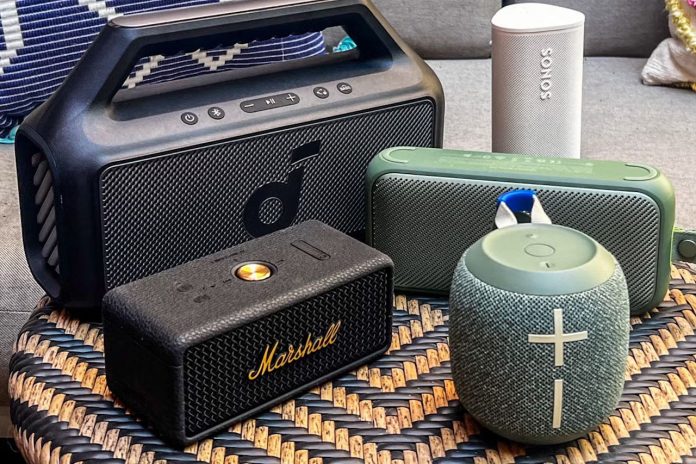
Marshall Middleton. The lighter, more compact rival with a 3.5 mm input, which the Detroit lacks. Marshall lists 20+ hours, IP67 and 4.0 pounds. StereoGuide reviewed both and preferred the Detroit's sound, finding the Middleton's bass thick indoors. Our Marshall Middleton review has more.
Klipsch Nashville. The smaller Music City sibling uses two 2.25-inch full-range drivers and two passive radiators in a 360-degree layout, with a 24-hour claim, IP67 and the same 18W/10W USB-C charging. Choose it if you want sound for people sitting all around the speaker.
Sony SRS-XG300. StereoGuide names it as the closest match in sound quality, with significantly more features, though not quite as natural or refined. Our Sony SRS-XG300 review covers it.
If the plan is a backyard dance party with a mic, a party box such as the JBL PartyBox Encore Essential 2 is the better tool.
Frequently asked questions
Is the Klipsch Detroit waterproof?
Yes. It carries an IP67 rating, which Klipsch says means it is fully protected from dust and can be submerged in up to one meter of water for 30 minutes. That covers rain, sand and a drop in the pool. Close the rubber cover over the USB-C port before it gets wet, and let the port dry before you charge it.
How long does the Klipsch Detroit battery last?
Klipsch's current product page says up to 20 hours, and the spec sheet says 20+ hours with roughly a two-hour recharge. Some early retail listings claimed 24 hours. Real runtime falls at higher volume and when you charge a phone from the speaker's 10W USB-C output, as Serious Insights noted in its review.
Can you pair two Klipsch Detroit speakers in stereo?
Not as a left/right pair. StereoGuide reports there is no stereo mode for two Detroits. Broadcast Mode can link 10 or more Klipsch Broadcast-enabled speakers, but Klipsch's spec sheet says the added speakers receive a mono signal. Each Detroit already plays in stereo on its own through its two separate tweeter-and-woofer pairs.
Does the Klipsch Detroit have an aux input?
No. Bluetooth 5.3 is the only audio input, and the USB-C port on the back handles charging in both directions. StereoGuide confirmed the port does not carry audio, and Serious Insights named the missing aux jack as its biggest request. If you need a wired input, the Marshall Middleton has a 3.5 mm jack.
Can the Klipsch Detroit charge my phone?
Yes. Klipsch lists 10W reverse charging from the USB-C port, so a phone cable plugged into the speaker will top up your handset. It is slower than most wall chargers and it drains the speaker's battery, so use it to rescue a dying phone rather than as a daily power bank.
Sources
- Klipsch: Detroit product page
- Klipsch: Detroit spec sheet (PDF)
- StereoGuide: Klipsch Detroit review
- Serious Insights: Klipsch Detroit review
- Klipsch: Nashville product page
- JBL: Xtreme 4 specs
- Marshall: Middleton specs
What do the Klipsch Detroit's specs mean for you?
The spec sheet numbers show where this speaker fits in your day. Here is what each one means for a buyer.
- Klipsch's product page rates the battery at up to 20 hours, so ignore older listings that say 24. (klipsch.com)
- The 2 x 15W amplifier and 93dB maximum output suit a patio, not the loudest parties. (assets.klipsch.com)
- A full recharge takes roughly two hours if you supply an 18W-capable wall charger. (assets.klipsch.com)
- At 5.4 lb, the 13-inch bar packs into a bag but is noticeable to carry. (stereoguide.com)
- IP67 lets it sit under one meter of water for 30 minutes, so a pool dunk is covered.