If you want something pocket sized that still throws punches above its weight, Klipsch the Austin portable bluetooth speaker is a small speaker with real energy and bass presence. This review looks at the Klipsch The Austin speaker for people who judge audio with their ears as well as spec sheets. It covers specs and design, and whether this speaker can turn a patio dinner into a small party without annoying the neighbors.
Klipsch bills The Austin as a travel friendly speaker with a one and a half inch full range driver and dual passive radiators that punch out low end far bigger than the form factor suggests. There is Bluetooth 5.3 for modern stability, app based EQ control, an IP67 dust and waterproof rating, and up to twelve hours of playtime so you can soundtrack a full day without babysitting a charger. You can even link a crowd of Klipsch Music City speakers at once with Broadcast Mode for house wide or campsite wide sound. That is the brochure version. This review checks whether it sounds like music and not a tin can, whether the strap is more than decoration, and whether the battery lasts.
If you are the person who keeps a soundtrack running while you work, lift, cook, code, or create, the Klipsch The Austin Portable Bluetooth Speaker might suit your day. The review looks closely at tone and texture, then compares it with JBL Clip 5, Bose SoundLink Micro, and Sony SRS XB100.
Table of Contents
How easy is the Klipsch The Austin to set up and use?
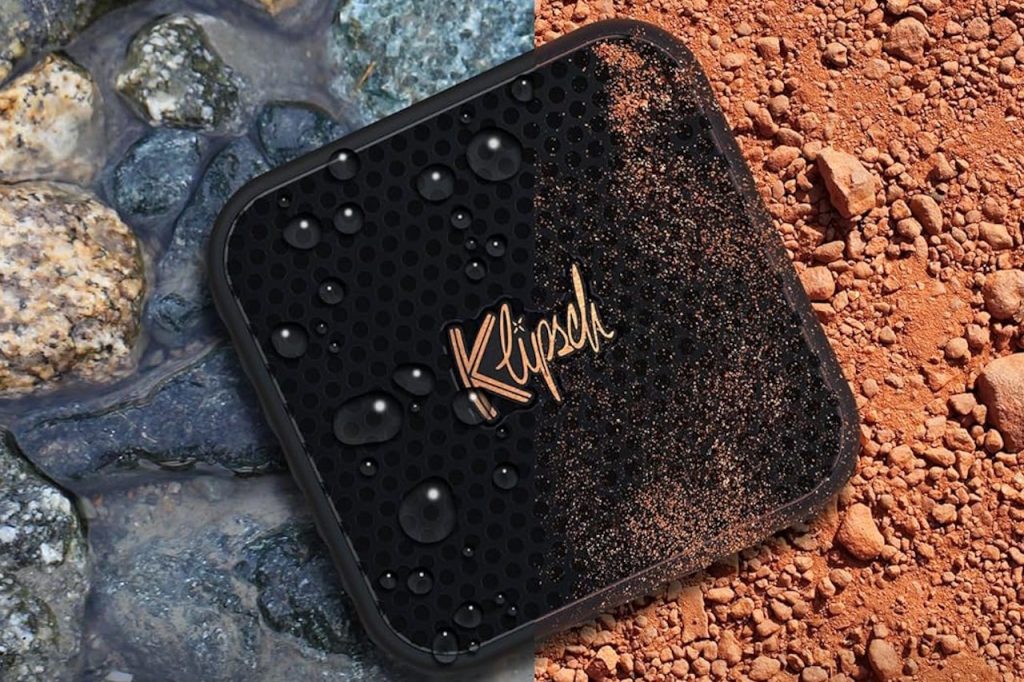
Setup is simple. Out of the box, you press the power button, hear the friendly tone, then tap it in your phone’s Bluetooth menu. The speaker remembers multiple devices which makes bouncing between phone, tablet, and laptop painless when your work day refuses to stick to a single screen. The range is good for a compact speaker, so you can leave it on the patio while you refill in the kitchen without the music cutting out. Klipsch quotes around forty feet which tracks in real use through a wall or two with a typical home layout.
The Klipsch Connect app is for people who like to tune their sound. You get adjustable EQ bands for bass, mids, and treble, along with over the air firmware updates and support access. In practice, a couple minutes in the app lets you tame a bright recording, bring vocals forward on podcasts, or kick the bass for hip hop and EDM without turning everything into mush. That beats the one button “extra bass” options some rivals offer. The app is quick to respond, changes apply immediately, and once you set a profile, it sticks so you do not have to tweak every time.
Controls on the unit are tactile and straightforward. Volume up, volume down, play and pause are simple to use. The built in microphone takes quick calls when your hands are full, and the caller can hear you clearly enough to confirm the order, the gate code, or the pickup spot. You would not host a board meeting on it, but for a quick check in it works. Clip the built in strap to a bag handlebar or shower caddy and it stays put.
How well built is the Klipsch The Austin?
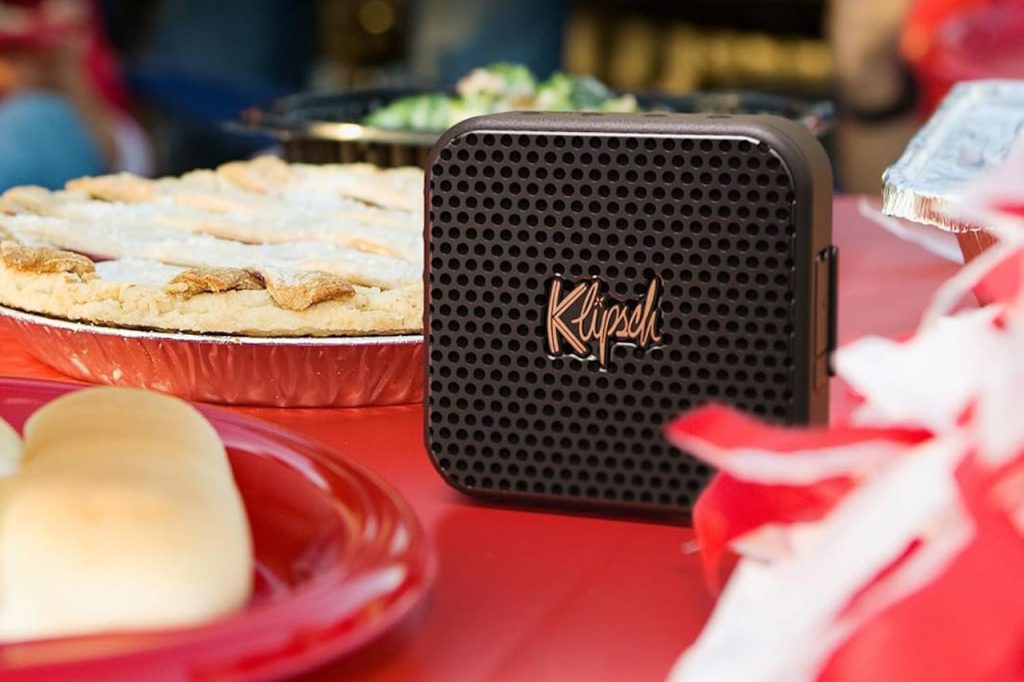
The Austin looks like it stole style notes from a modern camera and a vintage radio, then shrunk them into a palm sized square. The face is all business with a clean grille and minimal branding. The sides have a soft touch finish that resists scratches and day bag abuse. At about four point one three inches by four point one three inches and under two inches deep, it is compact enough to pocket in a jacket or slip into the side pouch of a backpack. The weight sits around point nine pounds, which feels reassuringly solid without turning your sling into a workout.
The IP67 rating means it is fully dust tight and can handle water immersion up to one meter for thirty minutes. In plain terms, beach sand is fine, pool splash is fine, and an accidental dunk is survivable if you fish it out quickly. That suits a backyard barbecue, a dance break on the trail, or kitchen steam and spills while you meal prep.
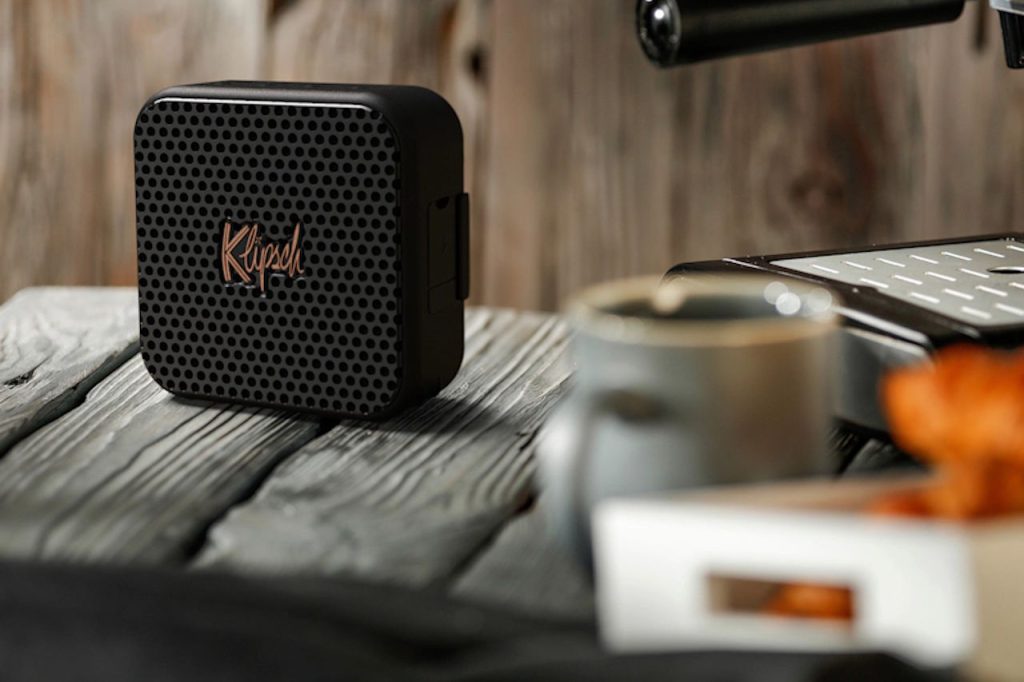
Some speakers give you a decorative loop that feels like an afterthought. The Austin’s strap is ready for real attachment duty so you can hang it on a bike, golf bag, shower hook, or tent pole. The USB C port sits where you can charge easily while it stands upright on a desk. Buttons have a positive click, not a mushy lottery. Nothing rattles at high volume which is more than I can say for a few rivals.
How does the Klipsch The Austin sound?
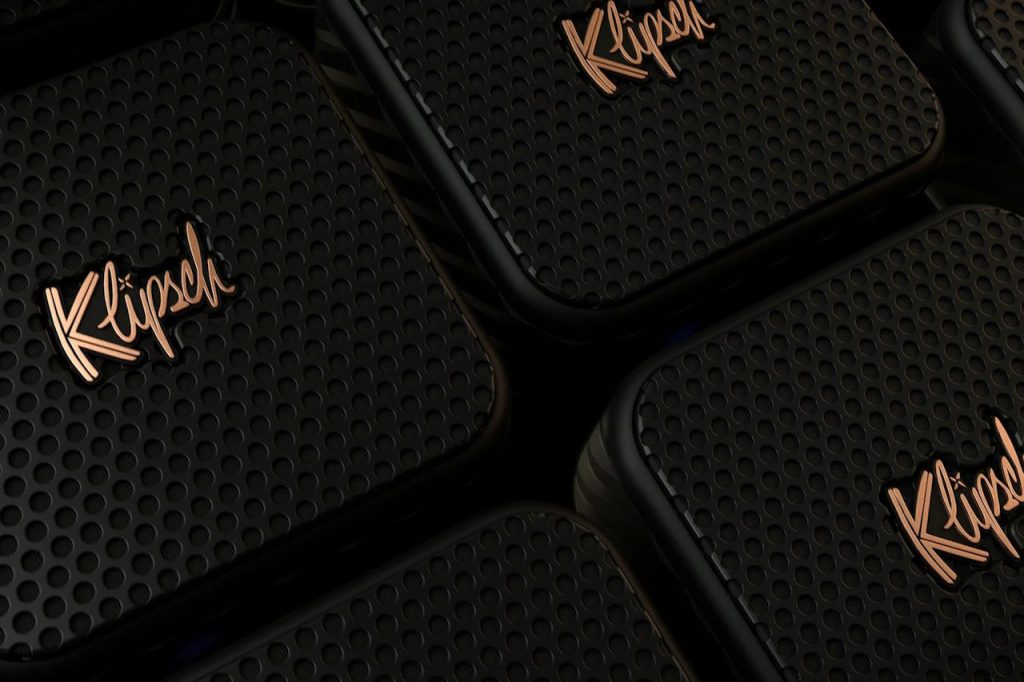
The Austin runs a one and a half inch full range driver flanked by dual passive radiators, pushed by a ten watt RMS amplifier. On paper the frequency response spans roughly seventy hertz to twenty kilohertz with a max acoustic output around eighty five decibels. In a small to medium room or a patio table setting, The Austin fills space with surprising body. Bass is present and textured rather than boomy. You can actually hear kick drum impact and bass guitar fingers, not just a dull thud.
Mids carry warmth without clogging detail. Vocals land front and center with presence that flatters singer songwriter tracks, podcasts, and dialogue heavy content. Treble has sparkle, not haze. Cymbal energy pops without turning sibilant when you nudge the EQ slightly. At max volume the speaker stays composed. You will hear compression kick in at the very top to protect the driver which you should expect in this class. The key is that it holds tone and timing without falling apart into thin loudness.
The single driver layout naturally limits stereo separation. If you want true left and right imaging, pair a second Austin in TWS stereo mode and the soundstage opens in a way that belies the size. For larger gatherings, Broadcast Mode can throw the same mono feed to a fleet of Music City speakers so every corner gets coverage. That works in a backyard, a multi room apartment, or a pop up market stall, and turns a pocket speaker into a scalable system.
What features does the Klipsch The Austin have?

The Klipsch Connect app gives you EQ, firmware updates, and support access. Quick tweaks help when you switch from jazz to metal to a podcast with wildly inconsistent production. The built in mic means you can accept a call on the trail or in the kitchen without digging for your phone.
Bluetooth 5.3 brings a stable connection and efficient power management. The forty foot rated range lets you keep the soundtrack steady even when you wander to the fridge or the hallway. If you use two units, TWS stereo mode creates a convincing left and right image that beats the fake stereo claims on many single driver minis. If you own other Music City models like Nashville or Detroit, Broadcast Mode sends a mono feed to more than ten speakers at once. That is coverage your neighbors might not appreciate, so use responsibly.
Charging is fast through the USB C port. Official documentation highlights eighteen watt input charging with about two hours to fill. Several retailers also advertise reverse USB C functionality that can top up your phone in a pinch. The spec sheet and main product page do not explicitly list reverse charging, so treat that as a sometimes feature that can vary by region or batch. Either way, it charges quickly and plays long.
How long does the Klipsch The Austin battery last and how far does Bluetooth reach?

The battery carries a rating of up to twelve hours which is enough for a full workday plus a workout or a long afternoon outside. Real world playback time always depends on volume and content. Acoustic sets at moderate volume will stretch longer. Bass heavy sets at max volume will pull it down. The two hour charge time is excellent for quick turnarounds. Plug it during lunch and you are back to full by the time emails have multiplied again.
Bluetooth 5.3 keeps connections stable with snappy reconnection when you power the unit back on. Pairing is painless. Multi device memory means your phone and laptop do not fight for attention every morning. The quoted forty foot range is enough to keep a playlist flowing while you roam the house or the campsite. The included microphone makes quick voice calls functional, and the speaker controls respond fast so you can pause, skip, and adjust volume without fishing for your phone.
Durability matters for connectivity too. The IP67 rating means rain and dust will not force an early shutdown, and the sealed design protects the ports when you are out in the wild. If you want bigger sound or actual stereo, the TWS stereo pairing is your path. If you want coverage across multiple rooms or tents, Broadcast Mode is the flex that sets The Austin apart in this size class. It is the rare feature that can scale your setup as your life changes.
How does the Klipsch The Austin compare with JBL Clip 5, Bose SoundLink Micro and Sony SRS XB100?
Here is how Klipsch The Austin compares with three popular pocket rivals. The strap and IP rating make it as ready for chaos as JBL Clip 5 and Bose SoundLink Micro. The app EQ and Broadcast Mode give it flexibility those two do not match. Sony SRS XB100 has a longer battery and clean sound.
Klipsch The Austin vs JBL Clip 5
JBL Clip 5 is the backpack hanger champ with an integrated carabiner and the famous JBL house sound. It gives you up to twelve hours per charge with a Playtime Boost option that can squeeze a few more hours by tuning performance. Clip 5 is easy to love, especially for hikers and students. The Austin fires back with app EQ, a livelier tuning, and Broadcast Mode that turns one speaker into many. If you want a simple always ready clip and go buddy, JBL is a winner. If you want a tiny speaker you can tune, scale, and stage for rooms or patios, The Austin is the better pick.
| Feature | Klipsch The Austin | JBL Clip 5 |
|---|---|---|
| Driver | 1.5 inch full range with dual passive radiators | Not specified |
| Amplifier power | 10 W RMS | Not specified |
| Rated frequency response | 70 Hz to 20 kHz | Not specified |
| Battery life | Up to 12 hours | Up to 12 hours plus about 3 hours with Playtime Boost |
| Charge time | About 2 hours | About 3 hours |
| Charging port | USB C | USB C |
| Bluetooth version | 5.3 | Not published |
| Rated range | About 40 feet | Not published |
| Water and dust rating | IP67 | IP67 |
| Mount and strap | Built in strap | Integrated carabiner |
| App EQ | Yes with Klipsch Connect | No |
| Party linking | Broadcast Mode to more than 10 speakers | Not listed |
| Price | See Price | See Price |
Klipsch The Austin vs Bose SoundLink Micro
Bose SoundLink Micro is a crowd favorite for its warm tuning and tear resistant strap. It is tiny, rugged, and simple. The trade off is battery life around six hours and an older micro USB charging port on many versions, which feels dated next to USB C. The Austin stretches playtime to a full workday, adds app EQ, and offers Broadcast Mode for larger spaces. If you want a very small unit for short listening sessions and you love the Bose voice, Micro is charming. If you need modern charging, longer stamina, and scalable sound, The Austin makes the stronger case.
| Feature | Klipsch The Austin | Bose SoundLink Micro |
|---|---|---|
| Driver | 1.5 inch full range with dual passive radiators | Not specified |
| Amplifier power | 10 W RMS | Not specified |
| Rated frequency response | 70 Hz to 20 kHz | Not specified |
| Battery life | Up to 12 hours | Up to 6 hours |
| Charge time | About 2 hours | Not listed |
| Charging port | USB C | Micro USB on many units |
| Bluetooth version | 5.3 | Not published |
| Water and dust rating | IP67 | IP67 |
| Mount and strap | Built in strap | Tear resistant strap |
| Stereo pair | TWS stereo with two Austins | Stereo pairing available with two Micros |
| App EQ | Yes with Klipsch Connect | Limited through Bose app |
| Price | See Price | See Price |
Klipsch The Austin vs Sony SRS XB100
Sony SRS XB100 is the endurance athlete of this group with a rated sixteen hours of battery life and a clean, balanced sound signature that fits everything from lo fi study beats to pop. It is also IP67 with USB C and offers a stereo pair mode. The Austin has stronger app EQ control and Broadcast Mode. If stamina is your top priority, Sony holds the edge. If modular party coverage and a livelier, concert flavored tuning are your goals, The Austin has more personality.
| Feature | Klipsch The Austin | Sony SRS XB100 |
|---|---|---|
| Driver | 1.5 inch full range with dual passive radiators | Full range driver with sound diffusion |
| Amplifier power | 10 W RMS | Not specified |
| Rated frequency response | 70 Hz to 20 kHz | Not specified |
| Battery life | Up to 12 hours | Up to 16 hours |
| Charge time | About 2 hours | Not listed |
| Charging port | USB C | USB C |
| Bluetooth version | 5.3 | 5.3 |
| Water and dust rating | IP67 | IP67 |
| Stereo pair | TWS stereo with two Austins | Stereo pair function |
| Party linking | Broadcast Mode to more than 10 speakers | Not listed |
| Price | See Price | See Price |
Should you buy the Klipsch The Austin?
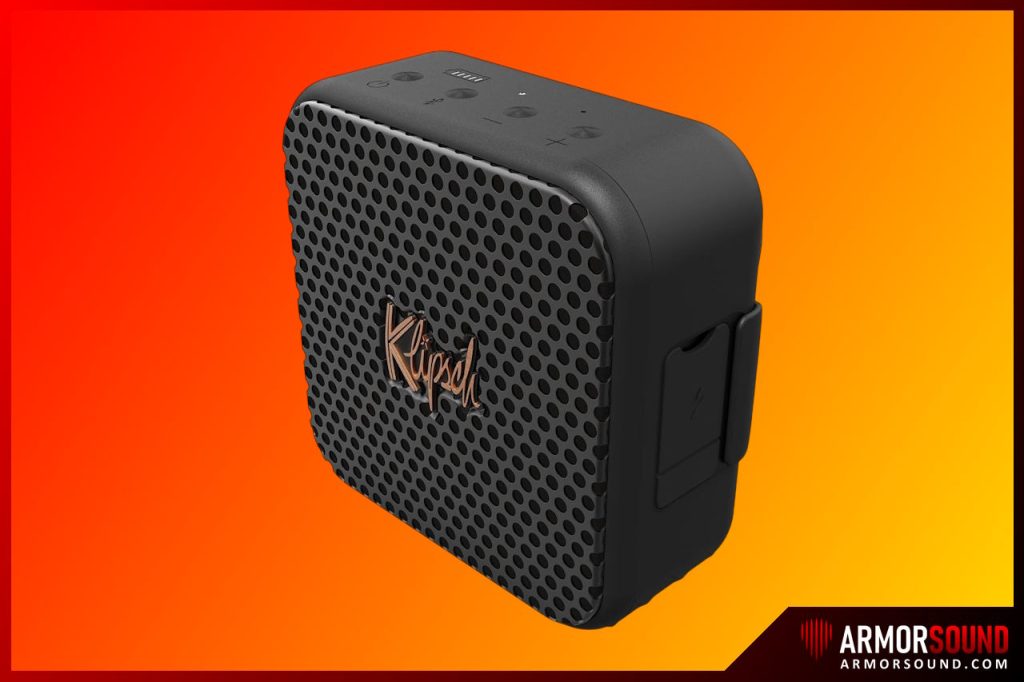
Klipsch The Austin Portable Bluetooth Speaker is a small speaker with a lot of sound. If you value punchy bass that does not smear the mids, clean treble you can tune, and a design that survives sand, rain, or kitchen chaos, it earns a spot in your daily carry. The app EQ is a real advantage. Broadcast Mode lets you scale from solo listening to group hangs without buying a new system. The battery carries a rating of up to twelve hours and charging is quick.
Who should buy it: creators and indie workers who need a dependable soundtrack that moves with them, travelers who want a carry on friendly speaker, and audiophile curious listeners who dislike shrill sound from a pocket speaker. Who might look elsewhere: if your top priority is marathon stamina, Sony SRS XB100 gets the nod. If you need the simplest clip and go rig for hikes, JBL Clip 5 is a natural pick. If you only listen for short spurts and prefer the Bose voice, SoundLink Micro is a fit.
For most people, The Austin wins on balance of sound, features, and durability. The key numbers: one and a half inch driver, ten watt RMS power, frequency response around seventy hertz to twenty kilohertz, IP67 protection, Bluetooth 5.3, about forty foot range, two hour charge time, and up to twelve hours of playtime.
You can buy the Klipsch The Austin portable bluetooth speaker here on Amazon.
FAQs
Common questions about the Klipsch The Austin Portable Bluetooth Speaker.
Is the Klipsch The Austin Portable Bluetooth Speaker truly waterproof with an IP67 rating
Yes. The Austin carries full dust protection and can handle short immersion at one meter for about thirty minutes. Beach days and rain showers are fair game, just rinse and dry after the chaos.
How long does the Klipsch The Austin Portable Bluetooth Speaker battery last and how fast does it charge
Expect up to twelve hours per charge at moderate volume. A USB C top up takes about two hours, which means a lunch break can bring it back to full strength.
Does the Klipsch The Austin Portable Bluetooth Speaker support stereo pairing and multi speaker Broadcast Mode
Yes. Two Austin units can run true left and right stereo. For bigger coverage, Broadcast Mode lets you mirror the same mix to a group of Music City series speakers.
How does the Klipsch The Austin Portable Bluetooth Speaker sound for bass mids and treble
Bass has real texture for the size, mids keep vocals clear, and treble stays crisp without sting. You can nudge the tone in the app if you want more thump or a smoother top.
What is the Bluetooth range of the Klipsch The Austin speaker and how stable is the connection
The rated range is about forty feet in typical spaces, helped by Bluetooth 5.3. It holds steady through a room or two in most homes.
Can I customize EQ on the Klipsch The Austin Portable Bluetooth Speaker with the Klipsch Connect app
Yes. Klipsch Connect gives you quick EQ controls, firmware updates, and support access. Set it once and your profile sticks.
How loud is the Klipsch The Austin speaker and is it good for outdoor use
Loud enough to fill a small room or a patio table hang without turning harsh. For larger spaces, add a second Austin or use Broadcast Mode to cover more ground.
What are the dimensions and weight of the Klipsch The Austin Portable Bluetooth Speaker for travel and everyday carry
It measures about four point one three inches tall and wide and about one point seven three inches deep. Weight sits under one pound, so it drops into a bag easily.
Does the Klipsch The Austin Portable Bluetooth Speaker have a microphone for calls and voice assistants
Yes. The built in mic handles quick calls clearly, which helps for hands free check ins when your phone is buried.
Who should buy the Klipsch The Austin Portable Bluetooth Speaker and who should consider alternatives
Buy it if you want lively sound, real durability, app EQ, and the option to scale with stereo pairing or Broadcast Mode. Consider rivals with longer single speaker battery life if stamina is your only priority.
What do the Klipsch The Austin specs mean for your day?
The Austin is a palm sized speaker built for travel, patios and busy kitchens. These numbers show how it fits a full day of listening.
- Up to 12 hours of rated playtime covers a full workday plus a workout.
- About 2 hours to charge means a lunch break can bring it back to full.
- A rated range of about 40 feet keeps music playing when you step into the kitchen.
- A 10 W RMS amplifier fills a small to medium room or a patio table setting.
- Bluetooth 5.3 gives a stable connection and quick reconnection when you power it on.