Shopping for karaoke speakers? Start with these brands
Each button opens the brand's own store or its official Amazon storefront, so you can check current prices and the return window.
Anker audio
soundcore
Headphones, earbuds and speakers from Anker's soundcore
- Anker's audio brand: Bluetooth headphones, true wireless earbuds and speakers
- ArmorSound has reviewed the Liberty 4 NC, Space Q45 and AeroFit 2
- Opens soundcore's official Amazon store
Desk and home speakers
Edifier
Upgrade your desk or living room with Edifier speakers
- Speakers and headphones for home, desktop and portable listening
- Line-up includes the M90, MR5 and S1000 MKII
- Sold direct from Edifier's US store
Picture a karaoke night in your living room or backyard. Your crew hits the mic, laughter fills the air, and the speaker can’t keep up. Karaoke speakers and party speakers both get loud, but they’re not interchangeable.
A karaoke speaker delivers vocal clarity with mic input, echo effects, and EQ tuning for singing. A party speaker prioritizes bass-heavy sound, RGB lighting, loud volume, and music playback, which suits hyping up a crowd more than solo sing‑offs. They might both be loud Bluetooth speakers, but they serve different purposes.
This guide helps you work out which speaker you need. If you care more about karaoke speakers for singing, mic support, or party speakers with bass and light shows, we break it down below. If you are exploring the top 10 best karaoke speakers and machines for singing, or looking at the top 10 best party speakers, you’ll come away knowing which speaker fits a house karaoke night or a bass-heavy party.
Table of Contents
What Are Karaoke Speakers?
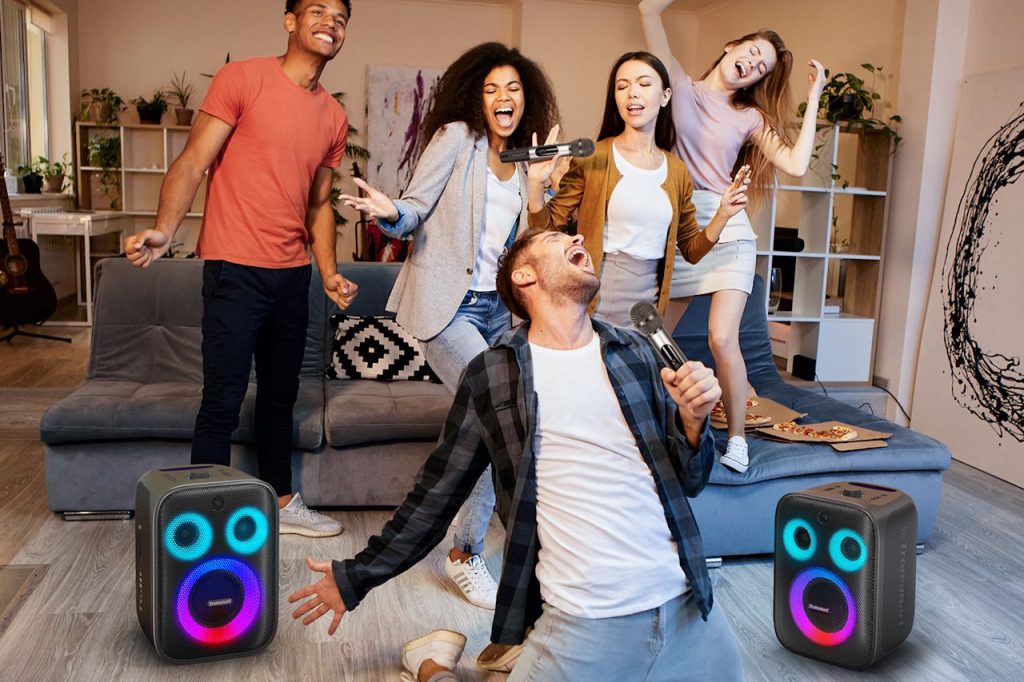
Karaoke speakers are audio systems that put your voice up front. Party speakers blast beats and shake floors, while karaoke speakers center on vocal performance, which makes them the best speakers for singing and small performances. If you’ve ever tried belting out a song only to have overpowering bass or muddy mids drown you out, you’ve used the wrong speaker for karaoke.
Purpose-Built for Vocals
Unlike your average Bluetooth party speaker, karaoke speakers prioritize vocal clarity and mic integration over raw volume or deep bass. They process your voice alongside backing tracks, boosting mids and highs and giving you more control over how you sound. Most models come with mic input(s) (often two), and include sound features like echo, reverb, treble/bass EQ, and pitch correction that can make shower singers sound better.
Key Features of Karaoke Speakers
A solid karaoke speaker with mic support usually has:
- Multiple mic inputs (often 1–2): Usually 1/4″ or XLR ports, for wired or wireless mics
- Vocal effects: Echo, reverb, and pitch adjustments to make your singing smoother
- Built-in displays or lyric syncing: Some karaoke machines feature screens for lyrics, while others integrate with apps like StarMaker or Karafun via Bluetooth
- Dedicated EQ presets for vocals: Fine-tuning the output to highlight voice over music
- Bluetooth, AUX, USB, and SD card inputs: Flexible playback from various sources
- Compact, portable design: Many models are lightweight for easy home use
These features make them ideal for home karaoke setups, family get-togethers, or even small live performances.
Who Uses Karaoke Speakers?
Karaoke speakers suit:
- Home users throwing impromptu karaoke nights
- Aspiring vocalists who want to practice in a more realistic setup
- Event hosts and party organizers looking for interactive entertainment
- Performers in small venues or street performers who need portability and vocal tools
According to manufacturers like Moukey, TONOR, and JYX, karaoke speakers are also designed to minimize distortion at higher volumes, so your voice isn’t lost in feedback.
Why They’re Different from Party Speakers
While some party speakers with karaoke features exist (like the JBL PartyBox line), most are not optimized for serious vocal performance. Karaoke speakers don’t try to be club systems. They focus on voice-first audio design, which is where the real difference lies.
If your main goal is singing with microphone support, get a karaoke speaker.
What Are Party Speakers?
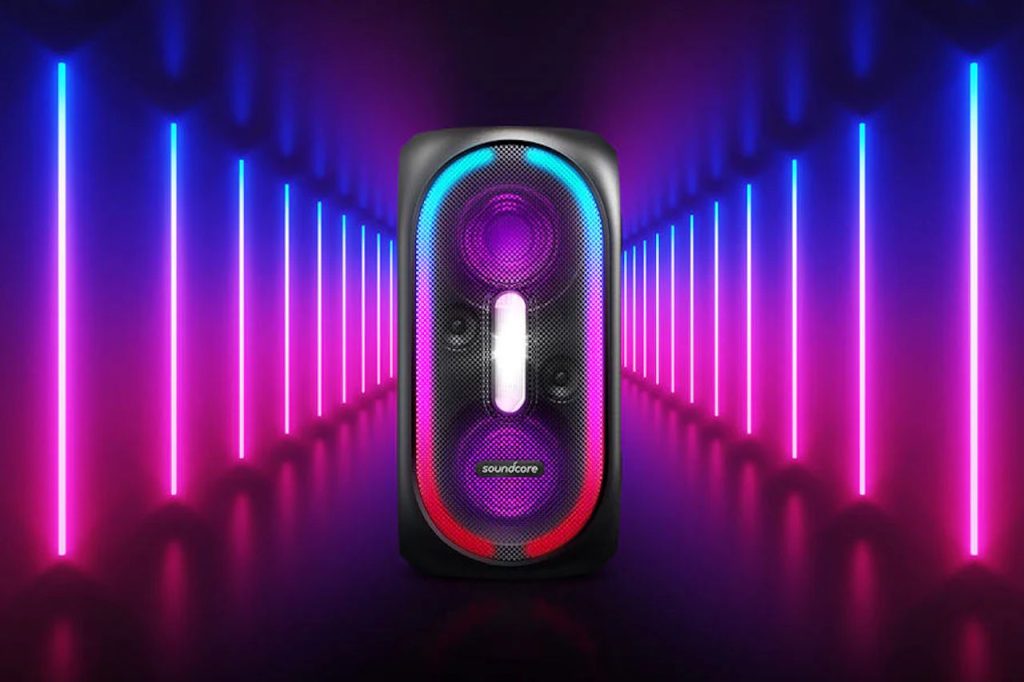
Party speakers deliver high-volume, bass-heavy music playback in large spaces and outdoor gatherings. Where karaoke speakers enhance your vocals, party speakers shake the room (or backyard) with thumping beats, booming lows, and bright LED lighting.
Built to Blast, Not to Sing
Nobody’s plugging a Shure mic into a party speaker and expecting Mariah Carey acoustics. Party speakers favor wide sound dispersion, boosted bass, and intense volume, not delicate vocal precision. They’re made to fill open areas with music that slaps, whether it’s EDM at a rave or reggaeton at a beach party.
Key Features of Party Speakers
Most party speakers with bass boost include:
- RGB lighting effects: Flashing lights that sync with the beat
- Multi-device Bluetooth pairing: Connect multiple devices or speakers at once
- DJ controls (in premium models): Cue tracks, add transitions, or tweak effects
- Bass Boost mode: Crank the lows for earth-shaking impact
- High wattage output: Typically ranging from 100W to over 500W for serious volume
- Rugged design: Water-resistant, portable, sometimes built for the outdoors
Brands like JBL, Sony, and Soundcore dominate this space, with models like the JBL PartyBox 310 or Sony XP700 offering punchy sound and built-in light shows. Sony’s XP series targets crowd-sized gatherings, with long battery life and customizable lighting.
Who Uses Party Speakers?
Party speakers suit:
- DJs who need a mobile audio system
- Event hosts throwing house parties, weddings, or festivals
- Tailgaters and campers who want high-energy tunes off the grid
- Anyone who loves big bass and louder-is-better audio
If your priority is volume, lights, and beats, get a party speaker. Just don’t expect karaoke magic from them, unless you’re cool with yelling over the bass.
How does sound compare between karaoke speakers and party speakers?
For vocals, karaoke speakers win. They emphasize the mid and high frequencies, which gives your voice clarity and presence. Many models also include dedicated EQ presets, echo/reverb controls, and midrange drivers designed to keep your voice clean and prominent even when the music gets loud.
Party speakers, on the other hand, focus on a broader sound range, especially the low-end. While mids and highs are present, the emphasis is on bass-heavy playback. These speakers aim to fill a space with energy, not necessarily capture vocal subtleties. They’re better for blasting playlists than for showing off your vocal range.
Volume & Bass
In a head-to-head for raw power, party speakers win easily. Models like the JBL PartyBox 1000 and PartyBox Club 120 push past 100 dB SPL and feature dedicated Bass Boost modes for outdoor raves, tailgates, and massive living rooms.
Karaoke speakers, while still capable of solid volume, keep things more balanced. You’ll get clear audio without the overwhelming low-end. That makes them perfect for small venues, home karaoke nights, or practice sessions, where refined, intelligible sound matters more than bass bombs.
Audio Customization
They split on audio controls:
- Karaoke Speakers offer:
- Mic echo/reverb controls
- Vocal EQ presets
- Real-time pitch correction
- Dual mic inputs with gain knobs
- App integration for lyric syncing and settings tweaks
These features make karaoke speakers ideal for users looking to fine-tune vocal output and sound better.
- Party Speakers provide:
- Bass boost modes
- RGB lighting control
- Multi-band music EQ
- DJ-style fade and transition effects
They’re perfect if you want to DJ your own party and don’t need complex mic controls.
Verdict
- If you’re planning a karaoke night, talent show, or small gig, get a karaoke speaker. Their tailored sound profile and vocal tools make them the best speakers for karaoke.
- If you’re throwing a big party, an outdoor party, or just want to blast bass-heavy music, a party speaker brings the boom, the lights, and the power.
The question is whether you’re singing or just playing music.
What microphone and input options do karaoke and party speakers have?
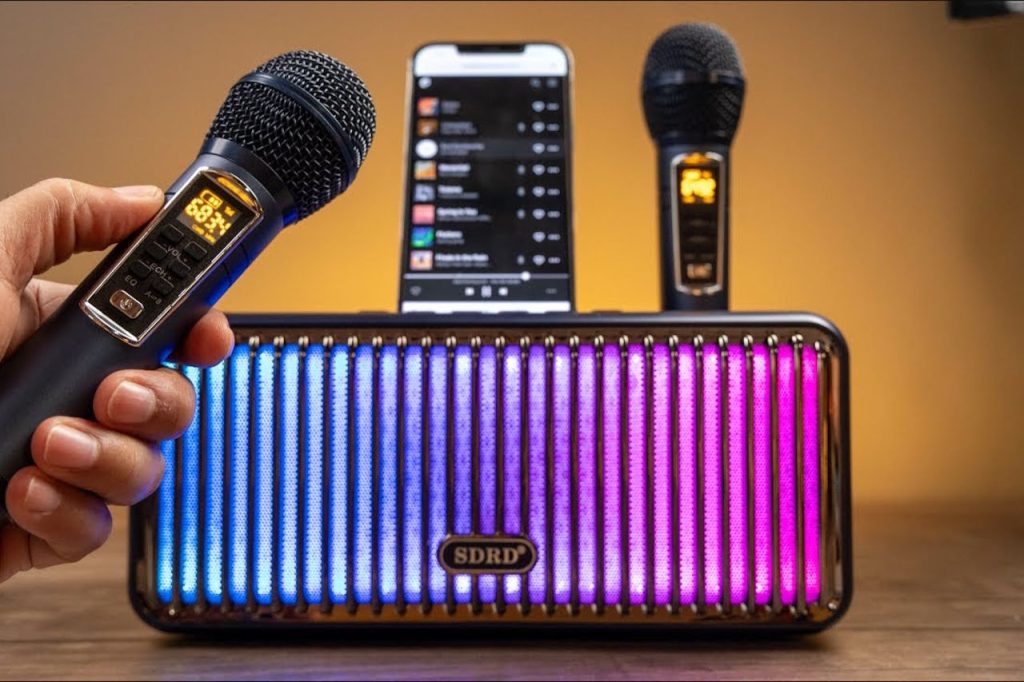
Microphone and input options are one of the biggest technical differences between the two. Karaoke speakers are strong here, and most party speakers are basically Bluetooth playback.
Karaoke Speakers
Karaoke speakers center on vocal performance, so they process the mic rather than just accepting it.
You’ll typically find:
- 1–2 Microphone Inputs: Most karaoke speakers come with either wired mic ports (1/4″ or XLR) or built-in wireless mic systems. That covers duets, family sing-offs, or solo sessions without extra hardware.
- Built-In Vocal Effects
Expect features like:- Echo/Reverb: Add depth to your voice without a mixer
- Pitch Control: Perfect for on-the-fly vocal tweaks
- Duet Modes: Separate mic channel EQ or auto harmonizing (on premium models)
- App & Screen Integration: Many karaoke speakers connect with popular karaoke apps like StarMaker or KaraFun, while some even come with built-in lyric displays or LED readouts.
- Vocal Volume Control: Independent mic and music volume knobs give you precise mixing options so nothing drowns out your voice.
Everything on a karaoke speaker targets singing, clarity, and control.
Party Speakers
Party speakers aren’t built to spotlight your vocals. They’re built to blast music.
In practice:
- Mic Inputs: Many party speakers with mic input only include one port (if at all), usually a basic 1/4″ jack without any vocal enhancements. It’s more of a “bonus feature” than a core function.
- No Vocal Effects: You won’t find built-in echo, pitch control, or duet support here. These systems favor music playback, not live vocal performance.
- Input Variety, Not Vocal Control: Party speakers offer plenty of music inputs (Bluetooth, AUX, USB, even SD card slots) but lack microphone processing tools.
- Limited App Integration: You might get a lighting or music app, but no karaoke functionality or lyric syncing.
Verdict
- Get a karaoke speaker if:
- You need multiple mics with echo or pitch effects
- You want to sing along with apps and adjust vocal levels
- You’re hosting karaoke nights or vocal-driven events
- Get a party speaker if:
- You might use a mic occasionally but mostly want to vibe
- Your focus is Bluetooth playback and crowd-pleasing bass
- You don’t need vocal enhancements or lyric tools
How do karaoke and party speakers differ in portability and design?
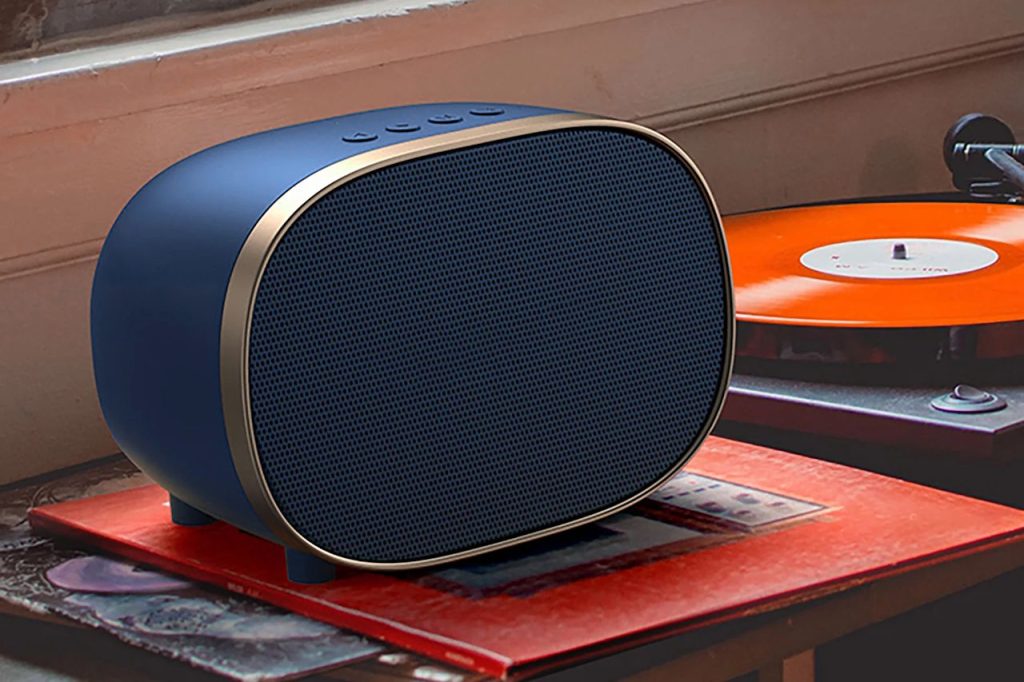
When choosing between karaoke speakers vs party speakers, portability and design matter, especially if you’re setting up in different locations. Weight, build, battery life, and looks all differ between the two.
Size & Weight
Karaoke speakers usually put convenience and flexibility first. Most models are smaller, lighter, and easy to carry, even if you’re heading to a friend’s house or just switching rooms. For example, popular home-use karaoke speakers like the JYX or TONOR models are compact enough to store in a cabinet or carry with one hand. Their lighter weight suits fun family activities, indoor parties, or casual setups where you don’t want to wrestle a 40-pound speaker just to hit a high note.
Party speakers are bulky. They aim to fill big spaces with sound and bass, and they’re big. High-powered options like the JBL PartyBox 310 or Sony SRS-XP700 can weigh 30–40 pounds, often requiring built-in wheels, telescoping handles, or even dedicated carrying straps. While not the most portable, you can move them occasionally, but you won’t carry them around on the daily.
Design & Styling
A karaoke speaker’s design leans toward functionality over flash. Expect a straightforward, often boxy look with focus on usability: clear control panels, mic ports, and maybe a small LED display or basic lighting effects. Some include screens or app integration for lyric syncing, but the priority is sound clarity and ease of use for singing.
By contrast, party speakers put on a show. Brands like JBL, Soundcore, and Sony load these units with built-in RGB lights and reactive LED patterns, so they double as sound and light systems.
Battery Life & Outdoor Usability
Party speakers also win on battery life. They often support 12 to 24 hours of playback on a full charge. For example, the Ultimate Ears Hyperboom delivers around 23 hours of runtime, while the JBL PartyBox 310 clocks in around 18 hours, which suits tailgates, camping, and extended outdoor use. Many are IPX4+ water-resistant, which karaoke speakers generally aren’t.
In contrast, karaoke speakers are usually plug-in only, especially the ones that come with dual mic setups and lyric displays. Portable karaoke systems exist, but even the better ones cap out at 4 to 6 hours of battery life. These are fine for indoor get-togethers, family use, or practice sessions, but for a full-day outdoor party you’ll likely need an outlet (or an extension cord… or three).
The best karaoke speaker is light, easy to carry, and functional, which suits indoor sessions and quick setups. The best party speaker has bold design, long battery life, and built-in light shows, which suits outdoor venues.
Which features differ between karaoke and party speakers?
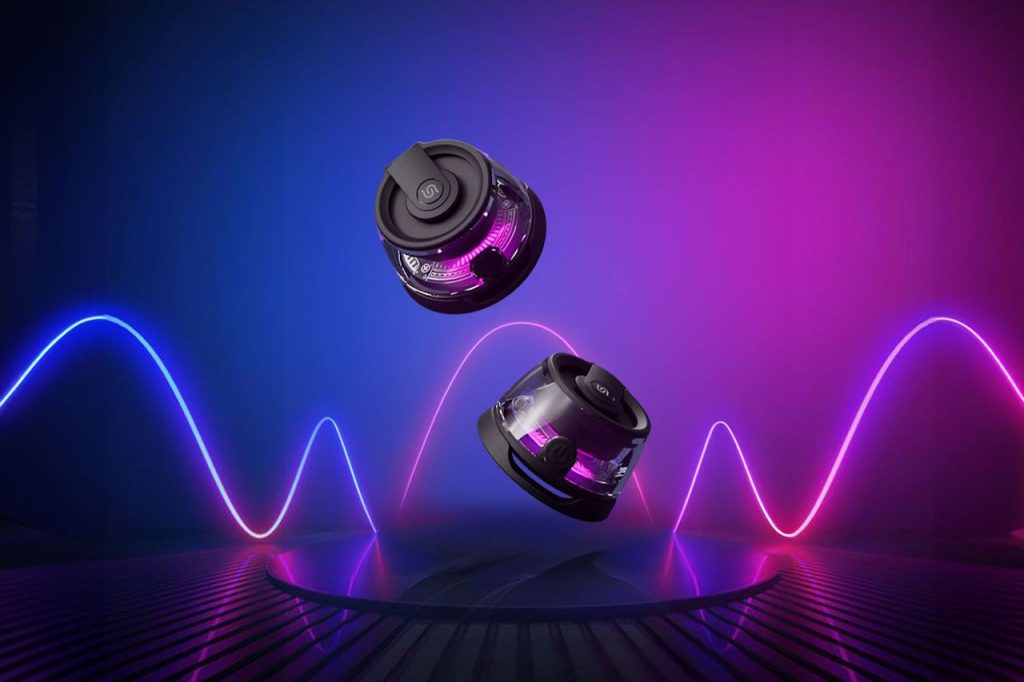
Both offer loud audio and Bluetooth playback, but their strengths differ: one favors performance, the other for party energy. Here is how the main features compare.
Mic Inputs
Karaoke speakers suit vocal use and almost always include 1–2 microphone inputs, with individual volume, echo, and reverb controls. This allows singers to adjust their vocal presence independently of the music, which matters for duets or live performances.
Party speakers, while some include mic inputs, usually treat them as a side feature. You may get a single 1/4″ jack without any vocal processing. These suit emcees hyping up the crowd more than actual vocal performances.
Echo/Reverb Effects
Karaoke speakers have built-in echo and reverb controls, which soften your voice, add depth, and mimic a stage or studio. That suits casual and semi-serious singers alike.
On the flip side, party speakers rarely include any vocal effects. Their focus is on outputting clean music, not tweaking vocal performances.
Bluetooth & App Support
Both karaoke and party speakers offer Bluetooth connectivity, making it easy to stream from your phone, tablet, or laptop. But karaoke speakers often also integrate with karaoke apps like StarMaker, Karafun, or WeSing. Some even include dedicated app support to adjust mic EQ or display lyrics.
Party speakers, meanwhile, usually offer app support for lighting control or audio presets, but don’t support karaoke-specific functionality.
RGB Lighting
Party speakers are the ones with real lighting. Many models, like the JBL PartyBox series, come with customizable RGB lights that sync to the beat and add visual energy to your setup.
Karaoke speakers might include basic LED indicators or soft accent lighting, but rarely compete with the full-blown light shows you’ll find on a party speaker.
Sound Modes
Karaoke speakers often include vocal-focused sound modes, like “Live,” “Studio,” or “Duet,” which shape EQ around the human voice.
In contrast, party speakers boast modes like Bass Boost, Outdoor Mode, or Club Mode, prioritizing enhanced beats and crowd-pleasing thump.
Battery Power
Party speakers are battery beasts. With built-in rechargeable batteries, they can run anywhere from 12 to 24 hours, depending on the model.
Karaoke speakers may include battery options on portable models, but many are plug-in only, especially those with built-in displays or dual-mic setups.
Display Screens
Karaoke speakers sometimes feature small LCD screens for built-in lyric displays or menu navigation. This is especially handy if you’re not using an app or need on-device controls.
Party speakers don’t include screens.
Feature Comparison Table
| Feature | Karaoke Speakers | Party Speakers |
|---|---|---|
| Mic Inputs | Multiple w/ controls | 1–2 basic inputs, no vocal FX |
| Echo/Reverb Effects | Built-in | Rare |
| Bluetooth | Yes | Yes |
| App Support | Karaoke apps integration | Limited to music apps |
| RGB Lighting | Some, minimal | Flashy & customizable |
| Sound Modes | Vocal modes | Party/Bass Boost modes |
| Battery Powered | Optional | Often built-in |
| Display Screen | Some models have lyric screens | None |
If you want singing features, vocal control, and app integration, karaoke speakers win. If you want lighting, battery life, and big-room energy, party speakers win.
Should I buy a karaoke speaker or a party speaker?
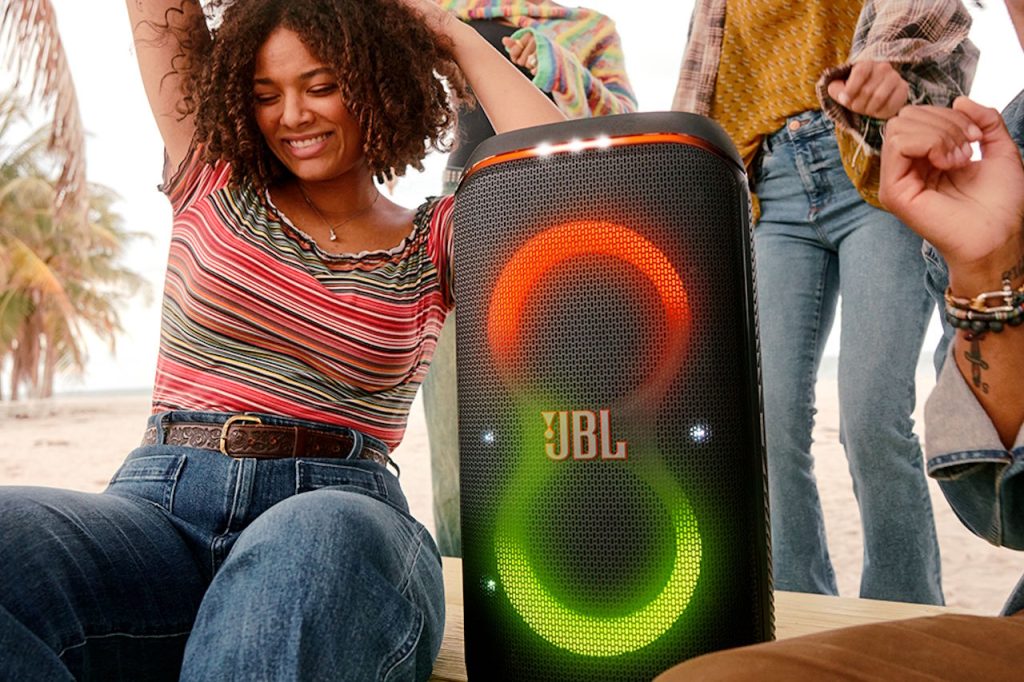
The right choice depends on whether you want performance or party. Karaoke speakers suit singers, with vocal clarity, mic control, and real-time effects like echo, reverb, and pitch adjustment. They highlight the mids and highs in music, keeping your voice front and center, and often include lyric display options or app integration. They are usually lighter, more compact, and often plug-in only, with shorter battery life, which suits indoor setups, family events, and small venues where singing is the focus.
Party speakers win on power. They are bass-heavy, high-wattage systems for large gatherings, backyard parties, or outdoor raves, with RGB lighting effects, DJ-style controls, and long-lasting batteries (12–24 hours). That suits anyone who values volume, deep bass, and lights over vocal precision. While some models include a mic input, they generally lack vocal effects and advanced mixing tools, such as acoustic AI tools, which makes them better for music playback and crowd hype than true karaoke.
If your goal is to host karaoke nights, practice singing, or perform for friends and family, get a karaoke speaker. If you want to blast music, show off light effects, and keep the energy up all night, get a party speaker. If you can’t choose, owning one of each works: the karaoke speaker for singing sessions, the party speaker when you want the volume up.
Frequently Asked Questions (FAQs)
These answers cover whether party speakers can double as karaoke setups, whether karaoke speakers are loud enough for a backyard party, and how mic compatibility, battery life, and app support compare.
Can party speakers be used for karaoke?
Technically yes, but not ideally. Most party speakers include basic mic inputs but lack essential vocal effects like echo, reverb, or pitch correction. You can sing through them, but don’t expect studio-quality vocals.
What makes karaoke speakers better for singing?
Karaoke speakers focus specifically on vocal performance. They come with dedicated mic inputs, built-in vocal processing (like echo and pitch adjustment), and EQ settings tuned for voice clarity, which makes them the better choice for singing.
Do karaoke speakers work well for regular music playback?
Yes, they can play music through Bluetooth, USB, or AUX. However, they favor vocals, so they may not deliver the deep bass and wide soundstage that define party speakers.
Which has better sound quality overall—karaoke or party speakers?
It depends on the use case. For vocal clarity, karaoke speakers win. For music playback with strong bass and volume, party speakers are superior. Each serves a different purpose.
Do party speakers come with microphones?
Most don’t. Some premium party speakers include one basic wired mic, but they rarely come with dual wireless mics or vocal controls. Karaoke speakers almost always include at least one mic, and often two.
Can I connect karaoke apps to both types of speakers?
You can connect karaoke apps like StarMaker or KaraFun to either via Bluetooth. However, only karaoke speakers are likely to support lyric syncing, dual mic mixing, and real-time effects that enhance the karaoke experience.
Which speaker is better for outdoor use?
Party speakers win. They often have rugged designs, water resistance (IPX4+), and long battery life, which suits tailgates, BBQs, and raves. Karaoke speakers are typically indoor-friendly and require AC power.
Are there hybrid speakers that work for both karaoke and parties?
Yes! Models like the JBL PartyBox 310 offer mic inputs, echo control, lighting effects, and deep bass, which makes them decent all-rounders. However, they still won’t match the vocal finesse of a true karaoke system.
What’s the average battery life of a party speaker vs karaoke speaker?
Party speakers usually run for 12–24 hours on a full charge. Karaoke speakers, especially those with screens or displays, may offer 4–6 hours, or none at all if they’re plug-in only.
Is a karaoke speaker worth it if I only sing occasionally?
If you sing even a few times a month, yes, it’s worth it. Sound quality, mic responsiveness, and ease of use are far better on a karaoke speaker than on a repurposed party speaker.
How long do party and karaoke speakers run, and how loud do they get?
Party speakers run longer and play louder. Karaoke speakers trade battery life and volume for vocal tools.
- The Ultimate Ears Hyperboom runs around 23 hours, which suits camping and tailgates.
- The JBL PartyBox 310 runs around 18 hours, so it can last through long outdoor use.
- Portable karaoke systems cap out at 4 to 6 hours, so a full-day outdoor party needs an outlet.
- Party speakers typically range from 100W to over 500W, which gives serious volume for big spaces.
- The JBL PartyBox 1000 and PartyBox Club 120 push past 100 dB SPL for outdoor parties.
Partner brands for karaoke speakers at a glance
| Brand | What they make | Where you buy | |
|---|---|---|---|
| soundcore Anker audio | Anker's audio brand: Bluetooth headphones, true wireless earbuds and speakers | Official Amazon store | Shop soundcore → |
| Edifier Desk and home speakers | Speakers and headphones for home, desktop and portable listening | Brand's own store | Check price → |