The Lightspeed Delta Zulu headset enters the aviation space promising more than clear audio: it claims to sharpen focus, personalize hearing, and detect carbon monoxide in the cabin.
Most pilots reading this are somewhere between cautious curiosity and headset fatigue. You’ve seen the glowing reviews, the dramatic product videos, and the claims of "next-level comfort" and "studio-grade noise cancellation." Between the headset you need and the one that just looks impressive on Instagram… lives a product like this. Confident. Feature-stuffed. Expensive.
You’re not buying headphones to impress anyone at the FBO. You’re buying clarity in a cockpit full of engines, radios, and wind noise. The wrong headset adds to the chaos. The right one disappears.
On paper, the Delta Zulu headset sounds like the latter: lightweight, low-profile, with carbon monoxide monitoring and customizable EQ. But the aviation market overflows with "on paper" promises that fall apart in real flight conditions.
The question is whether Lightspeed is offering real innovation or just overcomplication.
This review focuses on what actually helps when you’re 6,000 feet up in a noisy aircraft, and whether the Delta Zulu makes your life easier or just empties your wallet.
If you’re thinking about buying the Lightspeed Delta Zulu headset, read on.
Table of Contents
What’s Inside the Box
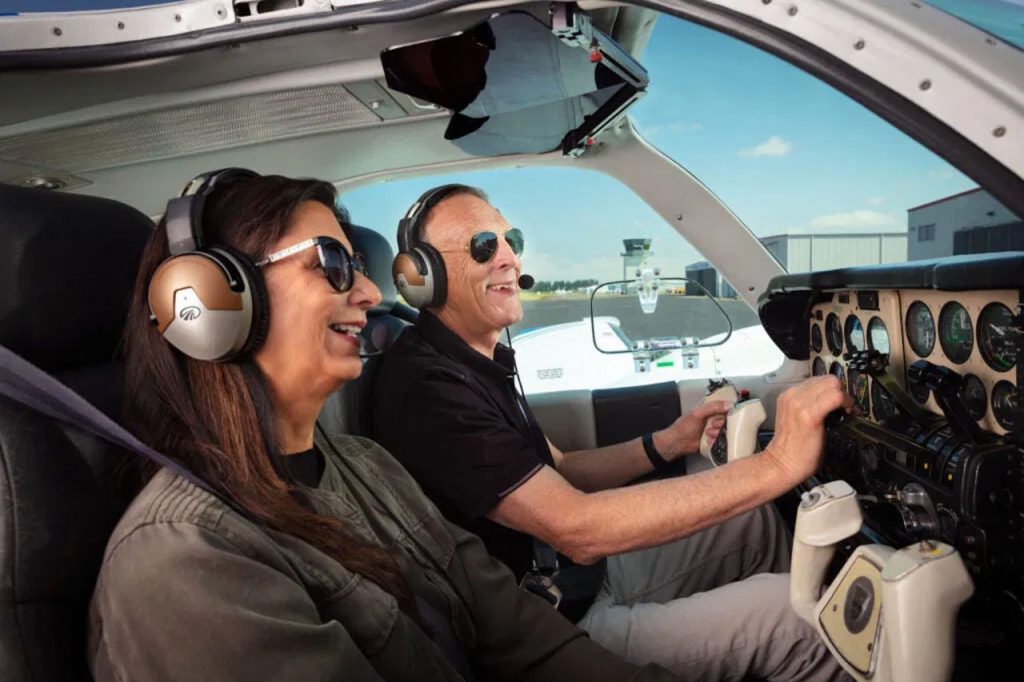
Unboxing the Lightspeed Delta Zulu headset feels more like unsealing gear from a cockpit or a survival kit than unwrapping tech.
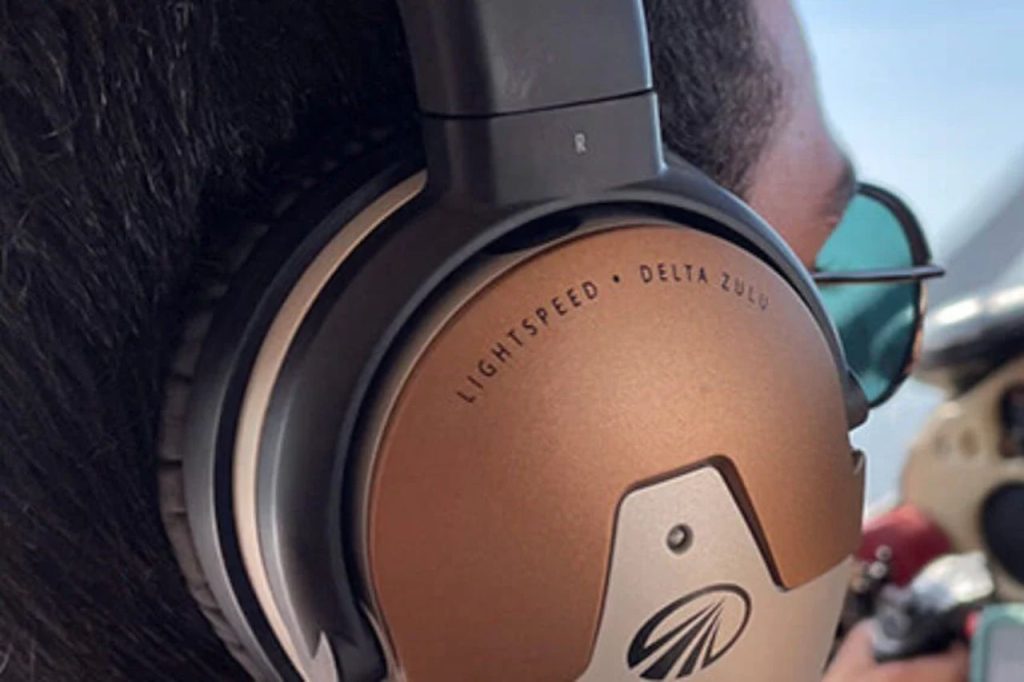
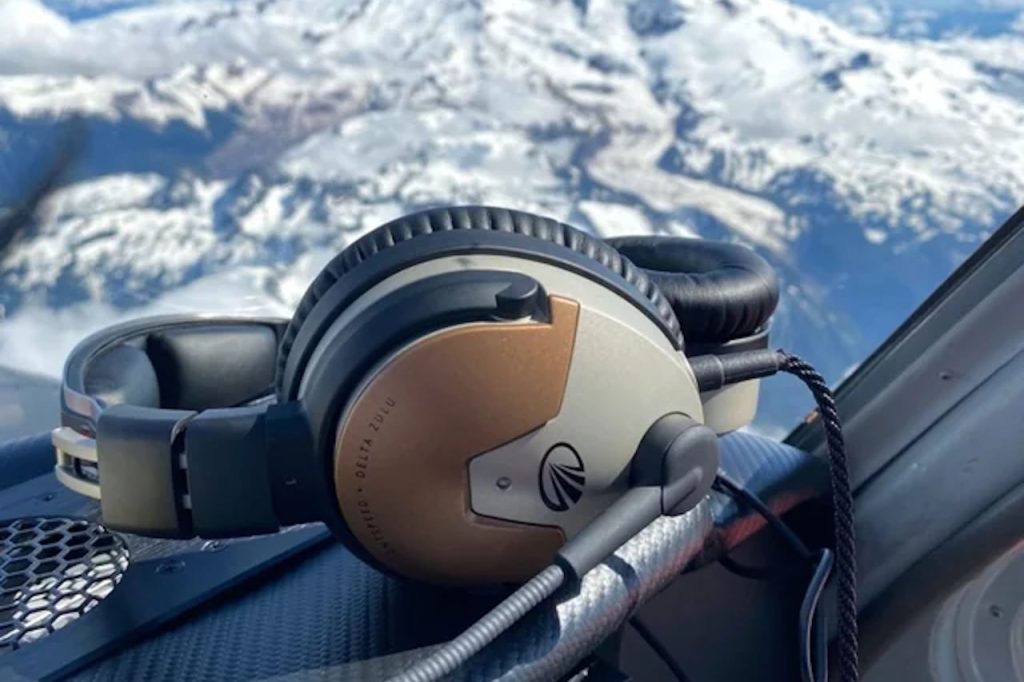
Inside the molded protective case (solid, unbranded, free of the usual retail gloss) you get the headset itself, tan and bronze and understated. It looks more like a precision tool than consumer electronics.
You’ll find a dual battery setup: a rechargeable lithium-ion pack and a backup AA battery module. No adapters needed. It’s redundancy, which is more comforting than sexy.
Also in the box:
- An assortment of cables with UAC, USB-C, Lightning, and 3.5mm compatibility
- The standard GA dual plugs
- A quick-start guide that assumes you’re at least marginally competent (thankfully)
- And a pair of ear seals that feel closer to memory foam than aviation-grade rubber
Everything fits tight, with no needless stickers or branding.
There’s no "wow" moment during unboxing, and that’s fine. the Delta Zulu doesn’t try to charm you right away.
It’s an aviation tool, delivered with just enough ceremony to say: We’re not here to impress you. We’re here to work.
Design and Build Quality

The Lightspeed Delta Zulu headset uses materials that hold up, and it’s easy to forget you’re wearing it.
At 14.9 ounces, it doesn’t vanish on your head. But it’s balanced, with none of the forward pitch that heavier headsets force you to tolerate after hour two. The headband has just enough flex to avoid that industrial clamp sensation, yet enough pressure to maintain a proper seal.
The magnesium ear cups feel like real metal, not mass-market plastic. The material choice says: “We know where this headset is going — and what it’s going to deal with.”
The cables have a Kevlar core. Overkill? Maybe, but no pilot has ever complained about something being too durable.
There’s no chrome, no glossy panels, no excessive contouring. The tan-and-bronze finish is understated. Some will like its utilitarian look, others will wonder why it doesn’t look more "high-tech."
Adjustment points are smooth. There’s tactile resistance where there should be, no loose pivots, and the pivot arms don’t creak when flexed.
The plain look might be a weakness for some. It doesn’t look like a $1,200 headset. It looks like something issued, not gifted.
Sound Performance
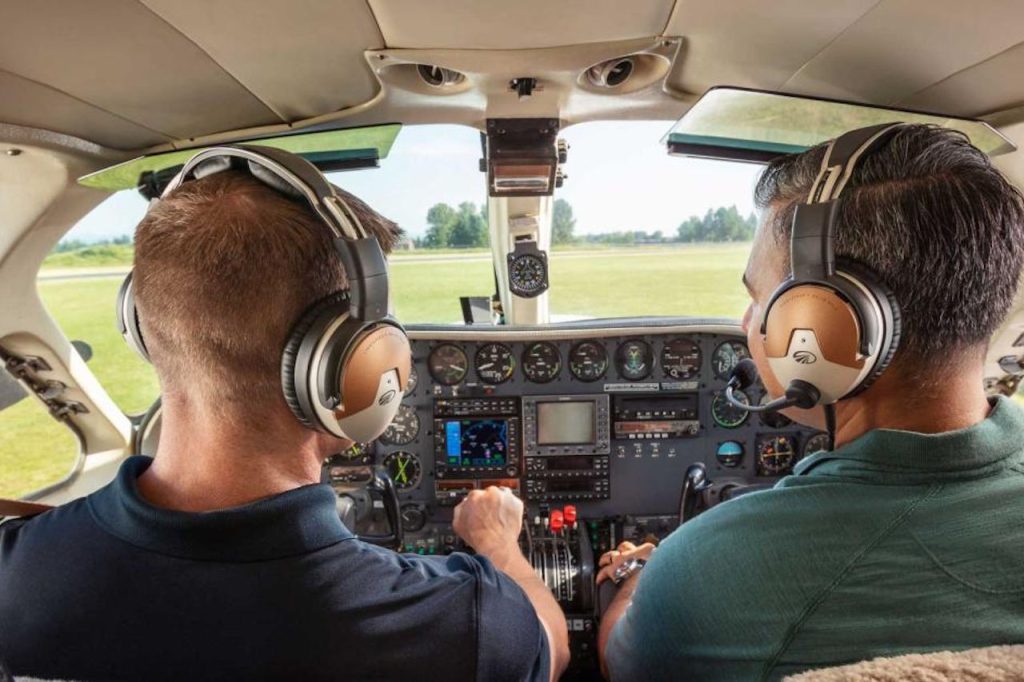
If you’ve flown with cheaper headsets, you know what “good enough” sounds like. It’s functional. Passable. But far from clear. You spend half your time decoding ATC like it’s a 1940s radio broadcast. And once engine noise settles in at cruise, the headset becomes more like a volume knob than a true filter.
That’s where the Lightspeed Delta Zulu headset separates itself with intention. The Active Noise Reduction (ANR) subtracts the low-end drone that wears you down over a long flight. It doesn’t silence everything.
Bass isn’t pumped up, which suits a tower call. The midrange, where speech lives, is clear and direct. You don’t get that underwater murkiness common with overprocessed headsets. Highs are crisp without veering into sibilance or digital harshness.
This is situational audio for communication, not entertainment.
Then there’s HearingEQity, the built-in feature that tailors the sound profile based on a 12-frequency hearing test. After calibration, you don’t hear "better," exactly. You hear cleaner. Subtleties in speech that used to wash out now come through. And if you’ve been flying for years and suspect your right ear isn’t what it used to be… this matters more than you think.
Now, is the audio perfect? No. Bluetooth streaming lacks the fidelity of wired sources, and not all aircraft intercoms play nicely with advanced EQ shaping. But in cockpit-relevant conditions (high noise, constant chatter) the Delta Zulu headset performs like someone who’s flown through all of it designed it.
Features

Some features here justify the price. Others are expensive distractions mid-flight.
The Lightspeed Delta Zulu headset doesn’t show up empty-handed. Some features are useful. Others feel like engineering exercises in "because we could."
Carbon Monoxide Monitoring
This is a real safety feature. The headset samples the air around you and gives audible and visual alerts if carbon monoxide levels rise above safe thresholds. You might never need it, but if you do, you don’t want to miss the warning.
EQ Customization
Lightspeed includes a built-in hearing test through its app, and uses that data to adjust the headset’s EQ to your individual hearing profile. The change is subtle. If you’ve flown long enough to have even slight asymmetry in your hearing, it compensates for that.
Bluetooth Multipoint
You can connect your headset to two devices at once, say your EFB and your phone. Prioritization works, and you don’t have to babysit the connection once it’s set up.
App Integration
The app is lean. You can adjust your hearing profile, access CO monitoring history, and record in-cockpit conversations, which helps instructors, student pilots, and anyone who reviews comms post-flight. There’s no subscription.
Touch Controls (or lack thereof)
There are none. Physical buttons may not look modern, but they don’t misfire when your finger grazes them mid-descent.
Transparency Mode
It lets you hear ambient sound without removing the headset. It works, but you’ll likely try it once and forget it. Most pilots just crack one earcup when needed.
Custom Buttons
The list of things you’ll realistically want to assign is short.
CO monitoring and hearing personalization are the standouts. The rest are quiet conveniences.
Battery Life and Connectivity
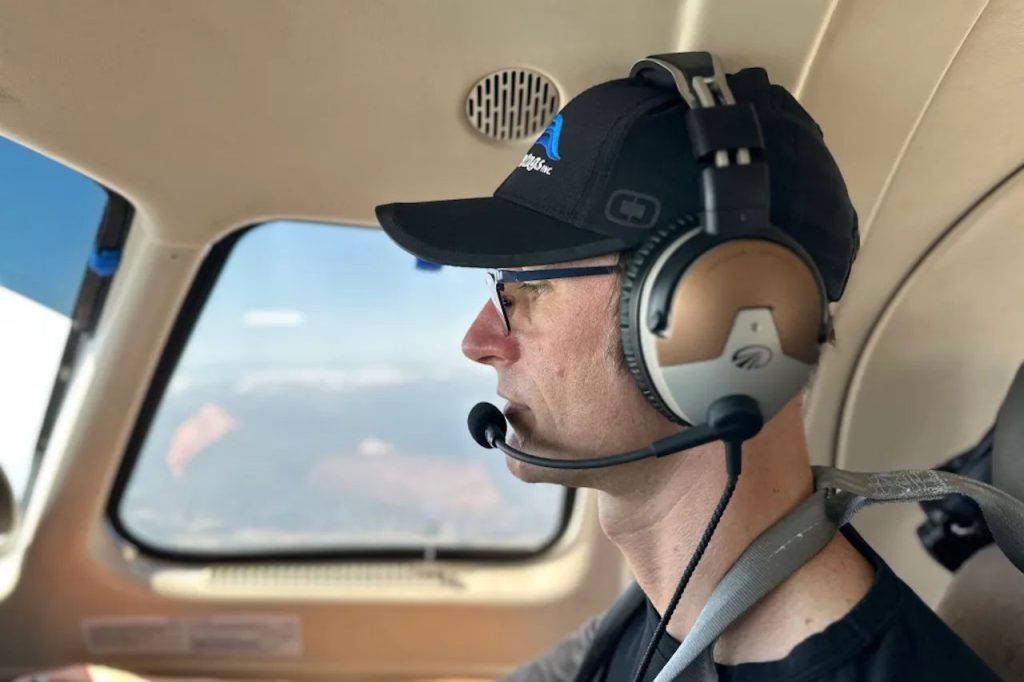
A headset that dies in the middle of a long leg over flat terrain and weak VHF coverage is useless. The Lightspeed Delta Zulu lasts.
You get up to 30 hours on a full charge using the rechargeable lithium-ion battery. And if you somehow forget to top it off before a trip? Pop in the included AA battery module and keep going. No adapters needed.
A brief top-off gives you several hours of extra runtime, enough to get you through the return flight.
It supports UAC (Universal Accessory Connector), USB-A, USB-C, Lightning, 3.5 mm analog, and Bluetooth. That covers iPhones, iPads, and oddball aircraft intercom systems.
Bluetooth pairing is fast and stable. It remembers your device and reconnects quickly. Priority goes to comms first, auxiliary second.
It won’t stream lossless audio from Spotify with perfect fidelity. What it offers is reliability and flexibility.
Product Comparison
At over a thousand dollars, you’re not shopping for "decent." You want decisive. Here is how the Lightspeed Delta Zulu compares with three rivals: the Bose A30, the David Clark ONE-X, and the Sony INZONE H9 (yes, a non-aviation option for comparison’s sake, because some pilots do consider premium consumer headsets for light GA flying or training).
Lightspeed Delta Zulu vs Bose A30 Aviation Headset
The Bose A30 is the successor to the A20. It improves on comfort and ANR performance and reduces the clamp force. It’s got three selectable noise cancellation modes and improved side-tone. But it still lacks what the Delta Zulu brings to the table in innovation: CO detection, hearing profile customization, and smarter app integrati
If you want a headset that’s polished, dependable, and familiar, the A30 delivers. If you want newer features, it plays it safe.
| Feature | Lightspeed Delta Zulu | Bose A30 |
|---|---|---|
| Active Noise Reduction | Advanced, full spectrum | Industry-leading |
| Hearing Customization | Yes (HearingEQity) | No |
| Carbon Monoxide Monitoring | Yes | No |
| App Integration | Full (EQ, logs, recordings) | Limited |
| Weight | 14.9 oz | 14.2 oz |
| Battery Life | 30 hrs (rechargeable + AA backup) | ~45 hrs (AA only) |
| Bluetooth | Multipoint + Streaming | Multipoint |
| Build Materials | Magnesium, Kevlar cables | Plastic & metal |
| Price | See Price | See Price |
Verdict: For ANR purists, the Bose A30 still has a slight edge. But for pilots who want more features, the Delta Zulu wins on features and safety.
Lightspeed Delta Zulu vs David Clark ONE-X
The ONE-X offers portability, comfort, and a lighter feel overall. It’s a headset you can wear all day without noticing. No app. No hearing adjustment. No CO detection. It aims for simplicity.
For old-school pilots or student flyers who just want a no-fuss, high-quality headset, the ONE-X makes sense. But if you’re logging serious hours, it may start to feel dated.
| Feature | Lightspeed Delta Zulu | David Clark ONE-X |
|---|---|---|
| Active Noise Reduction | Yes (Advanced) | Yes (Solid) |
| Hearing Customization | Yes | No |
| Carbon Monoxide Monitoring | Yes | No |
| App Integration | Full | None |
| Weight | 14.9 oz | 12.3 oz |
| Battery Life | 30 hrs (rechargeable + AA) | ~50 hrs (AA only) |
| Bluetooth | Multipoint | Basic |
| Build Materials | Magnesium, Kevlar | Plastic/Aluminum |
| Price | See Price | See Price |
Verdict: If weight and simplicity matter more than features, go with the ONE-X. But for pilots who want the headset to do more than just cancel noise, the Delta Zulu wins by a long mile.
Lightspeed Delta Zulu vs Sony INZONE H9
Then there’s the Sony INZONE H9, a wireless ANC headset that targets gaming. It has great noise cancellation, solid comfort, and Bluetooth + 2.4GHz wireless support. And yes, some new pilots try to cut corners by using high-end consumer headsets in GA cockpits, especially in rentals with Bluetooth adapters.
But it isn’t a fair fight. It has no dual GA plug, no aviation mic, and no sidetone. It doesn’t belong in your flight bag.
| Feature | Lightspeed Delta Zulu | Sony INZONE H9 |
|---|---|---|
| Active Noise Reduction | Yes | Yes |
| Hearing Customization | Yes | No |
| Carbon Monoxide Monitoring | Yes | No |
| App Integration | Aviation-specific | Gaming-focused |
| Weight | 14.9 oz | 11 oz |
| Battery Life | 30 hrs | 32 hrs |
| Bluetooth | Multipoint | Yes |
| Build Materials | Aircraft-grade | Consumer plastic |
| Price | See Price | See Price |
Verdict: If you’re flying anything more serious than a simulator, this isn’t a comparison. The Delta Zulu targets cockpits. The INZONE H9 targets Call of Duty.
The Bose A30 is a gold standard for comfort and clean audio. The David Clark ONE-X is the minimalist’s favorite. The Sony INZONE H9 is a solid headset for everything except actual flying.
The Lightspeed Delta Zulu headset competes on features as well as sound. If you want a headset that does more than cancel noise, it is the pick here.
Final Verdict
Aviation gear rarely lives in extremes, and the Lightspeed Delta Zulu headset is no exception.
It aims to reduce friction: the kind you notice after 90 minutes of engine noise, a scratchy call from center, or an unexpected alert that forces you to start scanning for smoke.
It’s not perfect and it’s not cheap. It won’t make you a better pilot, but it will make you a more comfortable one, maybe even a safer one.
Who is this headset for?
- Pilots logging serious flight hours who are done compromising on clarity or comfort
- CFIs and instructors who want recordable comms and headset longevity
- Student pilots with some financial runway who’d rather buy one headset now than two over time
- Anyone flying piston aircraft with older engines and unpredictable cabin air
- Pilots with asymmetrical hearing loss, or just aging ears, who need tailored audio
Who might want to skip?
- Weekend flyers who don’t need advanced features and prefer a sub-$1,000 option
- Pilots who already own a Bose A30 and aren’t chasing more features
- Budget-conscious buyers not ready to spend premium for CO sensing or EQ tech
Would I spend my own money on it? If I was flying regularly and wanted a headset I could grow into, trust under pressure, and not replace in two years, yes.
You can get the Lightspeed Delta Zulu headset here on Amazon.
Frequently Asked Questions
Below are common questions about the Lightspeed Delta Zulu headset
Is the Lightspeed Delta Zulu headset worth it for student pilots?
If you’re in it for the long haul, yes. The upfront cost is steep. Hearing customization, CO detection, and recording matter less on day one but more as you log hours.
Can I use this in helicopters?
Yes, but you’ll need an appropriate adapter for your plug type. The default version comes with GA dual plugs. Helicopter versions (U174/U) are available, or you can adapt it easily.
How well does the carbon monoxide monitoring actually work?
It’s passive and continuous. Alerts are both visual (LED) and audible through the headset. It’s calibrated to trigger based on real thresholds, not false alarms.
Does the Bluetooth work at the same time as intercom and ATC audio?
Yes. You’ll hear music, EFB alerts, or phone audio without losing radio priority. Comms always take precedence.
How does it compare to the Bose A30 for noise cancellation?
The A30 edges out slightly in raw ANR smoothness, especially in higher noise environments. The Delta Zulu trades some ANR polish for a richer feature set.
Is it comfortable for 4+ hour flights?
Yes. The ear seals taper for glasses-wearers, the clamping force is moderate, and the magnesium build keeps it balanced. You’ll feel it after long legs, but you won’t resent it.
Can I record conversations for training or review?
Absolutely. The Lightspeed app allows you to record full cockpit audio. It’s especially useful for CFIs, students, or anyone reviewing IFR comms or debriefing complex scenarios.
What if I hate it? What’s the return policy?
If purchased through Amazon, you get the standard 30-day return window. Lightspeed also backs it with a 7-year manufacturer’s warranty, which is practically unheard of in aviation headsets.
Is it compatible with iPads, iPhones, Android, etc.?
Yes. It connects via Bluetooth, USB-C, Lightning, UAC, or 3.5mm.