The FiiO FT1 is a wired over-ear headphone designed for listeners who prioritize sound quality, material craftsmanship, and long-term listening comfort over wireless features and digital processing. Positioned as an audiophile-focused model, the FT1 combines a large dynamic driver architecture with solid wood and metal construction for music, gaming, and professional use.
At the core of the FT1 is a 60mm dynamic driver paired with a nano wood fibre composite diaphragm, and as one of the top 10 best eco-friendly headphones of 2026, this pair of headphones appeal to those who are eco-concicous. This driver configuration moves more air than typical dynamic designs, resulting in improved low-frequency depth, wider soundstage presentation, and stronger dynamic impact. With a 32-ohm impedance, the headphones remain easy to drive from portable DACs, desktop amplifiers, and even smartphone dongles, making them flexible for both home and desktop setups.
The intended audience includes audiophiles seeking an organic sound signature, gamers who value positional accuracy without added processing, and professionals who prefer a clean, uncolored monitoring presentation. Unlike feature-heavy consumer headphones, the FT1 has no active noise cancellation, wireless connectivity, or onboard controls. It is all about acoustic performance and build quality.
Within its category, the FT1 sits firmly in the premium wired dynamic headphone segment. Solid wood earcups, a reinforced adjustable headband, and included balanced and single-ended cables reinforce its positioning as a serious listening tool rather than a lifestyle accessory. One of its defining characteristics is the combination of natural wood materials with modern acoustic engineering, a design philosophy that reflects FiiO’s emphasis on sound purity and long-term value.
Table of Contents
Key Highlights
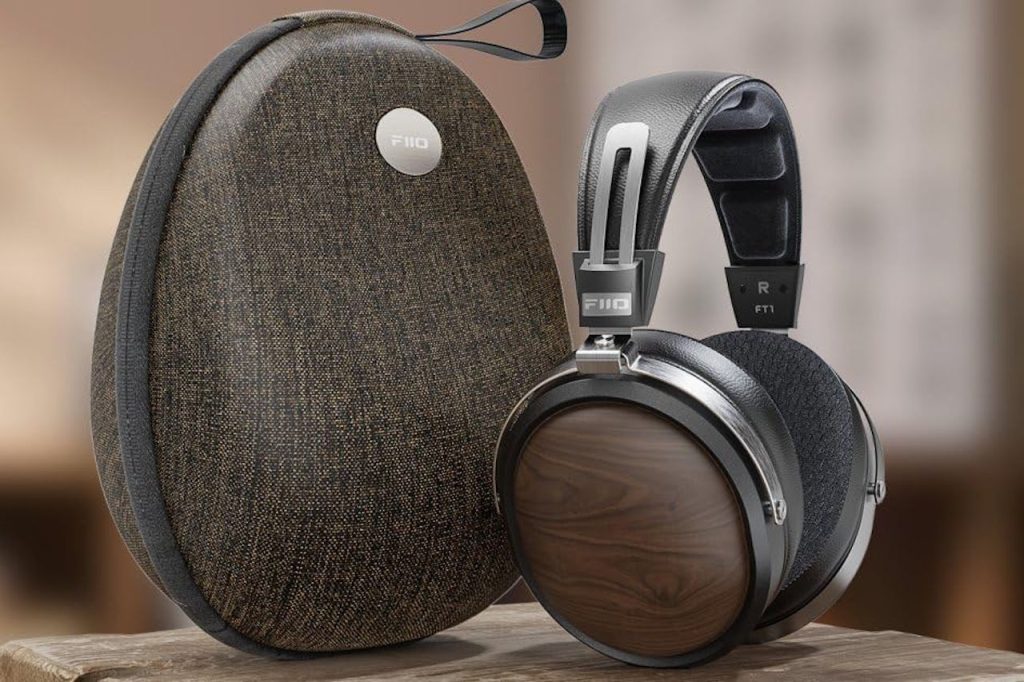
Every major design decision, from the oversized dynamic driver to the use of solid wood earcups, aims to deliver a natural and engaging listening experience. Instead of relying on digital processing or wireless enhancements, the FT1 emphasizes mechanical precision, efficient driver movement, and high-quality signal transmission.
- 60mm large dynamic driver architecture designed to deliver expansive soundstage, strong dynamic impact, and improved low-frequency extension compared to smaller driver designs
- Nano wood fibre composite diaphragm constructed from selected spruce wood fibres and carbon fibre for a lightweight yet rigid structure with fast transient response
- W-shaped independent suspension system that increases the effective vibrating area of the diaphragm, improving efficiency and overall acoustic stability
- Solid wood earcups that enhance natural resonance control while providing a premium, audiophile-grade aesthetic
- Easy-to-drive 32-ohm impedance suitable for portable DACs, desktop amplifiers, and everyday wired audio sources
- Detachable dual-cable system including both 3.5mm single-ended and 4.4mm balanced oxygen-free copper silver-plated cables
- Adjustable ball slide rail headband with a wide adjustment range and suede contact surface for long-session comfort
- Purely acoustic-focused design philosophy with no wireless modules or digital processing, prioritizing sound quality and durability
Design & Build Quality
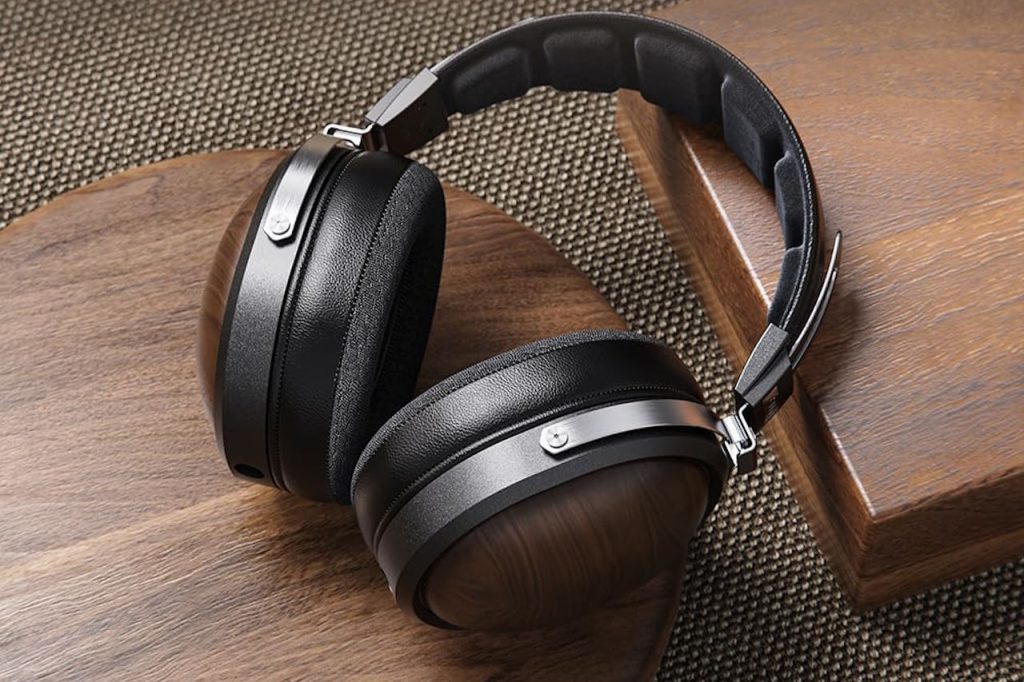
The design and build quality of the FiiO FT1 clearly signal its audiophile-oriented intent. Rather than adopting a flashy or consumer-focused aesthetic, the FT1 prioritizes materials, structural integrity, and acoustic function.
Overall Aesthetic
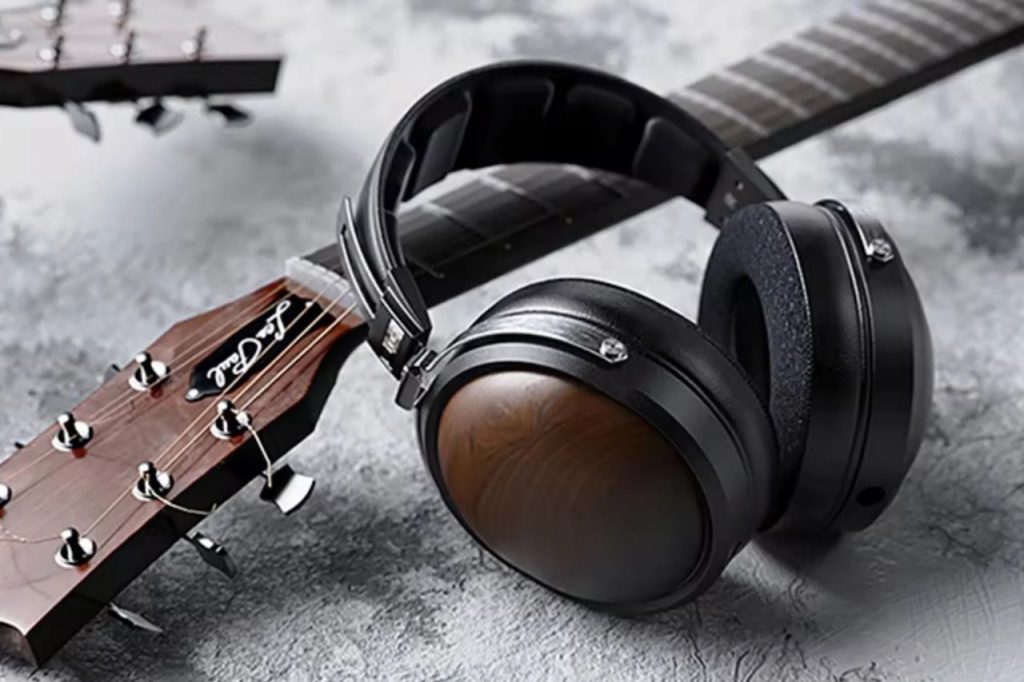
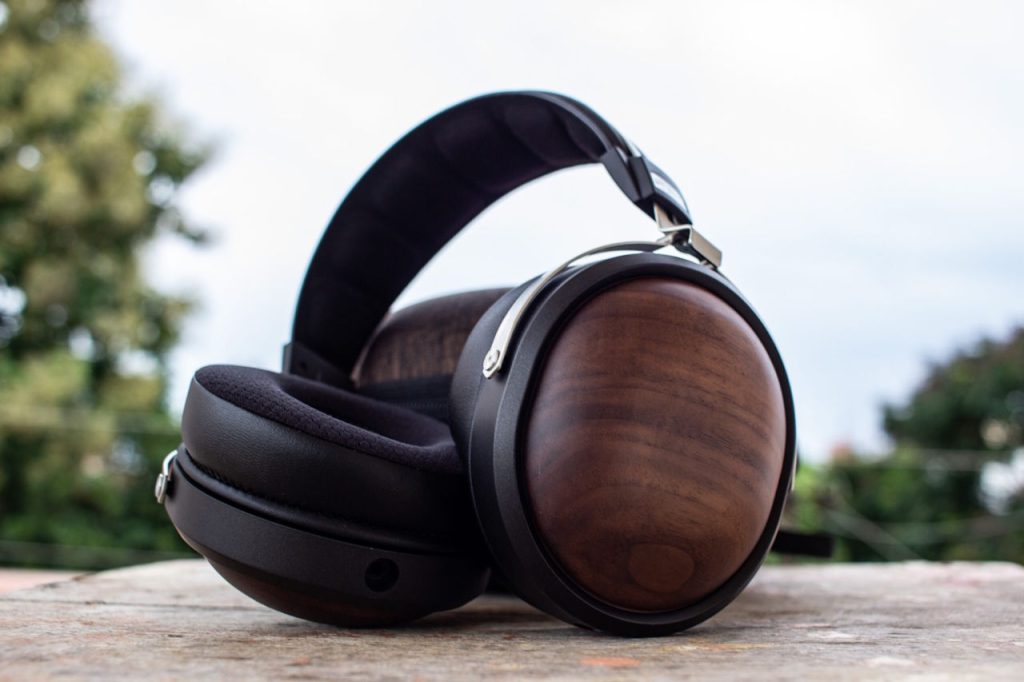
Visually, the FT1 leans toward a classic, understated look that highlights its solid wood earcups as the main design focal point. The natural wood grain gives each unit a subtly unique appearance. The finish is clean and well-executed, avoiding excessive branding or decorative elements. Metal components used in the frame and adjustment system add contrast and reinforce the headphone's solid feel without cluttering the minimalist look, which makes it one of the best eco-friendly headphones in the class.
Construction & Durability
From a structural standpoint, the FT1 withstands regular long-term use. The ball slide rail headband mechanism provides smooth adjustment while maintaining consistent tension, reducing wear over time compared to simpler friction-based designs. The headband frame feels rigid and secure, with no noticeable flex during handling. Ear cup construction is solid, with tight tolerances and reliable cable connection points that support repeated attachment and removal of detachable cables. Durability also benefits from the absence of fragile electronic components, making the FT1 a dependable option for home, studio, and desktop listening environments.
Comfort & Fit
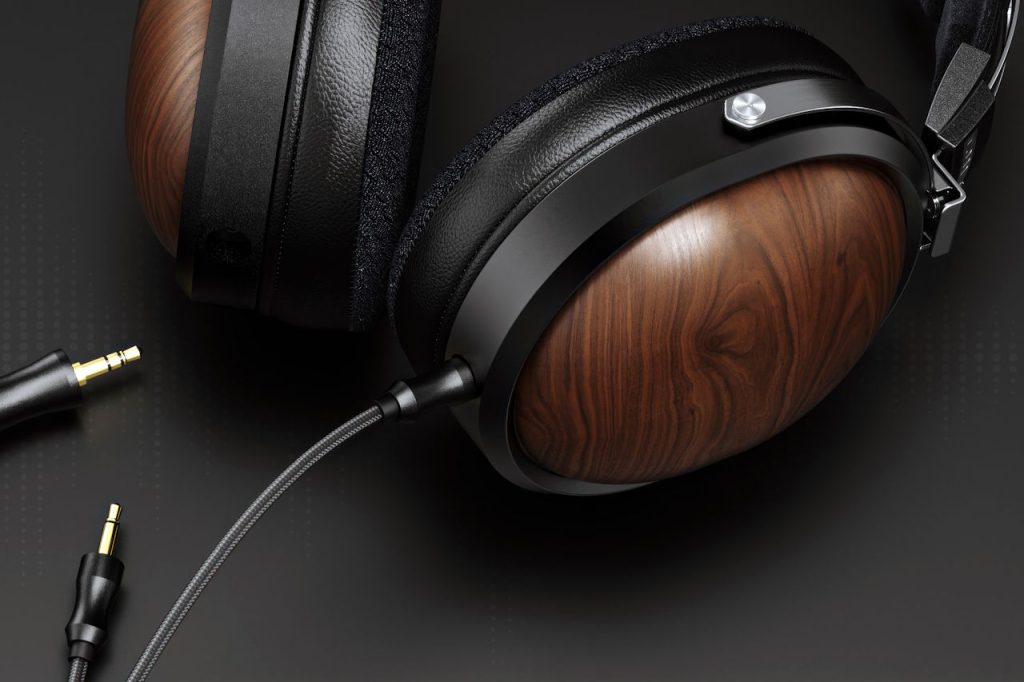
The FiiO FT1 suits long listening sessions. Despite housing large 60mm dynamic drivers and solid wood earcups, the FT1 manages its weight and pressure distribution effectively, making it suitable for hours of continuous use. The fit philosophy favors stability and even load distribution rather than a loose or overly relaxed clamp, which helps maintain consistent acoustic positioning.
Headband & Clamping Force
The FT1 uses an adjustable ball slide rail headband that offers a wide range of sizing options, allowing it to accommodate different head shapes without hotspots. The clamping force is well-judged, providing enough tension to keep the earcups securely in place without causing excessive side pressure. The headband spreads the weight evenly across the top of the head, and the suede-covered contact surface improves grip while remaining breathable. This design helps minimize fatigue during longer listening or gaming sessions.
Ear Cushions & Wearability
The ear cushions fully surround the ears, creating a comfortable seal without pressing directly against them. Padding density strikes a good balance between softness and structural support, helping the headphones maintain their position during movement. Breathability is adequate for indoor use, and heat buildup remains controlled over extended sessions. The FT1 stays comfortable for prolonged music listening, professional monitoring, and casual gaming use without frequent adjustment.
Driver & Acoustic Architecture
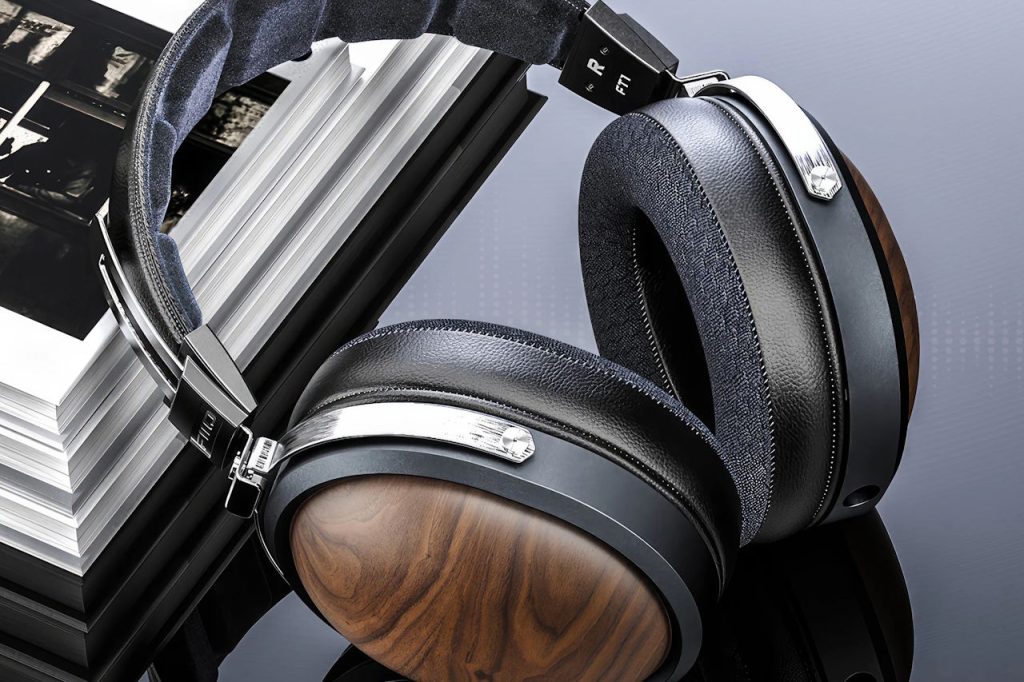
The FiiO FT1 centers on a carefully engineered driver system that prioritizes efficiency, control, and natural sound reproduction. Rather than relying on digital processing or corrective tuning, the FT1’s performance comes almost entirely from its physical driver design and internal acoustic structure. This approach places emphasis on mechanical precision, diaphragm behavior, and enclosure tuning, all of which directly influence the headphone’s tonal balance and spatial presentation.
Driver Type & Size
At the heart of the FT1 is a large 60mm dynamic driver, a size chosen to move more air with less strain compared to smaller drivers. This larger surface area allows for improved low-frequency extension, greater dynamic headroom, and a more open sense of scale. The dynamic driver configuration favors responsiveness rather than sheer volume, contributing to cleaner transients and better control across the frequency range. The 32-ohm impedance further supports efficient operation, allowing the driver to perform consistently across a wide range of audio sources.
Internal Acoustic Design
The driver uses a nano wood fibre composite diaphragm that blends selected spruce wood fibres with carbon fibre reinforcement. This structure balances low mass with sufficient rigidity, helping the diaphragm respond quickly while maintaining stability at higher volumes. FiiO’s W-shaped independent suspension design increases the effective vibrating area of the diaphragm, allowing it to store and release sound energy more efficiently. The solid wood earcups play a supporting role by helping manage internal resonance, contributing to a cleaner output and more natural tonal decay.
Sound Performance
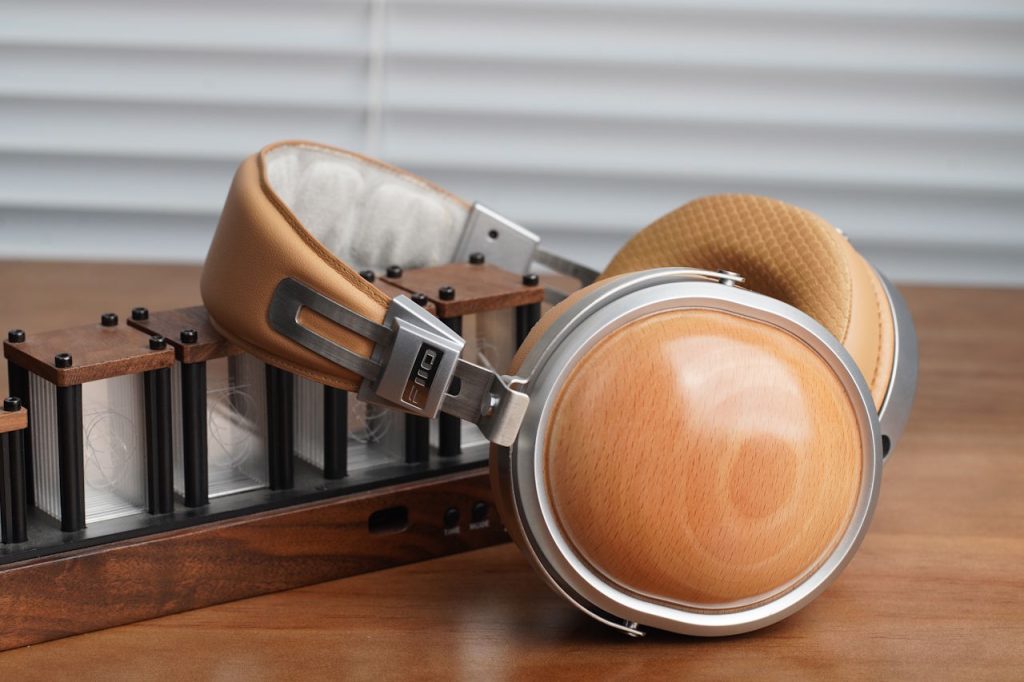
The FiiO FT1 favors balance, control, and natural tonality over exaggerated tuning. Its large dynamic driver and carefully tuned acoustic system work together to produce a cohesive sound signature that remains engaging across different genres and listening scenarios. The overall character is clean and dynamic, with a focus on realism and long-term listenability rather than short-term impact.
Bass Response
Bass performance is authoritative without being overpowering. The large driver provides solid sub-bass extension, giving low frequencies a sense of depth and weight while maintaining control. Mid-bass remains tight and well-defined, avoiding bloom or excessive warmth. This tuning allows bass notes to retain texture and separation, making the FT1 suitable for genres ranging from electronic and hip-hop to acoustic and orchestral recordings.
Midrange Performance
The midrange is one of the FT1’s strongest attributes. Vocals come through with clarity and natural body, sitting forward enough to feel engaging without becoming intrusive. Instrument separation is strong, allowing guitars, strings, and piano to occupy their own space within the mix. The tonal balance in this region favors accuracy, making the FT1 a reliable option for critical listening and professional monitoring.
Treble Performance
Treble reproduction is smooth and controlled, with enough extension to convey detail and air without introducing harshness. High frequencies are well-resolved, capturing subtle nuances such as cymbal decay and ambient cues. The treble tuning avoids sharp peaks, reducing listener fatigue during extended sessions while still preserving a sense of openness.
Soundstage & Imaging
The FT1 delivers a soundstage that feels spacious and well-proportioned, thanks to the large driver and efficient diaphragm movement. The FT1 defines width and depth clearly, giving music a wide, open feel. Imaging accuracy is precise, allowing listeners to pinpoint instrument placement and directional cues, which benefits both music enjoyment and gaming applications.
Connectivity & Inputs

The FiiO FT1 adopts a straightforward, audiophile-focused approach to connectivity, emphasizing signal integrity and compatibility over convenience features. By relying exclusively on wired connections, the FT1 avoids potential compromises that wireless transmission and internal amplification introduce. This design choice ensures a clean signal path and consistent performance across a wide range of audio sources.
Wired Connectivity
The FT1 features a detachable cable system that enhances both usability and long-term durability. Included in the box are two high-quality cables: a 3.5mm single-ended cable and a 4.4mm balanced cable. Both use oxygen-free copper with silver plating to maintain low resistance and stable signal transmission.
The detachable design allows for easy cable replacement or upgrades, while the balanced option provides improved channel separation and noise rejection when paired with compatible DACs and headphone amplifiers. With its 32-ohm impedance, the FT1 integrates smoothly with portable players, desktop audio interfaces, and dedicated amplification setups. It is also the ideal choice for flights given the fact you can listen to your favorite music in peace, especially those who are looking for the next top 10 best wired headphones for airplane in 2026.
Features & Controls

The FiiO FT1 is intentionally minimal in its feature set, putting acoustic performance ahead of digital extras. Rather than integrating onboard controls or software-based functions, the FT1 focuses on mechanical precision, signal purity, and compatibility with high-quality external audio equipment. This approach appeals to listeners who prefer a traditional wired listening experience without added complexity.
Physical Controls
The FiiO FT1 does not include onboard buttons or touch-sensitive controls. The connected source device or external amplifier handles playback, volume adjustment, and track navigation entirely. This absence of physical controls eliminates accidental inputs and keeps operation simple and consistent across different setups. Responsiveness is therefore dependent on the paired device rather than the headphones themselves.
Acoustic & Hardware-Oriented Features
The FT1 has no software or smart features, so its advantages are all hardware.
- Purely passive design with no internal DSP, preserving signal integrity
- Low 32-ohm impedance for easy pairing with portable and desktop sources
Detachable Dual-Cable System
The FT1 includes a flexible cable setup designed for audiophile use across multiple systems.
- Supplied with both 3.5mm single-ended and 4.4mm balanced cables
- Detachable design allows easy replacement, upgrades, or customization
Balanced Audio Support
Balanced connectivity is a core feature here.
- 4.4mm balanced cable enables improved channel separation
- Reduces background noise when paired with balanced DACs or amplifiers
Source Compatibility & Scalability
The FT1 scales cleanly with better source equipment.
- Performs well from portable dongles, desktop DACs, and headphone amps
- Benefits audibly from higher-quality amplification without becoming source-dependent
Product Comparison
Here is how the FT1 compares with three alternatives in nearby price and design segments.
FiiO FT1 vs FiiO FT1 Pro
The FT1 and FT1 Pro both come from FiiO and carry similar design DNA, but they target different listening priorities.
The FT1 Pro upgrades to a large planar magnetic driver with open acoustic design, offering wider frequency response and potentially greater detail and spatial depth when paired with a capable source. This makes the FT1 Pro more suitable for listeners seeking reference-like accuracy and expansive presentation.
In contrast, the FT1 focuses on a closed-back dynamic driver with solid wood earcups, delivering more natural resonance and better passive isolation for home and desktop listening without external amplification demands. The FT1 typically offers stronger low-end impact and fuller midrange warmth, while the FT1 Pro excels in overall resolution and airy soundstage.
| Feature | FiiO FT1 | FiiO FT1 Pro |
|---|---|---|
| Driver Type | 60mm dynamic driver | Planar magnetic driver |
| Acoustic Design | Closed back | Open back |
| Sound Signature | Warm, dynamic, musical | Neutral, highly detailed |
| Soundstage | Wide for closed back | Very wide and airy |
| Bass Presentation | Fuller with stronger impact | Tighter, faster, more linear |
| Impedance | 32 ohms | Higher impedance |
| Ease of Drive | Easy to drive | Benefits from stronger amplification |
| Cable Support | 3.5mm and 4.4mm included | 3.5mm and 4.4mm included |
| Use Case | Home listening, gaming, mixed use | Critical listening, reference work |
| Price | See Price | See Price |
FiiO FT1 vs AKG K371
The AKG K371 is a well-regarded closed-back headphone often recommended for studio and general listening. It’s lighter and generally more neutral than many consumer models, with excellent on-ear comfort and flat (reference-oriented) tuning. The FT1’s larger driver and wood-cup design contribute to a richer, warmer signature, particularly in the bass and lower mids, while the K371 leans toward analytical accuracy and tighter overall response.
The FT1 also includes a balanced cable option, which can improve separation on compatible gear. The K371’s strengths are in neutrality and long-haul comfort, making it attractive for mixing and critical listening. The FT1’s broader tonal body and resonance control can appeal more to those favoring musicality over strict neutrality.
| Feature | FiiO FT1 | AKG K371 |
|---|---|---|
| Driver Size | 60mm | Approx. 50mm |
| Tuning Approach | Musical and natural | Neutral and studio focused |
| Bass Depth | Deeper with more body | Controlled and flatter |
| Midrange Character | Rich and engaging | Clean and analytical |
| Treble Behavior | Smooth and non-fatiguing | More forward and revealing |
| Build Materials | Solid wood earcups | Predominantly plastic |
| Balanced Cable Support | Yes | No |
| Portability | Better suited for desktop use | More portable and lightweight |
| Target User | Audiophile music listeners | Studio monitoring and mixing |
| Price | See Price | See Price |
FiiO FT1 vs Sennheiser HD 620S
The Sennheiser HD 620S is a higher-impedance closed-back headphone designed for reference-level listening with detailed imaging and slightly elevated clarity across the mids and highs. Its build and tuning favor extended, precise listening in controlled environments. The FT1, with lower impedance and wood-cup resonance, delivers deeper bass emphasis and a more engaging low end without sacrificing overall balance.
The HD 620S may edge ahead in neutrality and instrument layering for complex mixes, while the FT1 offers greater ease of drive and a warmer character that many prefer for genre-agnostic casual listening. Each headphone serves different priorities: detail and neutrality (HD 620S) versus musical engagement and accessibility (FT1).
| Feature | FiiO FT1 | Sennheiser HD 620S |
|---|---|---|
| Impedance | 32 ohms | 150 ohms |
| Drive Requirements | Works well without amp | Performs best with amp |
| Tonal Balance | Warm and engaging | Neutral and precise |
| Bass Emphasis | More pronounced low end | Tighter and more linear |
| Midrange Detail | Natural and smooth | Highly resolving |
| Treble Presentation | Relaxed and refined | Clear and detailed |
| Build Style | Solid wood earcups | Composite enclosure |
| Listening Fatigue | Low during long sessions | Can be revealing on poor recordings |
| Best Use Case | Casual listening | Critical and analytical listening |
| Price | See Price | See Price |
Who Should Buy Fiio FT1 Closed-Back Wired Headphones?
The FiiO FT1 suits listeners who value sound quality, craftsmanship, and long-term listening comfort over convenience-driven features. Its tuning, materials, and wired-only design make it a strong fit for home and desktop listening environments where audio fidelity is the primary goal. While it avoids wireless connectivity and smart features, it compensates with a refined sound signature, premium build, and flexible source compatibility.
Buy FiiO FT1 Headphones If:
- You want a wired over-ear headphone focused on sound quality rather than features
- You prefer a natural, balanced sound with strong bass control and realistic mids
- You value premium materials like solid wood earcups and durable metal components
- You plan to use the headphones with a DAC, headphone amplifier, or desktop setup
- You enjoy long listening sessions and prioritize comfort and stability
Don’t Buy FiiO FT1 Headphones If:
- You need wireless or Bluetooth connectivity for daily convenience
- You rely on active noise cancellation or transparency modes
- You require an integrated microphone for calls or online meetings
- You prefer lightweight, portable headphones for travel or commuting
- You want heavy bass emphasis over balanced tuning
Bottom Line:
The FiiO FT1 is a reliable wired headphone for people who want musical engagement, comfort, and long-term value over smart features.
Frequently Asked Questions
Answers to common buyer questions about the FiiO FT1.
What type of headphones are the FiiO FT1?
The FiiO FT1 is a wired, over-ear headphone that uses a large dynamic driver design. It suits audiophile listening, gaming, and professional use, focusing on sound quality and materials rather than wireless features or digital processing.
Do the FiiO FT1 headphones need an amplifier?
With a 32-ohm impedance, the FiiO FT1 does not strictly require a dedicated headphone amplifier. Portable DAC dongles, audio interfaces, and some mobile devices can drive it. However, pairing it with a quality DAC or headphone amp improves dynamics, bass control, and overall clarity.
What makes the FiiO FT1 sound different from other dynamic headphones?
The FiiO FT1 uses a 60mm dynamic driver combined with a nano wood fibre composite diaphragm and a W-shaped independent suspension system. This design increases the effective vibrating area of the diaphragm, resulting in stronger dynamics, wider soundstage, and more natural tonal decay compared to standard dynamic headphones.
Are the FiiO FT1 headphones good for gaming?
Yes, the FiiO FT1 performs well for gaming, especially single-player titles. Its soundstage and imaging allow accurate positional cues, while the controlled bass prevents masking of details. Since it has no built-in microphone, competitive gamers will need an external mic.
Do the FiiO FT1 headphones have noise cancellation?
No, the FiiO FT1 does not include active noise cancellation or transparency modes. It relies on passive isolation from its over-ear design and solid wood earcups. This makes it better suited for home or studio environments rather than noisy travel settings.
What cables are included with the FiiO FT1?
The FiiO FT1 includes two detachable cables: a 3.5mm single-ended cable and a 4.4mm balanced cable. Both use oxygen-free copper with silver plating, allowing compatibility with a wide range of DACs and headphone amplifiers.
Is the FiiO FT1 comfortable for long listening sessions?
Yes, the FiiO FT1 suits extended use. It features an adjustable ball slide rail headband with suede padding and well-shaped ear cushions that distribute weight evenly. The even weight distribution should keep pressure low over long sessions.
What type of music does the FiiO FT1 work best with?
The FiiO FT1 performs well across many genres, including rock, jazz, classical, electronic, and acoustic music. Its balanced tuning offers controlled bass, clear mids, and smooth treble, making it versatile rather than genre-specific.
Is the FiiO FT1 a closed-back or open-back headphone?
The FiiO FT1 is a closed-back headphone. Its solid wood earcups help manage internal resonance while providing moderate passive isolation, making it suitable for shared spaces and desktop listening.
Who should consider buying the FiiO FT1 headphones?
The FiiO FT1 is ideal for listeners who prioritize sound quality, premium materials, and wired performance. It suits audiophiles, home listeners, gamers, and professionals who do not need wireless connectivity, microphones, or smart features and prefer a purely acoustic listening experience from FiiO.