The Yamaha DHR12 Series Powered Speaker review begins with a straight fact: this is a workhorse for people who care about sound more than flashy gimmicks. The DHR12 is a 1000-watt, 12-inch powered loudspeaker built inside a plywood enclosure that feels more industrial than ornamental. It delivers the fundamentals of live audio with precision, reliability, and enough headroom to handle anything from rehearsal spaces to professional venues. It is one of the top 10 best PA speaker systems for events and local businesses.
This review covers setup, build materials, sound, features, connectivity, and size and weight. It also compares the DHR12 with three competing models in the same class.
The Yamaha DHR12 powered speaker sits in that middle ground between portability and professional use. At just under 50 pounds, it is heavy enough to feel serious yet manageable for solo transport. Its rotatable horn and flexible mounting options give it a level of adaptability that fits many different environments, from weddings to club gigs to corporate events. And with Yamaha’s digital processing running behind the scenes, it stays consistent even when you push it hard.
We start with setup and interface, because how quickly you can get sound out of a speaker matters as much as the sound itself.
Table of Contents
How easy is the Yamaha DHR12 to set up?
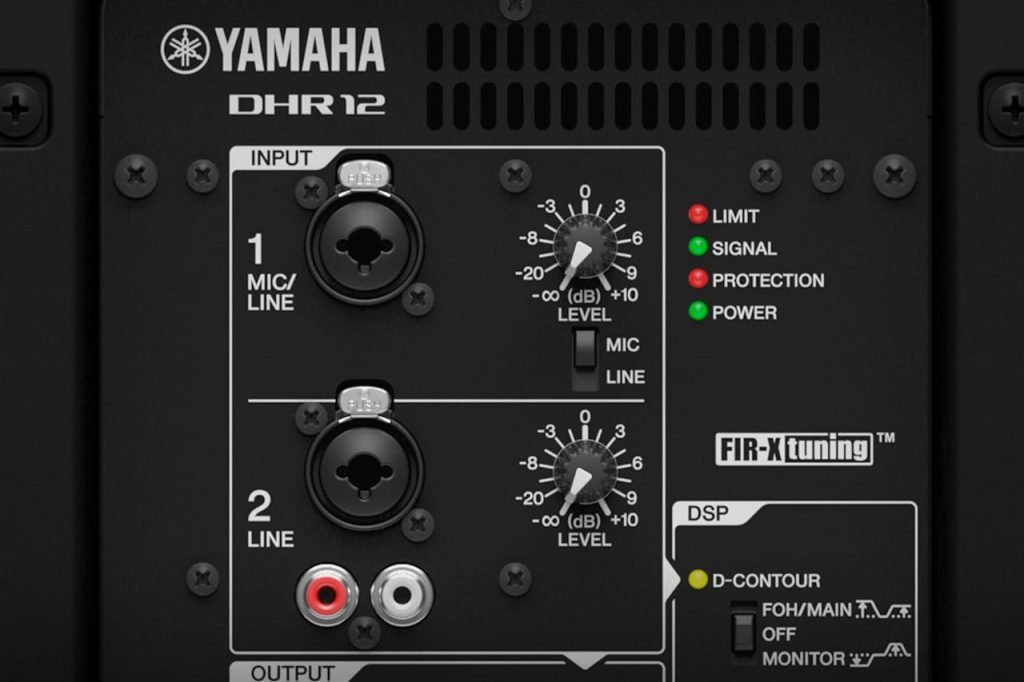
The setup process is straightforward and avoids the over-complication that sometimes plagues modern powered speakers. With a standard power cable, XLR input, and thoughtfully placed controls, Yamaha has kept things practical. There are no distracting lights or unnecessary digital gimmicks on the back panel. You get inputs, outputs, and DSP options that let you quickly adjust for the environment.
The DHR12 works whether you are running a single unit, pairing two for stereo, or integrating into a larger system. The built-in mixer functionality is minimal but effective, giving you the ability to handle a microphone and line-level source without external gear if the situation demands it. For more professional setups, the balanced XLR connections ensure compatibility with mixing consoles, laptops, or audio interfaces. It works as a simple plug-and-play box for small events and fits into more complex sound rigs.
Mounting options also play a big role in the user experience, and Yamaha addressed this with dual pole sockets that allow for straight 0-degree placement or a 7-degree downtilt. That small detail makes a noticeable difference when aiming sound toward an audience instead of wasting energy against ceilings or walls. Add in the integrated rigging points and the DHR12 becomes a speaker that fits on poles, in flown arrays, or as a floor wedge for stage monitoring. The setup choices are wide enough that you do not feel locked into one type of use.
Control runs through Yamaha’s digital signal processing, which comes preloaded with presets to adjust for typical use cases such as speech reinforcement, live performance, or music playback. They adjust EQ and crossover points intelligently, saving time during setup while giving consistent results. For users who prefer full manual control, the DHR12 is transparent enough to let external processors and mixers dictate the sound without adding unwanted coloration.
It is easy enough for a first-time user to get running, and it offers the flexibility seasoned engineers expect.
How well built is the Yamaha DHR12?
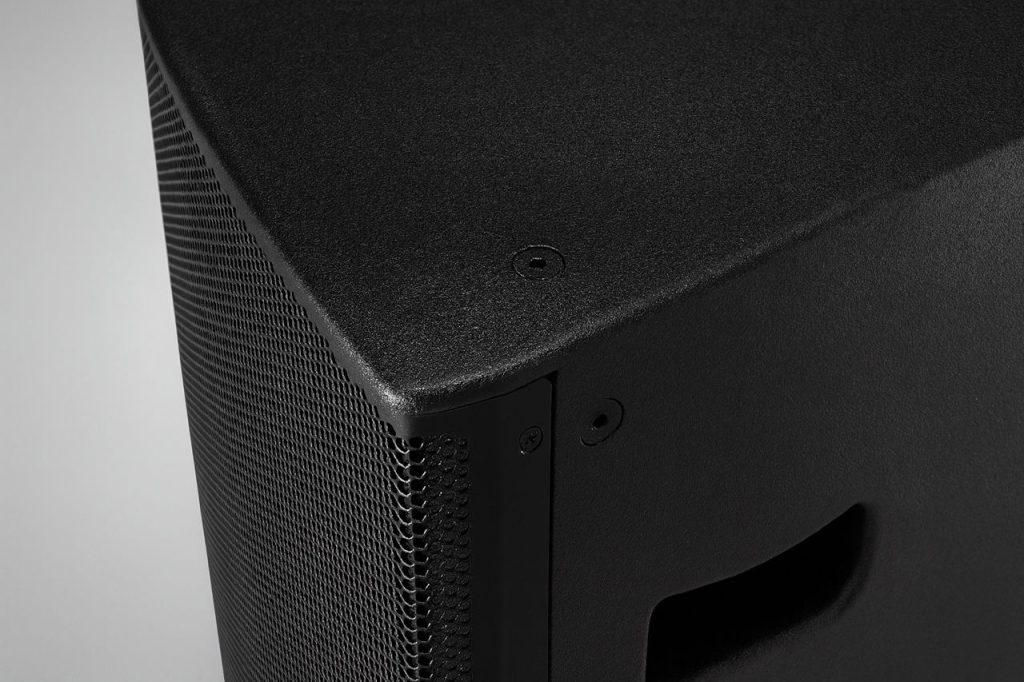
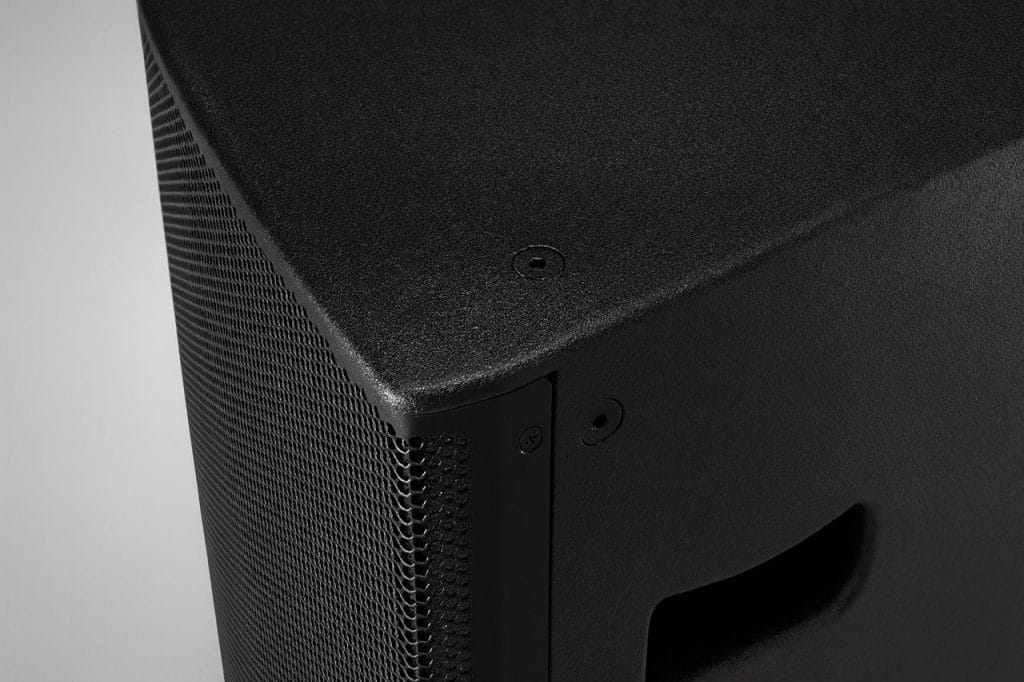
Unlike many speakers in its price range that cut corners with plastic enclosures, the DHR12 uses durable plywood with a polyurea coating. Plywood cabinets resonate less, translating into cleaner sound and improved durability. The polyurea coating adds an extra layer of protection against scratches, bumps, and the general abuse that comes with transport and setup in unpredictable environments. It feels built for the road rather than the showroom.
Weighing in at 49.5 pounds, the DHR12 strikes a balance between rugged construction and manageable portability. It is heavy enough to inspire confidence but not so unwieldy that one person cannot lift and position it. The dimensions (13.4 inches deep, 14.1 inches wide, and 22.8 inches tall) give it a compact footprint for its class, allowing it to fit easily on poles, stages, or in transport cases. The sharp edges, precise finish, and understated matte black design keep it professional-looking without drawing unnecessary attention.
Practicality is evident in the mounting and rigging options. Yamaha built the DHR12 with dual pole sockets that allow for either a straight 0-degree setup or a 7-degree downtilt, which helps audiences hear the mix instead of reflections off the ceiling. For larger setups, integrated rigging points make it easy to fly the speaker as part of an array, while its angled cabinet design means it can also double as a reliable floor monitor.
The hardware and components reinforce Yamaha’s reputation for reliability. The 12-inch woofer and 1.4-inch HF compression driver sit behind a sturdy metal grille that feels solid enough to deflect impact without compromising airflow. Built-in cabinet handles feel ergonomic, ensuring easier lifts and less hand strain when moving the unit. It is not flashy, but it suits constant use and transport.
How does the Yamaha DHR12 sound?
With 1000 watts of Class-D amplification pushing a 12-inch woofer and 1.4-inch compression driver, the DHR12 handles more than casual playback. It offers a wide dynamic range that holds up under stress. Even when driven hard, distortion is minimal, thanks to Yamaha’s integrated digital processing that protects the drivers while keeping output balanced and detailed.
Low frequencies are where many 12-inch speakers either shine or stumble. The DHR12 lands firmly in the first category, delivering tight, responsive bass that is present without overwhelming the mix. It does not attempt to substitute for a subwoofer, but it provides enough punch for small to mid-sized venues when used on its own. In setups that include subs, the DHR12 integrates smoothly, maintaining its clarity in the midrange while letting the dedicated low-end drivers carry the weight. This balance makes it adaptable across different environments, whether used for live bands, DJs, or speech reinforcement.
The midrange is arguably the DHR12’s strongest suit. Vocals, guitars, and keys cut through the mix with natural presence, avoiding the boxy tone that often plagues portable loudspeakers. The high-frequency driver paired with the rotatable 90 x 60 degree horn ensures wide but controlled coverage. Cymbals, synths, and vocal harmonics stay crisp without crossing into harshness, even at higher volumes. The rotatable horn also means you can tailor dispersion for vertical or horizontal mounting, which adds versatility in both live and fixed installations.
Yamaha’s DSP presets further refine the sound. In music mode, the speaker feels lively and full-bodied, making it well-suited for playback and DJ applications. In speech mode, intelligibility takes priority, cleaning up the low end to ensure announcements or spoken word cut through with clarity. For stage monitoring, the wedge position works in tandem with the DSP to reduce feedback while keeping performers connected to their mix.
What features does the Yamaha DHR12 have?
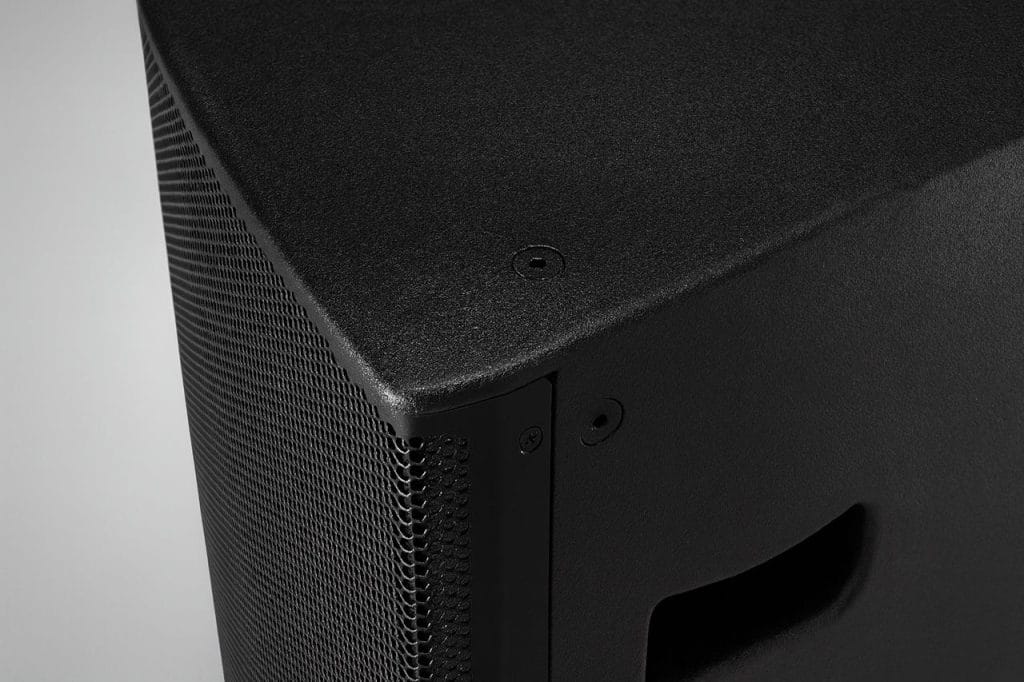
Yamaha kept the DHR12 feature set to what audio professionals actually use.
The centerpiece is its 1000-watt Class-D amplifier, delivering power efficiently without generating excessive heat. Efficiency matters at live events, where reliability comes first. The bi-amped design means the woofer and compression driver each get their own dedicated amplification, ensuring cleaner separation between low and high frequencies. Paired with Yamaha’s digital signal processing, the speaker guards against overloads while maintaining consistent output. You only notice it when pushing the system hard, because it keeps the sound stable.
Another practical feature is the rotatable 90 x 60 degree horn, which allows users to adjust coverage depending on the setup. Whether the DHR12 stands vertically on a pole or lies horizontally as a monitor, you can rotate the horn to maintain proper dispersion. Combined with the dual pole sockets that offer both straight placement and a seven-degree downtilt, this gives users a lot of control over how the speaker projects in different spaces. The integrated rigging points expand those options further, enabling flown installations for venues where pole mounting isn’t enough.
Connectivity is intentionally simple. The DHR12 offers balanced XLR inputs and outputs, ensuring professional-level signal integrity while keeping the setup process fast. It supports direct input from microphones or line-level sources for small, quick gigs, while also working with mixers and larger rigs. For users who want plug-and-play ease, the minimal back panel layout means less confusion and fewer mistakes, especially in live environments where speed counts.
The polyurea-coated plywood enclosure is not just tough but acoustically superior to plastic alternatives. The ergonomic handles make transport manageable despite the nearly 50-pound weight. And the DSP presets (speech, music, monitor) let users adapt without diving into complicated EQ adjustments.
Does the Yamaha DHR12 have a battery, and how does it connect?
Our Yamaha DHR12 Series Powered Speaker review has to be clear on one point up front: this is not a battery-powered speaker. It runs on corded electric power only, which means you get reliability but not portability without an outlet. In professional sound reinforcement, people rarely expect battery operation. For most live performers, DJs, and venues, plugging into a stable power source is a non-issue, especially when the trade-off is consistent output at high wattage.
The DHR12 has balanced XLR inputs and outputs, the standard for professional audio setups. This ensures noise-free connections and compatibility with a wide range of gear, from mixing consoles to laptops and desktop audio interfaces. The presence of both input and output options means the DHR12 can act as a standalone unit or chain into a larger system without fuss. For performers who want to run a microphone or small line-level device directly into the speaker, the built-in input handling makes that possible without requiring extra equipment.
The subwoofer connectivity is wired, which aligns with its role as a professional tool rather than a consumer speaker. When paired with a dedicated sub, the DHR12 slots neatly into a full-range system, allowing the sub to carry the deepest frequencies while the DHR12 maintains clean mids and highs. That lets you expand the system without fighting mismatched components.
While the lack of wireless streaming may seem like a limitation for casual users, the DHR12 does not target Bluetooth playlists at backyard parties. It aims for clarity, control, and adaptability in professional environments. Wireless often introduces latency, interference, and reliability concerns that are unacceptable in live audio contexts. Yamaha avoids those pitfalls by sticking to wired connections that guarantee performance.
How does the Yamaha DHR12 compare with the QSC K12.2, JBL PRX812W and Electro-Voice ZLX-12P?
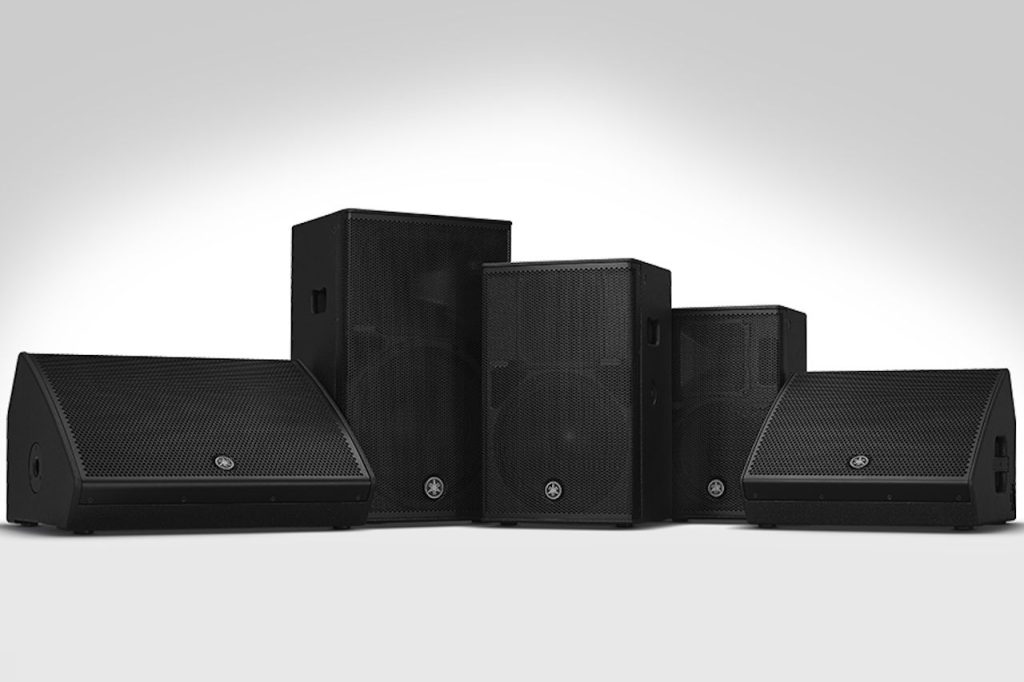
Other 12-inch powered speakers sit in the same price and performance class. Below we compare the DHR12 against three of them: the QSC K12.2, the JBL PRX812W, and the Electro-Voice ZLX-12P, each with a side-by-side features table.
Yamaha DHR12 vs QSC K12.2 Speakers
The QSC K12.2 has long been a benchmark in the powered speaker market, delivering 2000 watts of peak power, built-in DSP, and an excellent reputation for reliability. Compared to the DHR12, the K12.2 offers more raw wattage and a wider feature set, including onboard user presets and a more advanced control panel. However, the Yamaha wins on cabinet construction. The plywood build with polyurea coating gives it a sturdier, more resonance-free sound compared to the QSC’s ABS enclosure. If your priority is maximum output with extensive DSP control, the K12.2 edges ahead. If you value a rugged cabinet and balanced tonality, the DHR12 holds strong.
| Feature | Yamaha DHR12 | QSC K12.2 |
|---|---|---|
| Power Output | 1000W Class-D | 2000W Class-D |
| Woofer Size | 12″ | 12″ |
| HF Driver | 1.4″ | 1.4″ |
| Enclosure | Plywood with Polyurea | ABS Plastic |
| Weight | 49.5 lbs | 39 lbs |
| DSP Presets | Yes (basic modes) | Yes (advanced with user settings) |
| Mounting Options | Pole, rigging, wedge | Pole, rigging, wedge |
| Price | See Price | See Price |
Yamaha DHR12 vs JBL PRX812W Speakers
The JBL PRX812W emphasizes modern connectivity, boasting built-in Wi-Fi control and app-based DSP management. This makes it attractive for users who want remote control over EQ, levels, and presets. By contrast, the Yamaha DHR12 keeps things simple, offering simpler on-board DSP but no wireless functionality. The Yamaha, however, earns its points back in durability and tonal accuracy. The PRX812W, with its wooden cabinet, competes on build quality but weighs slightly more. The JBL suits users who prioritize wireless convenience, while the Yamaha is ideal for those who prefer a straightforward, no-compromise setup.
| Feature | Yamaha DHR12 | JBL PRX812W |
|---|---|---|
| Power Output | 1000W Class-D | 1500W Class-D |
| Woofer Size | 12″ | 12″ |
| HF Driver | 1.4″ | 1.5″ |
| Enclosure | Plywood with Polyurea | Wooden Enclosure |
| Weight | 49.5 lbs | 55 lbs |
| DSP Presets | Yes (basic modes) | Yes (advanced with app control) |
| Wireless Control | No | Yes (Wi-Fi + app) |
| Price | See Price | See Price |
Yamaha DHR12 vs Electro-Voice ZLX-12P Speakers
The Electro-Voice ZLX-12P is one of the most popular budget-friendly powered speakers available. It offers a lightweight plastic enclosure, solid DSP options, and competitive pricing. However, it cannot compete with the Yamaha in build quality or long-term durability. The DHR12’s plywood enclosure, superior drivers, and more professional connectivity options make it a stronger choice for demanding applications. The ZLX-12P works well as an entry-level solution, while the DHR12 clearly targets semi-professional and professional users who need reliability under pressure.
| Feature | Yamaha DHR12 | EV ZLX-12P |
|---|---|---|
| Power Output | 1000W Class-D | 1000W Class-D |
| Woofer Size | 12″ | 12″ |
| HF Driver | 1.4″ | 1.5″ |
| Enclosure | Plywood with Polyurea | ABS Plastic |
| Weight | 49.5 lbs | 34.3 lbs |
| DSP Presets | Yes (basic modes) | Yes (basic modes with LCD) |
| Mounting Options | Pole, rigging, wedge | Pole, wedge |
| Price | See Price | See Price |
Should You Buy the Yamaha DHR12 Series Powered Speaker?
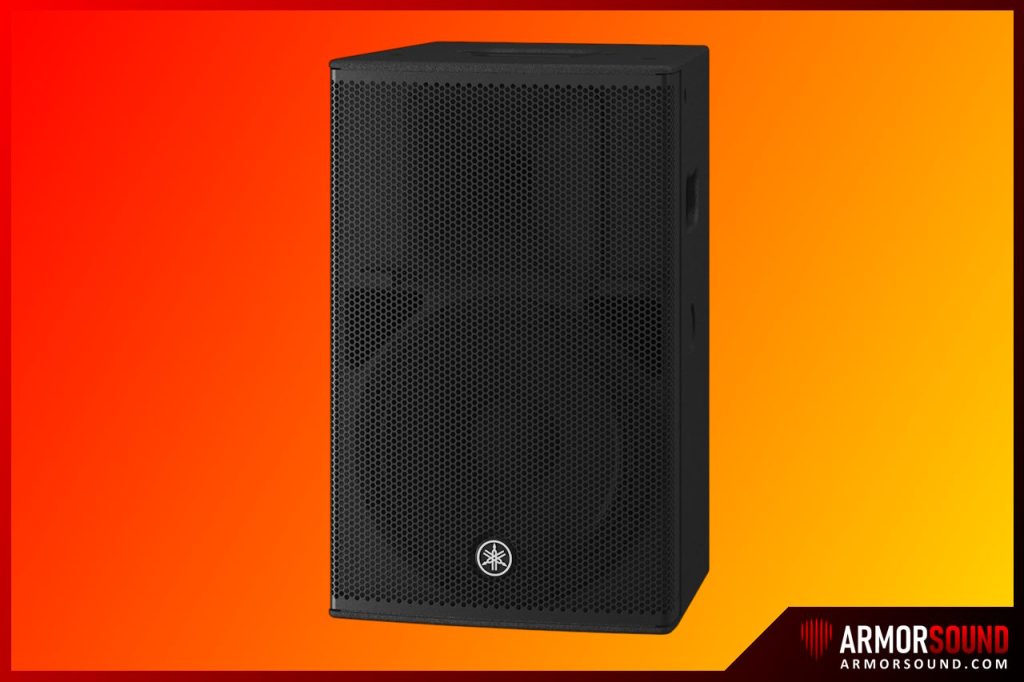
The DHR12 is not a flashy all-in-one speaker. It is a focused tool for musicians, DJs, venues, and audio engineers who want reliable performance, clear sound, and durability that does not quit after a year of heavy use.
For buyers who value sound quality over gimmicks, the DHR12 makes sense. Its low end is tight, its mids are natural, and its highs are crisp without being brittle. The integrated DSP modes simplify operation without locking you into overly colored presets. It may not have wireless control apps or a massive list of onboard effects, but what it delivers is professional-grade consistency. If you want a speaker that you can push hard night after night and trust to sound good, the DHR12 earns that trust.
On the practical side, the plywood cabinet and polyurea coating make it far more durable than the many plastic options flooding the market. At just under 50 pounds, it is not feather-light, but the handles are well-placed, and one person can manage it without too much effort. The dual pole sockets and rigging points let it work in many environments, from small clubs to rehearsal spaces to permanent installs.
Where it falls short is in modern conveniences. No wireless streaming, no remote control apps, and no built-in fancy mixers. If those matter to you, competitors like the JBL PRX812W or QSC K12.2 may feel more attractive. But those conveniences also add complexity and, in some cases, long-term reliability concerns. The Yamaha DHR12 takes a simpler path.
So, should you buy it? If you want a professional-grade powered speaker that delivers accurate sound, resists damage, and fits into live or studio setups, the Yamaha DHR12 is a strong choice.
You can buy the Yamaha DHR12 Series powered speaker here on Amazon.
Frequently Asked Questions
Quick answers to common questions about the DHR12.
What is the Yamaha DHR12 Series Powered Speaker best used for?
The DHR12 excels in live performance environments such as small to mid-sized venues, rehearsal studios, DJ setups, and event spaces. Its tight bass, clean mids, and clear highs make it a versatile tool that adapts well to reinforcing vocals, running a DJ set, or using it in a multi-speaker PA system.
Does the Yamaha DHR12 have wireless or Bluetooth connectivity?
No, it does not. The DHR12 is wired only, using XLR connections. This is by design, since wireless streaming can introduce latency, interference, and reliability issues that are unacceptable in professional live sound.
How much power does the Yamaha DHR12 deliver?
It provides 1000 watts of continuous Class-D power. The bi-amped design splits that power between the woofer and high-frequency driver, ensuring each driver operates efficiently without distortion, even at high volumes.
Is the Yamaha DHR12 waterproof or weather-resistant?
The DHR12 is not waterproof. It is a professional indoor/outdoor speaker that needs protection from rain and moisture. Using it outdoors is fine as long as you shelter it or make it part of a properly weatherproofed setup.
What makes the Yamaha DHR12’s enclosure special?
Its plywood construction with a polyurea coating gives it strength and acoustic benefits that plastic cabinets cannot match. The plywood keeps resonance under control for a cleaner sound, while the coating protects it from scratches and transport wear.
Can I use the Yamaha DHR12 as a floor monitor?
Yes. Its angled cabinet design lets you position it on stage as a wedge monitor. Combined with Yamaha’s DSP “monitor mode,” it reduces feedback while keeping vocal and instrument clarity intact for performers.
How portable is the Yamaha DHR12?
At 49.5 pounds, it is moderately heavy but still manageable for one person to carry. The ergonomic handles make lifting less awkward, and the size allows it to fit easily in vehicles or storage cases.
What kind of DSP options does the Yamaha DHR12 provide?
The DHR12 offers preset modes tailored to speech, music, and monitor use. Each preset adjusts EQ and crossover behavior for its specific role, saving setup time and making the speaker flexible in different applications.
How does the Yamaha DHR12 compare to the QSC K12.2 and JBL PRX812W?
The QSC offers higher peak wattage and advanced DSP with user-defined controls. The JBL includes app-based wireless management. The Yamaha trades those extras for a stronger cabinet design, straightforward operation, and a focus on tonal accuracy, making it a long-term reliable option.
What warranty does the Yamaha DHR12 come with?
Yamaha backs the DHR12 with a 7-year manufacturer’s warranty. This is one of the longest warranties in its class.
What do the Yamaha DHR12's specs mean at a gig?
The DHR12's numbers show how easy it is to move, how you can aim it and how long Yamaha backs it.
- At 49.5 pounds, one person can lift and position it using the built-in handles.
- It measures 13.4 inches deep, 14.1 inches wide and 22.8 inches tall, so it fits poles, stages and cases.
- The 90 x 60 degree horn rotates to keep coverage right on a pole or as a monitor.
- The 7-degree downtilt aims sound at the audience instead of the ceiling.
- The 7-year manufacturer's warranty is one of the longest in its class.