Subwoofer prices move quickly, and an old “under $300” list can quietly become a list of unavailable or over-budget products. As checked on September 12, 2026, two current US listings clear the cap with exact-model evidence: the Dayton Audio CS1200 Wood at $239.98 from Parts Express and the Polk Audio PSW10 at $209 from Polk. They are not interchangeable. Dayton offers a larger cabinet, more amplifier power on paper, and high-level as well as line-level connections. Polk is lighter, cheaper, and easier to place, but its compact design and input layout make it a different fit.
Table of Contents
Short Verdict: Two Different Budget Jobs
| Best for a larger, flexible setup | Dayton Audio CS1200 Wood: 12-inch driver, 200 W RMS, LFE and high-level connections |
|---|---|
| Best for a smaller room | Polk Audio PSW10: lighter 10-inch design, lower current price, compact footprint |
| Current price check | Dayton $239.98 at Parts Express; Polk $209 on Polk's US page, both checked September 12, 2026 |
| Important caution | Prices and stock can change; the old RSL $299 figure is no longer current |
There is no honest reason to call one the universal winner. The Dayton's extra size and connections help if you are integrating older equipment or want more headroom on paper. The Polk is more practical when the subwoofer has to fit beside furniture and the system does not need high-level pass-through. Start with the receiver's output and the room, not the driver-size number on a shopping page.
How the Under-$300 Filter Was Applied
The price is a current US snapshot, not a lifetime promise. Parts Express listed the Dayton at $239.98 with a $299.99 MSRP, but the same page exposed both an in-stock/ships-next-business-day state and a conflicting “Get Notified When Available” block. The Polk page showed $209 with a $249 MSRP. Confirm the final cart total, shipping, return terms, and stock before ordering. A model that was $299 last year but is now $339 does not qualify simply because old search snippets still show the earlier number.
The list also requires an exact model identity and enough documentation to explain the tradeoffs. Manufacturer pages supply dimensions, inputs, warranty, and rated performance. Independent sources help interpret those numbers. Recent owner discussion is useful for spotting questions, but the current exact-model social sample was too thin to support reliability or sound-quality consensus. That is why this guide contains two defensible picks rather than padding the page with a nominal third choice.
Dayton Audio CS1200 Wood: Best for Flexible Connections
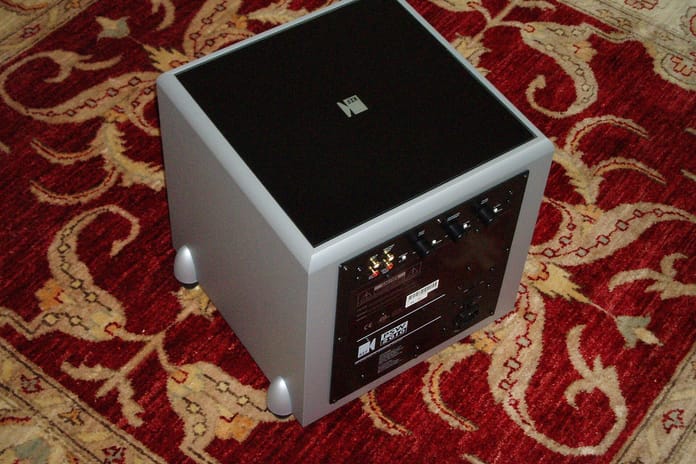
Parts Express listed the exact CS1200 Wood at $239.98 when checked, but its page showed both an in-stock/ships-next-business-day state and a conflicting availability-notification block. Verify stock at checkout. Dayton's CS1200 specification page lists a 12-inch driver, 200 W RMS Class-D amplifier, 26–200 Hz rated frequency range, 15.5 x 18 x 16.37-inch dimensions, and 38.76-pound weight. The five-year warranty is unusually useful at this price, although warranty coverage is not the same as guaranteed room performance.
The CS1200's connection choices are its clearest advantage. It has stereo RCA and LFE line-level connections plus high-level spring terminals and pass-through. That gives it a path into a modern home-theater receiver and into some older integrated or stereo systems that do not provide a dedicated subwoofer output. Check the amplifier's manual before wiring high-level inputs; do not assume every spring terminal layout or crossover behavior is identical.
Pragmatic Audio's exact CS1200 Wood review describes four weeks of use in a 2.1 system and reports extension toward the rated 26 Hz. A separate exact-model teardown and amplifier-dyno video provides additional technical context. These are independent sources, not a standardized prediction of every room's response, and Pragmatic Audio's €329 European price cannot replace the verified US price. The practical reading is that the Dayton is a substantial, furniture-sized box for the money, not a tiny sub that disappears under a desk.
Choose the Dayton if the cabinet can fit and you need input flexibility, a larger driver, or a full five-year warranty. Measure first: nearly 39 pounds is inconvenient to move, and the 18-inch depth can make placement beside a media console harder than the price suggests.
Polk Audio PSW10: Best for a Smaller Budget Setup
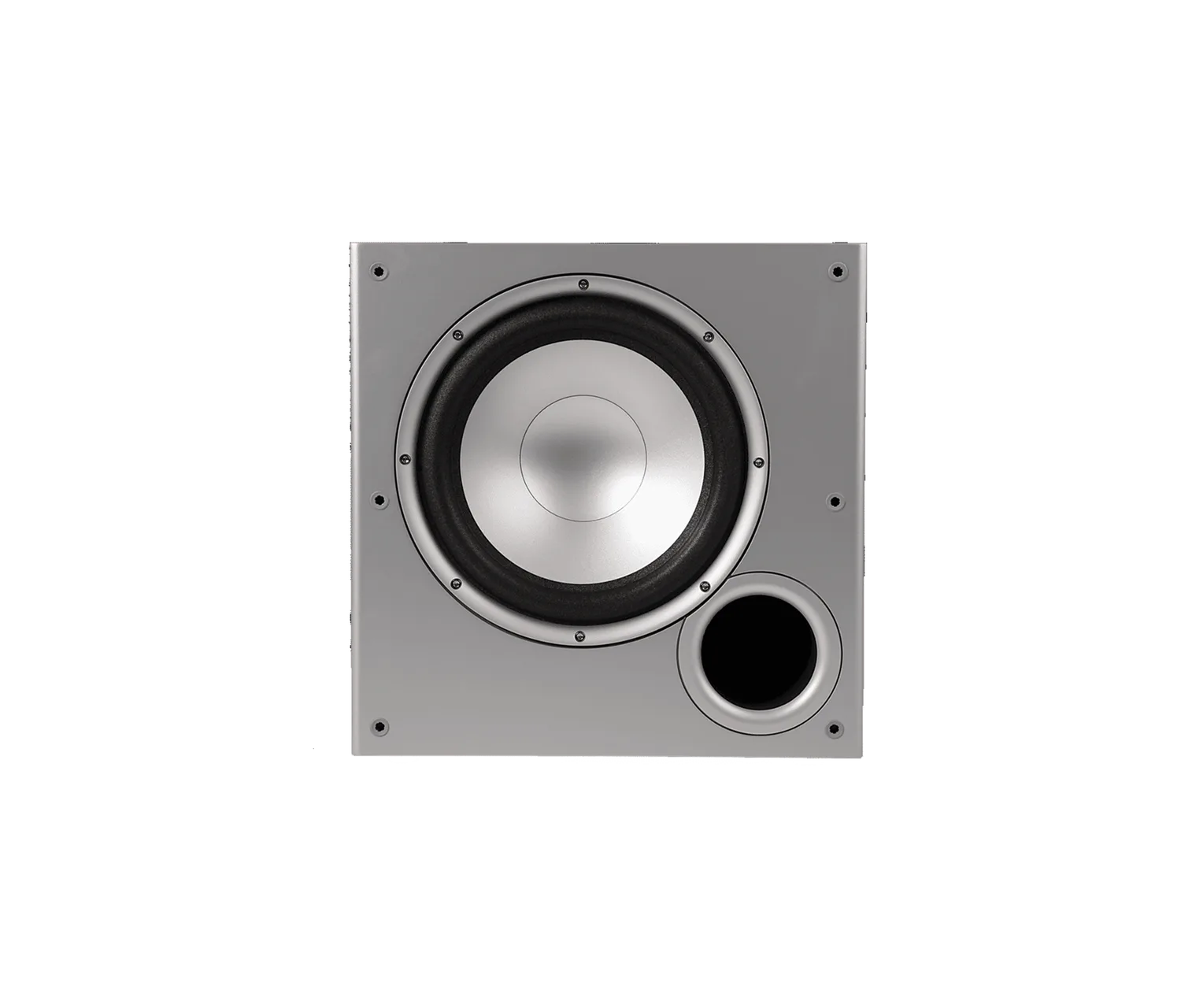
Polk's US page showed the exact PSW10 at $209 and in stock at the capture date. Polk identifies a front-firing 10-inch Dynamic Balance polymer-composite driver, 26-pound weight, stereo RCA line-level inputs, and speaker-level spring terminals. The listed warranty is five years for the speaker and three years for the amplifier. Those details make it easier to justify in a small or medium system where a lighter cabinet and lower price matter more than maximum extension.
The independent picture is more restrained than a retailer headline. Perfect Acoustic's exact PSW10 review reports 50 W RMS, a 40–160 Hz stated range, and a compact cabinet suited to small and medium rooms. It also says the model does not have a direct LFE input. An exact-model video review discusses the PSW10's 50 W RMS/100 W dynamic ratings and front port. Treat that input point as a connection warning to verify against the actual rear panel and your receiver: the official page lists RCA and speaker-level inputs, but buyers should not assume an RCA jack automatically behaves like a dedicated LFE input.
An older Audioholics forum thread includes an owner who found the lowest frequencies muddy and the upper bass tighter. The thread is anecdotal, old, and explicitly lacks controlled measurements. Use it as a reason to keep expectations realistic, not as proof that every PSW10 sounds the same.
Choose the Polk when the subwoofer needs to stay affordable and reasonably easy to move. It is a sensible small-room candidate, but do not buy it to fill a large open plan with cinema-level bass. The dedicated PSW10 review goes deeper into the model, while this guide keeps the focus on the under-$300 choice.
Room Size, Placement, and Expectations
Room size is not determined by the woofer diameter alone. Open doorways, listening distance, main-speaker crossover, room gain, and placement all change the result. A compact sub can be satisfying near a desk or in a smaller enclosed room while sounding underpowered in a large open living room. The independent PSW10 coverage specifically narrows its sensible use to small or medium rooms; the larger Dayton cabinet offers more specification headroom but is not a guarantee of uniform bass everywhere.
Start near the front wall, play familiar bass passages, and adjust location rather than immediately turning the level up. Avoid sealing the port or placing the cabinet where you cannot reach its controls. The Dayton's 18-inch depth and Polk's smaller footprint should be part of the room decision. If the sub has to sit under a desk, check clearance and vibration before choosing by price.
Do not sell either model as a magic fix for boomy bass. A subwoofer adds energy below the main speakers; integration still depends on crossover, phase, level, and listening position. If your receiver has an automatic setup routine, run it and then confirm that the resulting level sounds sensible with familiar content.
Inputs, Controls, Warranty, and Compatibility
For a home-theater receiver with a dedicated subwoofer output, you can consider either model, subject to the rear-panel connection details. The Dayton is the more forgiving choice for mixed equipment because its documentation explicitly includes LFE, stereo RCA, and high-level terminals. Polk's RCA and speaker-level inputs can work well, but the independent input caveat means you should verify whether your receiver's output and the PSW10's available controls meet your intended setup.
Warranties are another practical separator. Dayton lists five years, while Polk lists five years for the driver and three for the amplifier. Keep the invoice and check regional terms. A warranty does not cover every installation mistake, and online marketplace stock may not carry the same support as an authorized seller.
Popular Models That Did Not Make the List
The RSL Speedwoofer 10E is a strong comparison product with favorable independent coverage, but RSL's current page showed $339 when checked. It is not an under-$300 pick today. Monoprice's current SW-12 listing was also above the cap. Dayton's older SUB-1200 appeared at $239.98, but the exact Parts Express listing was out of stock, so do not present it as an immediately available recommendation.
These exclusions are intentional. If one returns to stock or falls below the limit, recheck the exact model, warranty, shipping, and independent evidence before adding it. “Under $300” is a changing filter, not a permanent product category.
How to Choose Between the Two
Pick the Dayton Audio CS1200 Wood if you have floor space, want high-level input flexibility, and prefer the larger 12-inch/200 W RMS specification. Pick the Polk PSW10 if you want the lighter, cheaper option for a smaller room and can confirm the available input path works with your equipment. If neither description matches, save for a model with stronger current independent measurements instead of forcing a budget purchase into the wrong room.
Our complete subwoofer guide explains crossover and placement in more depth. For a compact system, compare the Audioengine S8 review as well, but do not assume it meets this guide's current $300 price filter without checking its live listing.
Frequently Asked Questions
What is the best powered subwoofer under $300?
As checked September 12, 2026, the Dayton Audio CS1200 Wood and Polk Audio PSW10 were the two verified current US options in this guide. The better choice depends on room, inputs, and cabinet size.
Does the Dayton CS1200 have an LFE input?
Dayton's official specifications list LFE and stereo RCA line-level connections, along with high-level spring terminals.
Is the Polk PSW10 good for a large room?
Independent coverage positions the PSW10 for small or medium rooms. Large open rooms can demand more output and extension than this compact model can provide.
Are these prices guaranteed?
No. The prices and stock are dated snapshots. Confirm the retailer's current price, shipping, return policy, and warranty before checkout.