This Sony MDR-MV1 Open-Back Reference Monitor Headphones review focuses on a studio-grade monitoring tool designed for engineers and creators who demand accuracy above all else. Sitting firmly in the professional audio category, the MDR-MV1 supports critical listening tasks such as mixing, mastering, and immersive or spatial audio production, where tonal balance and precise imaging directly affect final results.
The intended audience for the Sony MDR-MV1 review includes studio mixing engineers, mastering engineers, sound designers, and immersive audio creators working in stereo, binaural, or spatial formats. These headphones are not aimed at casual listening or portable use. Instead, they replicate a speaker-based monitoring environment as closely as possible within a headphone format, making them suitable for both professional studios and high-end home studio setups.
Within its category, the Sony MDR-MV1 sits as a modern open-back studio reference headphone, competing with other industry-standard open-back models used for critical monitoring. Its low 24-ohm impedance allows easy pairing with professional audio interfaces and mixing consoles, while still maintaining reference-level performance and headroom. It is one of the top best open back monitor headphones right now.
Table of Contents
Key Highlights
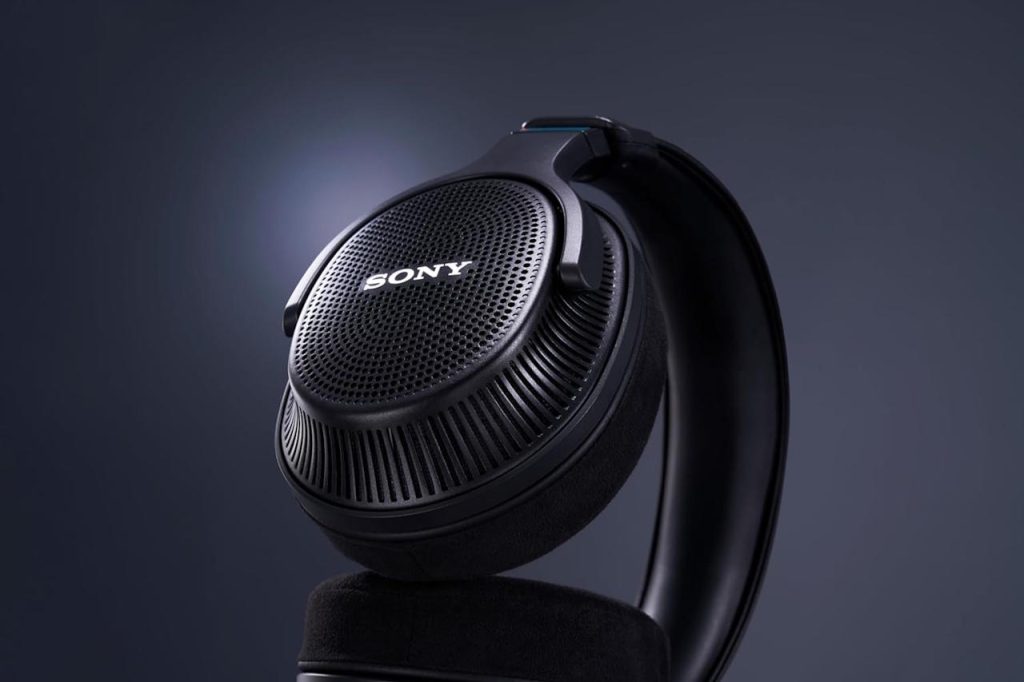
Rather than focusing on consumer-oriented extras, the MDR-MV1 prioritizes acoustic accuracy, spatial realism, and long-session comfort, all of which are critical for mixing, mastering, and immersive audio production.
Its open-back acoustic architecture delivers a wide, speaker-like soundstage with precise imaging. This design supports accurate spatial placement and depth perception, making the headphones particularly effective for immersive and spatial audio workflows. The newly developed 40 mm dynamic drivers aim for neutrality and balance, which helps mixes translate reliably across different playback systems.
The ultra-wide 5 Hz to 80 kHz frequency response allows engineers to hear subtle details, air, and transients that are often masked on narrower-range headphones. Combined with a lightweight aluminum alloy frame and breathable suede ear pads, the MDR-MV1 maintains consistent comfort and sonic accuracy during extended studio sessions.
Key Features at a Glance
- Open-back reference monitor headphones designed for mixing and mastering
- 40 mm dynamic drivers optimized for spatial and immersive audio
- Ultra-wide 5 Hz–80 kHz frequency response for high-resolution monitoring
- Wide, speaker-like soundstage with accurate imaging
- Lightweight aluminum alloy construction for long studio sessions
- Soft suede ear pads for breathable, fatigue-free comfort
- Detachable professional cable with secure connectors
Design & Build Quality
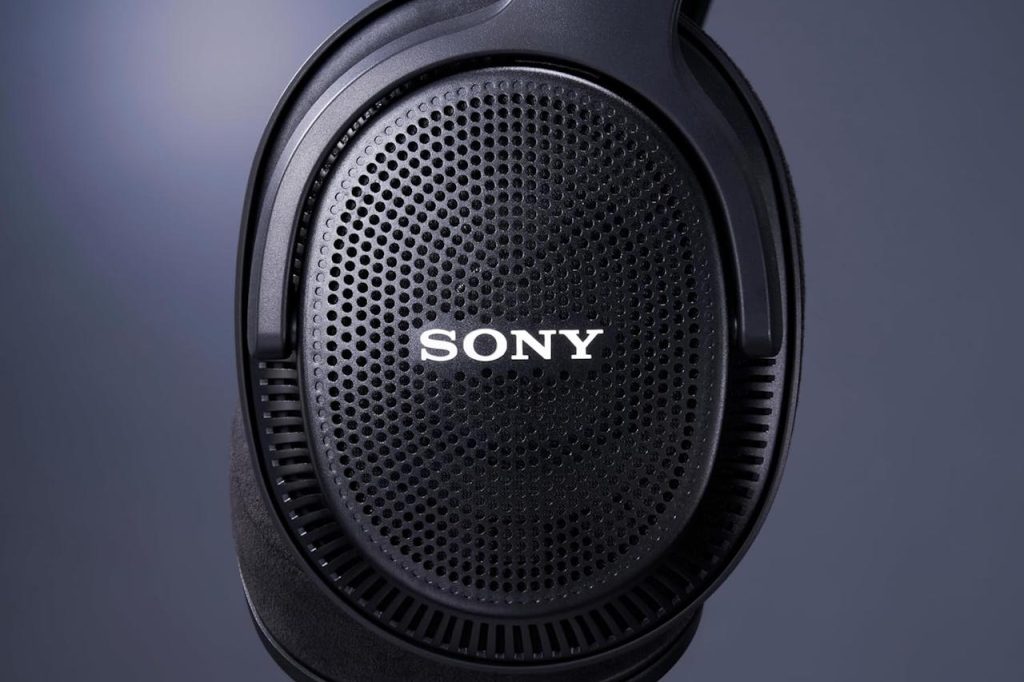
Sony’s approach here is utilitarian. Every design decision favors durability, comfort, and acoustic performance over visual flair.
Overall Aesthetic
The visual design of the Sony MDR-MV1 is clean, restrained, and unmistakably professional. The open-back ear cups feature a functional grille design that emphasizes airflow and acoustic transparency rather than decorative styling. The aluminum finish reinforces a studio-grade appearance, and it fits into both commercial and home studios.
The use of aluminum alloy across key structural components helps keep the overall weight low while maintaining rigidity. There are no flashy color options or lifestyle accents here, only a neutral, purpose-built finish.
Construction & Durability
From a structural standpoint, the MDR-MV1 handles daily studio use. The aluminum frame provides consistent clamping force without flexing, while the headband mechanism offers smooth adjustment with minimal wear points. The open-back ear cups feel solid and well-integrated into the frame, with no creaking or looseness during handling.
Long-term durability is further supported by the detachable cable system, which reduces strain on internal connectors and allows easy replacement if needed. This modular approach adds practical longevity, especially for engineers who rely on their monitoring headphones daily.
Comfort & Fit
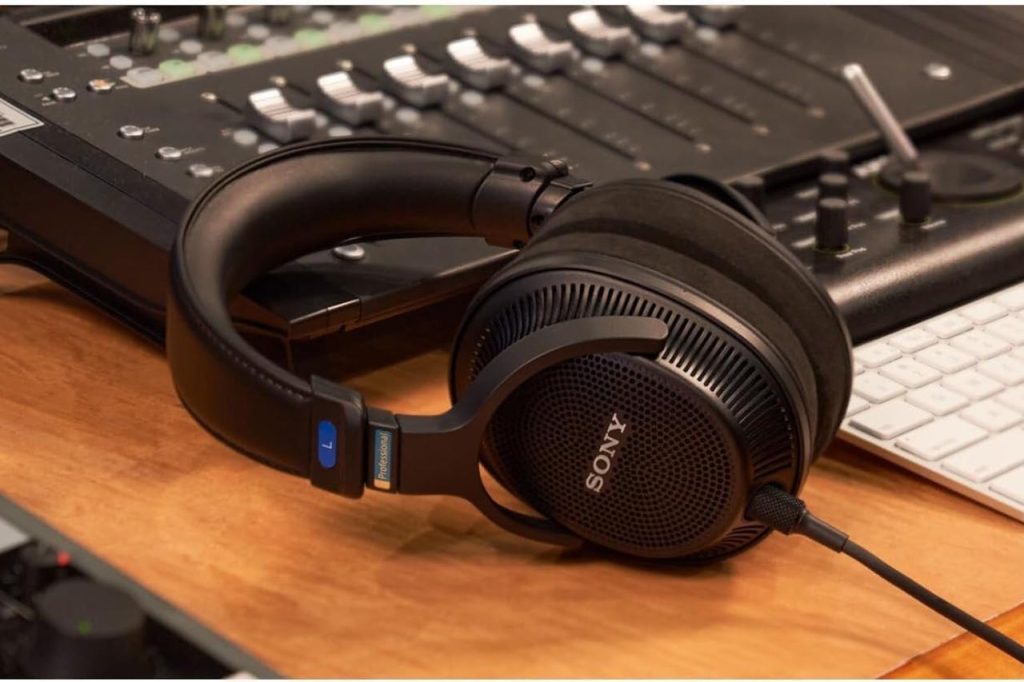
Engineers spend hours mixing, mastering, or working in immersive audio environments. Sony designed the MDR-MV1 to remain stable and comfortable over long sessions without introducing pressure fatigue or heat buildup that could compromise focus or listening accuracy.
Headband & Clamping Force
The headband system on the Sony MDR-MV1 provides a balanced combination of adjustability and stability. The adjustment range accommodates a wide variety of head sizes, while the clamping force keeps the headphones securely in place without feeling restrictive. The lightweight aluminum frame spreads the weight effectively, preventing pressure hotspots at the crown of the head.
The low weight is most noticeable during extended sessions. Even after several hours of continuous use, the headphones maintain a consistent fit without the gradual discomfort that heavier studio models can introduce.
Ear Cushions & Wearability
The ear cushions use soft suede for breathability and skin comfort. Unlike synthetic leather pads that can trap heat, the MDR-MV1’s suede cushions promote airflow, reducing moisture buildup during long mixing or mastering sessions. This is further enhanced by the open-back design, which allows heat to dissipate naturally.
From a wearability standpoint, the ear pads provide a stable seal around the ears without excessive pressure, supporting consistent monitoring accuracy. Breathable materials, controlled clamping force, and open-back airflow suit long, uninterrupted studio work where comfort directly impacts performance.
Driver & Acoustic Architecture
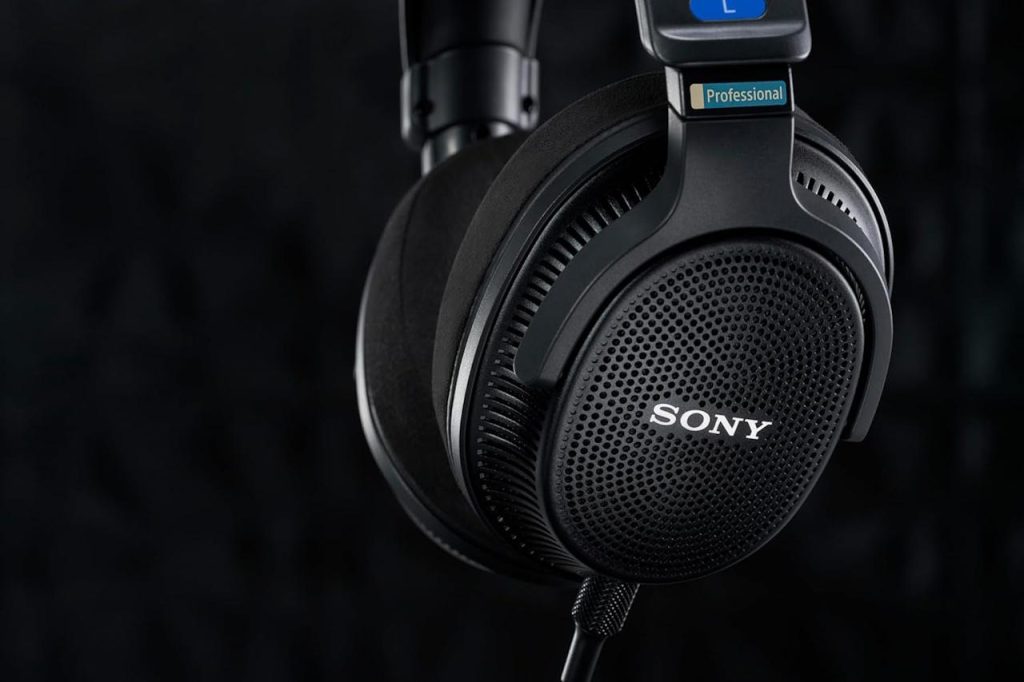
Sony’s focus here is on delivering a natural, speaker-like monitoring experience that supports accurate mixing, mastering, and immersive audio production without introducing artificial coloration.
Driver Type & Size
The Sony MDR-MV1 uses newly developed 40 mm dynamic drivers specifically tuned for open-back studio monitoring. Unlike consumer-oriented drivers that often emphasize bass or treble, these drivers aim for balance and precision. The driver tuning prioritizes linear frequency response and transient accuracy, allowing engineers to hear subtle changes in EQ, compression, and spatial placement.
The physical driver configuration supports fast response and controlled diaphragm movement, which is essential for resolving fine detail in high-resolution audio formats. This design choice reinforces the MDR-MV1’s role as a reference headphone rather than a casual listening device.
Internal Acoustic Design
The open-back acoustic structure is the defining element. By eliminating a sealed enclosure, Sony reduces internal reflections and resonance, resulting in cleaner decay and more natural spatial cues. This approach directly contributes to the wide soundstage and accurate imaging that are critical for immersive and spatial audio workflows.
The open-back design also enhances low-frequency realism by avoiding the pressure buildup commonly found in closed-back headphones. Bass reproduction remains tight and controlled, supporting accurate monitoring rather than exaggerated impact. Combined with the driver tuning, the MDR-MV1’s acoustic architecture delivers a transparent listening environment that closely mirrors nearfield studio monitors.
Sound Performance

The MDR-MV1 is a precision monitoring tool. Rather than tailoring the sound for enjoyment or impact, Sony has focused on accuracy, balance, and spatial realism to support professional mixing, mastering, and immersive audio production.
Bass Response
The bass response on the Sony MDR-MV1 is controlled, linear, and intentionally uncolored. Sub-bass extension is present without exaggeration, so you can monitor low-frequency elements accurately rather than hear them emphasized. Bass notes remain tight and well-defined, making it easier to judge kick drum weight, bass guitar balance, and low-end cleanliness in a mix.
Because of the open-back design, low frequencies do not benefit from enclosure reinforcement, which means impact is secondary to accuracy. This tuning helps prevent overcompensation during mixing and supports reliable translation to speaker systems.
Midrange Performance
The midrange is where the Sony MDR-MV1 excels. Vocals, guitars, and midrange instruments come through with clarity and natural tonality, so you hear subtle EQ adjustments immediately. The midrange presentation feels transparent and unmasked, making it easier to detect congestion, harshness, or imbalance in complex arrangements.
Instrument separation is strong, even in dense mixes, which supports confident decision-making during both mixing and mastering stages.
Treble Performance
Treble is detailed and extended, reaching well beyond the limits of standard audio bandwidth. The 5 Hz to 80 kHz frequency range allows the MDR-MV1 to reproduce air, shimmer, and transient detail without introducing sharpness or fatigue. This helps when working with high-resolution audio or spatial mixes that rely on subtle high-frequency cues.
High frequencies remain smooth and controlled, reducing listening fatigue during long sessions.
Soundstage & Imaging
The open-back architecture produces a wide and natural presentation with clear left-to-right separation and convincing depth. Spatial placement is precise, making it easier to position elements accurately in both stereo and immersive mixes.
For spatial and immersive audio production, the MDR-MV1 delivers speaker-like localization cues that help bridge the gap between headphone monitoring and studio monitor playback.
Connectivity & Inputs
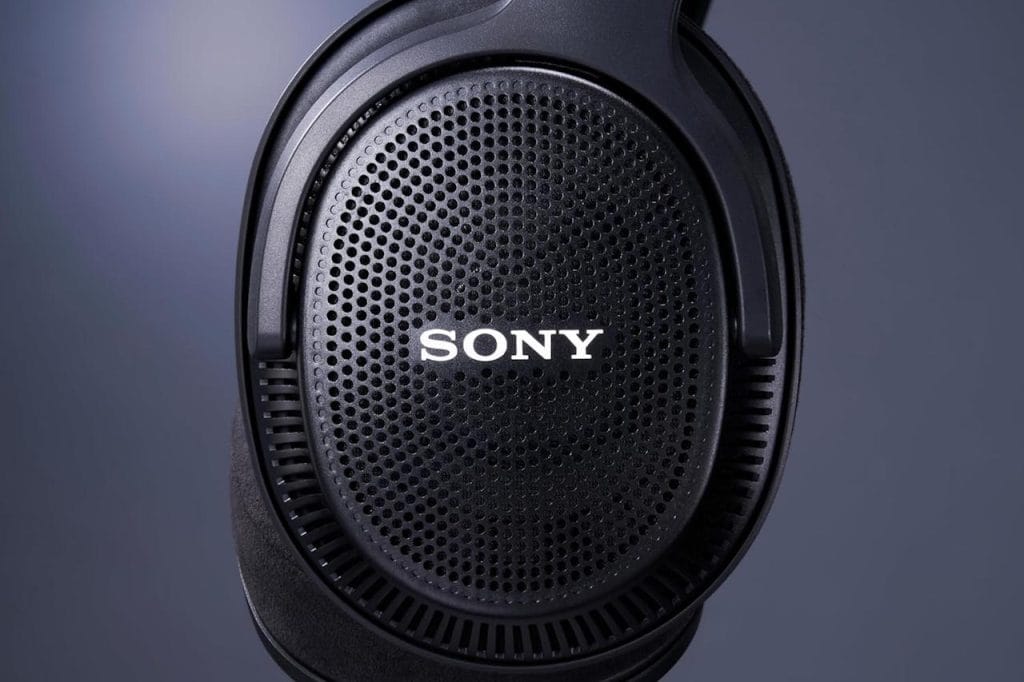
Connectivity is deliberately straightforward. Sony focuses on reliability, signal integrity, and compatibility with a wide range of studio equipment.
Wired Connectivity
The Sony MDR-MV1 is a wired-only headphone, which is exactly what most professionals expect from a reference monitoring solution. It features a detachable cable designed for studio use, allowing easy replacement and reducing long-term wear on the headphone’s internal connectors. This modular approach improves durability and minimizes downtime in professional environments.
The included cable terminates in a standard mini-jack connector, with a bundled adapter to ensure compatibility with audio interfaces, mixing consoles, headphone amplifiers, and desktop audio equipment. The low 24-ohm impedance is practical because a wide range of professional interfaces can drive the headphones efficiently without requiring a dedicated high-power headphone amplifier.
Signal stability and consistency are strong, with no reliance on batteries, wireless compression, or digital processing. This ensures a clean, unaltered signal path, which is essential for critical listening, accurate monitoring, and confident mixing and mastering decisions.
Features & Controls
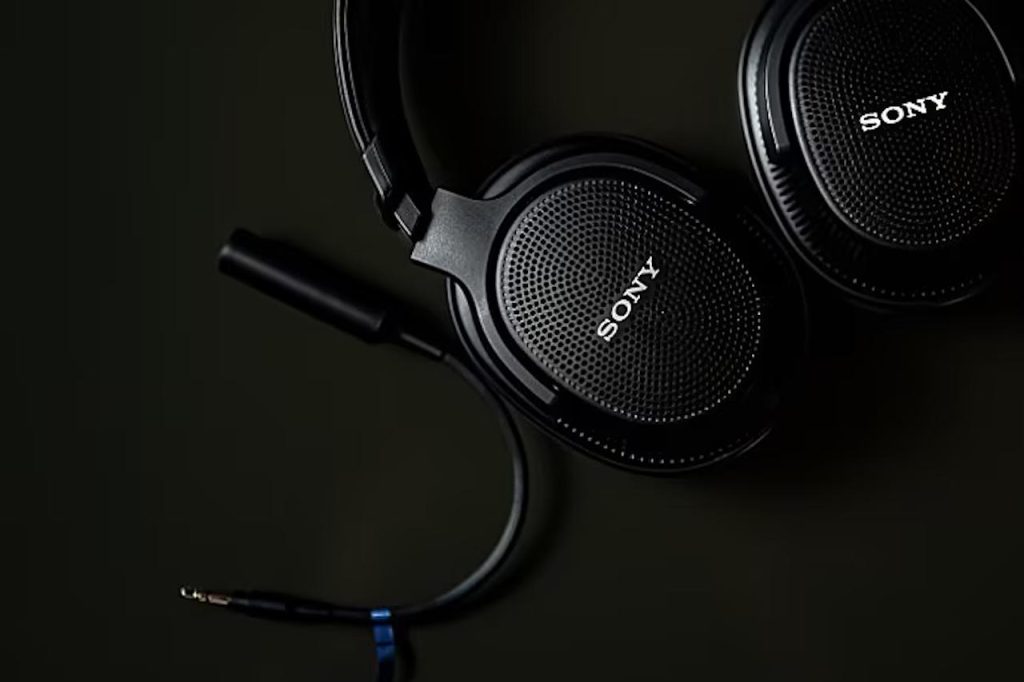
Sony has taken a minimalist, performance-first approach. Rather than adding consumer features or onboard controls, the MDR-MV1 preserves signal purity and maintain a consistent reference response for professional monitoring.
Physical Design Focus
The Sony MDR-MV1 does not include physical buttons, touch controls, or inline remotes. This is an intentional design choice. By eliminating onboard controls, Sony reduces potential signal interference and mechanical failure points. The absence of controls marks it as a studio reference tool rather than a lifestyle headphone.
Reference-Grade Acoustic Tuning
Instead of software-based EQ or app support, the MDR-MV1 relies on precise acoustic tuning at the driver and enclosure level. The neutral frequency balance delivers consistent results across different studio environments. This approach ensures that what you hear through the headphones closely matches speaker-based monitoring systems, which is essential for accurate mixing and mastering.
Open-Back Pressure Management
Pressure management is one of the most practical features. The open-back design allows air to move freely around the drivers, reducing ear pressure and minimizing listening fatigue. This contributes directly to long-session comfort and helps maintain consistent perception of dynamics and balance over time.
High-Resolution Monitoring Capability
With support for an ultra-wide frequency response, the MDR-MV1 is well suited for high-resolution audio production. Subtle transient details, harmonic overtones, and spatial cues stay intact without reliance on digital enhancement. This feature is particularly valuable for immersive and spatial audio workflows where precision is critical.
Studio-Optimized Impedance Design
The low 24-ohm impedance is a functional feature that improves usability across professional setups. This allows the headphones to perform consistently when connected to audio interfaces, mixing consoles, and desktop monitoring chains, without demanding excessive output power or specialized amplification.
Product Comparison
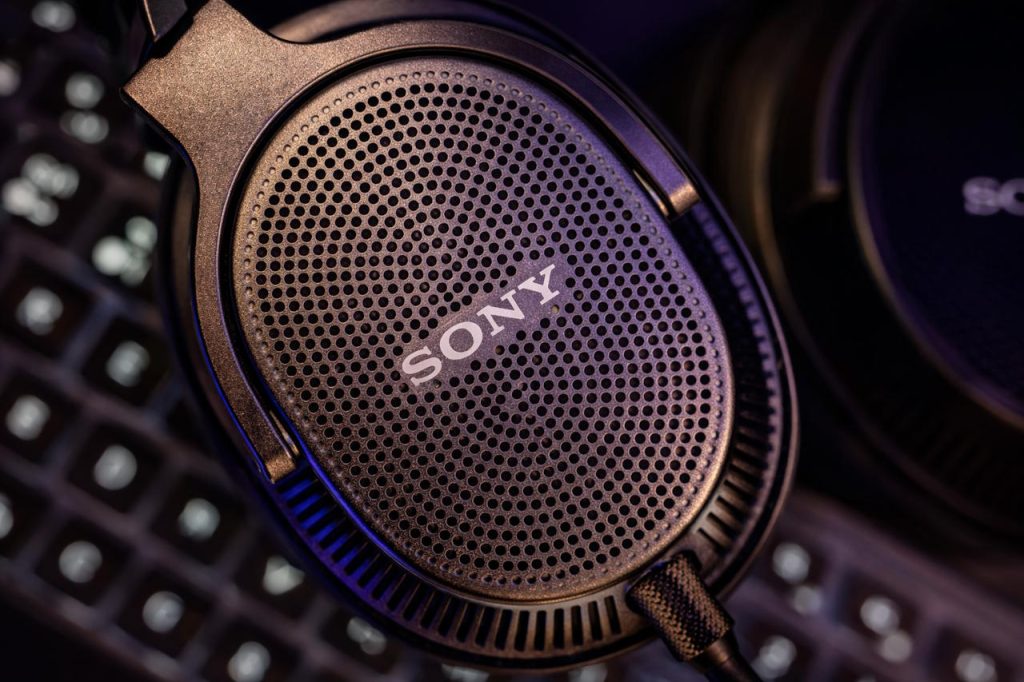
This section compares the MDR-MV1 against established open-back studio headphones commonly used for mixing and mastering. Each comparison covers tuning, specifications, drivability, comfort, and workflow suitability.
Sony MDR-MV1 vs Sennheiser HD 600
The Sennheiser HD 600 has long served as a benchmark for neutral midrange reproduction and tonal honesty in studio and audiophile environments. Its sound signature is balanced and natural, particularly in the mids, which makes it popular for vocal and acoustic work. However, its narrower perceived soundstage and higher impedance place it firmly in traditional stereo monitoring workflows.
The MDR-MV1 has a more expansive and spatially accurate presentation. Sony’s open-back acoustic design produces greater width and depth, allowing for more precise placement of elements across the stereo field. This becomes especially relevant for immersive and spatial audio production, where the HD 600’s more intimate imaging can feel constrained.
Another critical difference lies in drivability. The HD 600’s 300-ohm impedance typically requires a dedicated headphone amplifier to perform at its best, whereas the MDR-MV1’s 24-ohm impedance works efficiently with modern audio interfaces and mixing consoles. This makes the Sony more adaptable in contemporary studio setups without additional amplification.
| Feature | Sony MDR-MV1 | Sennheiser HD 600 |
|---|---|---|
| Design | Open-back reference | Open-back reference |
| Frequency Range | 5 Hz–80 kHz | ~12 Hz–40 kHz |
| Impedance | 24 Ω | 300 Ω |
| Soundstage | Wide and spatial | Intimate and centered |
| Spatial Audio Suitability | High | Limited |
| Weight | Lightweight | Moderate |
| Amp Requirement | Low | High |
| Price | See Price | See Price |
Sony MDR-MV1 vs Beyerdynamic DT 1990 Pro
The Beyerdynamic DT 1990 Pro delivers highly detailed, analytical sound and Tesla driver technology. It excels at exposing fine detail, making it a popular choice for precision editing and analytical listening. However, its treble-forward tuning can sound sharp to some users, particularly during long sessions.
In contrast, the MDR-MV1 has a smoother, more evenly balanced treble response. While both headphones deliver excellent detail, the Sony prioritizes long-term listening comfort and spatial coherence over sheer analytical intensity. This results in less fatigue during extended mixing or mastering sessions.
Comfort is another differentiator. The DT 1990 Pro is noticeably heavier and applies a firmer clamping force, which some engineers appreciate for stability but others find fatiguing over time. The MDR-MV1’s lighter aluminum frame and breathable suede pads make it better suited for prolonged studio use.
| Feature | Sony MDR-MV1 | Beyerdynamic DT 1990 Pro |
|---|---|---|
| Driver Type | Dynamic | Tesla dynamic |
| Frequency Range | 5 Hz–80 kHz | ~5 Hz–40 kHz |
| Treble Character | Smooth and extended | Bright and analytical |
| Weight | Lightweight | Heavier |
| Clamping Force | Moderate | Firm |
| Spatial Imaging | Natural and wide | Precise but forward |
| Session Fatigue | Low | Moderate |
| Price | See Price | See Price |
Sony MDR-MV1 vs Audeze MM-100
The Audeze MM-100 represents a different engineering approach, using planar magnetic drivers to achieve fast transient response and controlled bass behavior. Planar designs are often praised for their clarity and texture, especially in the low and mid frequencies.
The MDR-MV1 counters with a more speaker-like presentation and significantly lighter build. While the MM-100 delivers excellent resolution, its heavier weight can become noticeable during long sessions. The Sony’s dynamic driver, combined with its open-back architecture, emphasizes spatial depth and air, which benefits immersive audio workflows.
Frequency extension is another point of divergence. The MDR-MV1’s ultra-wide frequency response supports high-resolution and spatial formats more directly, whereas the MM-100 operates within a more conventional bandwidth. For engineers working extensively in Dolby Atmos or binaural environments, the Sony’s tuning aligns more closely with spatial monitoring requirements.
| Feature | Sony MDR-MV1 | Audeze MM-100 |
|---|---|---|
| Driver Technology | Dynamic | Planar magnetic |
| Frequency Range | 5 Hz–80 kHz | ~20 Hz–25 kHz |
| Weight | Lightweight | Heavy |
| Impedance | 24 Ω | 18 Ω |
| Spatial Imaging | Speaker-like | Controlled and focused |
| Comfort Over Time | High | Moderate |
| Power Demand | Low | Moderate |
| Price | See Price | See Price |
Sony MDR-MV1 vs AKG K712 Pro
The AKG K712 Pro is well known for its expansive soundstage and airy presentation. It creates a wide sense of space that many engineers enjoy for orchestral, ambient, and cinematic work. However, its tuning leans slightly relaxed, particularly in the low end.
The MDR-MV1 has greater precision in imaging and frequency extension. While both headphones sound spacious, the Sony provides more accurate depth perception and tighter low-frequency control, which improves translation when moving from headphones to studio monitors.
Comfort between the two is comparable, though achieved differently. The K712 Pro relies on large velour pads and a suspended headband, while the MDR-MV1 uses lighter materials and breathable suede pads. The Sony’s lower impedance also gives it an advantage in modern interface-based studios.
| Feature | Sony MDR-MV1 | AKG K712 Pro |
|---|---|---|
| Soundstage | Wide and precise | Very wide |
| Frequency Extension | Ultra-wide | Standard studio range |
| Bass Accuracy | Tight and linear | Relaxed |
| Imaging Precision | High | Moderate |
| Impedance | 24 Ω | 62 Ω |
| Comfort Design | Lightweight with suede pads | Suspension headband |
| Spatial Audio Use | Strong | Limited |
| Price | See Price | See Price |
Who Should Buy Sony MDR-MV1 Open Back Monitor Headphones?
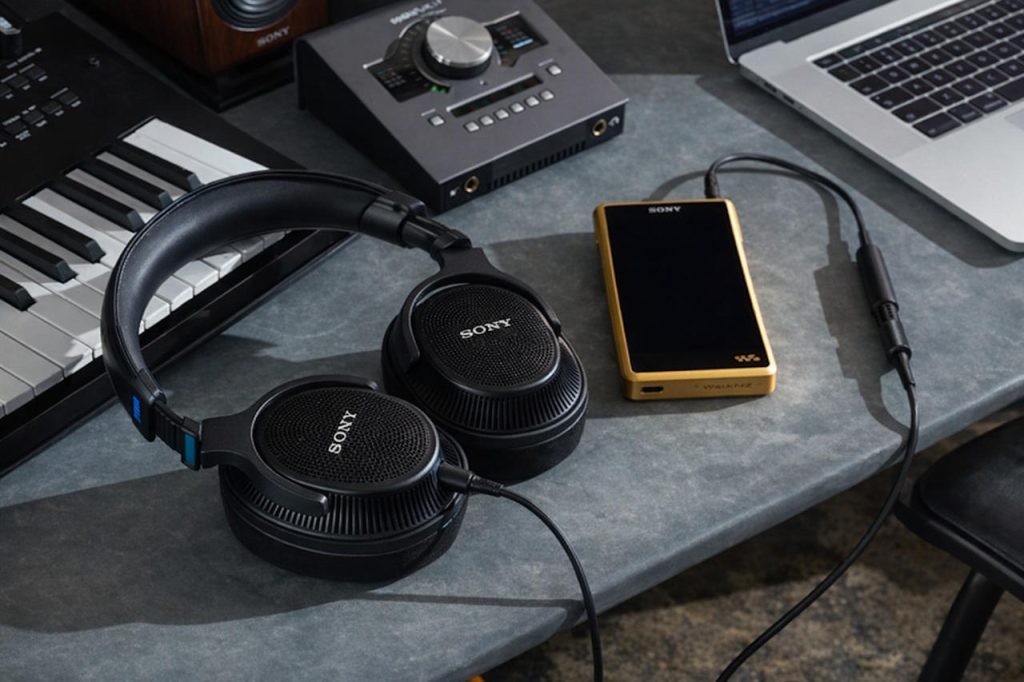
Here is who the MDR-MV1 fits and who should skip it.
Buy Sony MDR-MV1 Monitor Headphones If:
- You are a mixing or mastering engineer who needs accurate, neutral open-back reference monitoring
- You work with immersive or spatial audio formats and need precise imaging and depth perception
- You prefer a speaker-like soundstage for confident translation between headphones and studio monitors
- You spend long hours in the studio and prioritize lightweight construction and breathable comfort
- You want studio headphones that are easy to drive with modern audio interfaces and consoles
- You value accuracy and balance over bass emphasis or consumer sound tuning
Don’t Buy Sony MDR-MV1 Monitor Headphones If:
- You require isolation for tracking vocals or recording instruments
- You work in noisy environments where open-back leakage is an issue
- You want wireless connectivity, onboard controls, or consumer features
- You are primarily a casual listener rather than a critical listener or audio professional
- You need headphones with a built-in microphone for calls or conferencing
Bottom Line
The MDR-MV1 is a purpose-built tool for professionals who demand spatial accuracy, tonal balance, and long-session comfort. It is not designed to replace closed-back tracking headphones or lifestyle models. It is a modern open-back reference for engineers and creators who rely on precision and reliable translation.
Frequently Asked Questions
These answers cover real-world studio use, workflow compatibility, and long-term ownership.
What are the Sony MDR-MV1 Open-Back Reference Monitor Headphones designed for?
The Sony MDR-MV1 Open-Back Reference Monitor Headphones target professional studio applications such as mixing, mastering, and immersive or spatial audio production. Their open-back design and neutral tuning aim to replicate a speaker-based monitoring environment, allowing engineers to make accurate decisions about balance, imaging, and tonal detail during critical listening sessions.
Are the Sony MDR-MV1 headphones good for mixing and mastering?
Yes, the Sony MDR-MV1 headphones are well suited for mixing and mastering. Their wide frequency response, balanced midrange, and accurate imaging help reveal subtle EQ changes, dynamic adjustments, and spatial placement. This makes them a reliable reference tool for ensuring mixes translate well across different playback systems.
What makes the Sony MDR-MV1 different from other open-back studio headphones?
The main differentiators are the ultra-wide 5 Hz to 80 kHz frequency response, speaker-like soundstage, and tuning optimized for spatial and immersive audio workflows. Compared to traditional open-back studio headphones, the MDR-MV1 places a stronger emphasis on depth, localization, and high-resolution detail.
Can the Sony MDR-MV1 be used for immersive or spatial audio production?
Yes, the Sony MDR-MV1 Open-Back Reference Monitor Headphones specifically target immersive and spatial audio production. Their open-back acoustic design provides precise imaging and depth perception, making them effective for binaural, Dolby Atmos, and other spatial audio formats where accurate positioning is critical.
Do the Sony MDR-MV1 headphones require a headphone amplifier?
Most setups need no dedicated headphone amplifier. With a low 24-ohm impedance and high sensitivity, the Sony MDR-MV1 works efficiently with modern audio interfaces, mixing consoles, and desktop monitoring setups. A high-quality amplifier may still enhance performance, but it is not essential for proper operation.
Are the Sony MDR-MV1 headphones comfortable for long studio sessions?
Yes, comfort is a strong point. The lightweight aluminum frame, breathable suede ear pads, and controlled clamping force help reduce fatigue during long mixing or mastering sessions. The open-back design also improves airflow and minimizes heat buildup over time.
Can the Sony MDR-MV1 be used for recording or tracking vocals?
The Sony MDR-MV1 is not ideal for tracking or recording vocals due to its open-back design. Sound leakage can bleed into microphones, making closed-back headphones a better choice for recording. The MDR-MV1 is best reserved for mixing, mastering, and critical listening tasks.
Are the Sony MDR-MV1 headphones suitable for casual listening?
While you can use the Sony MDR-MV1 for casual listening, they aim for accuracy rather than entertainment. The sound is neutral and uncolored, which may feel less engaging for listeners who prefer boosted bass or enhanced treble. These headphones target professional and critical listening.
What type of cable does the Sony MDR-MV1 use?
The Sony MDR-MV1 Open-Back Reference Monitor Headphones use a detachable professional cable with secure connectors. This design allows easy replacement, reduces long-term wear, and supports reliable integration with studio equipment. A mini-jack adapter comes with it for compatibility with different audio outputs.
Are the Sony MDR-MV1 headphones worth the price for professionals?
For professionals who prioritize accuracy, spatial realism, and long-session comfort, the Sony MDR-MV1 is well worth the investment. They are a specialized reference tool rather than a general-purpose model, which makes them a strong value for mixing engineers, mastering engineers, and immersive audio creators.