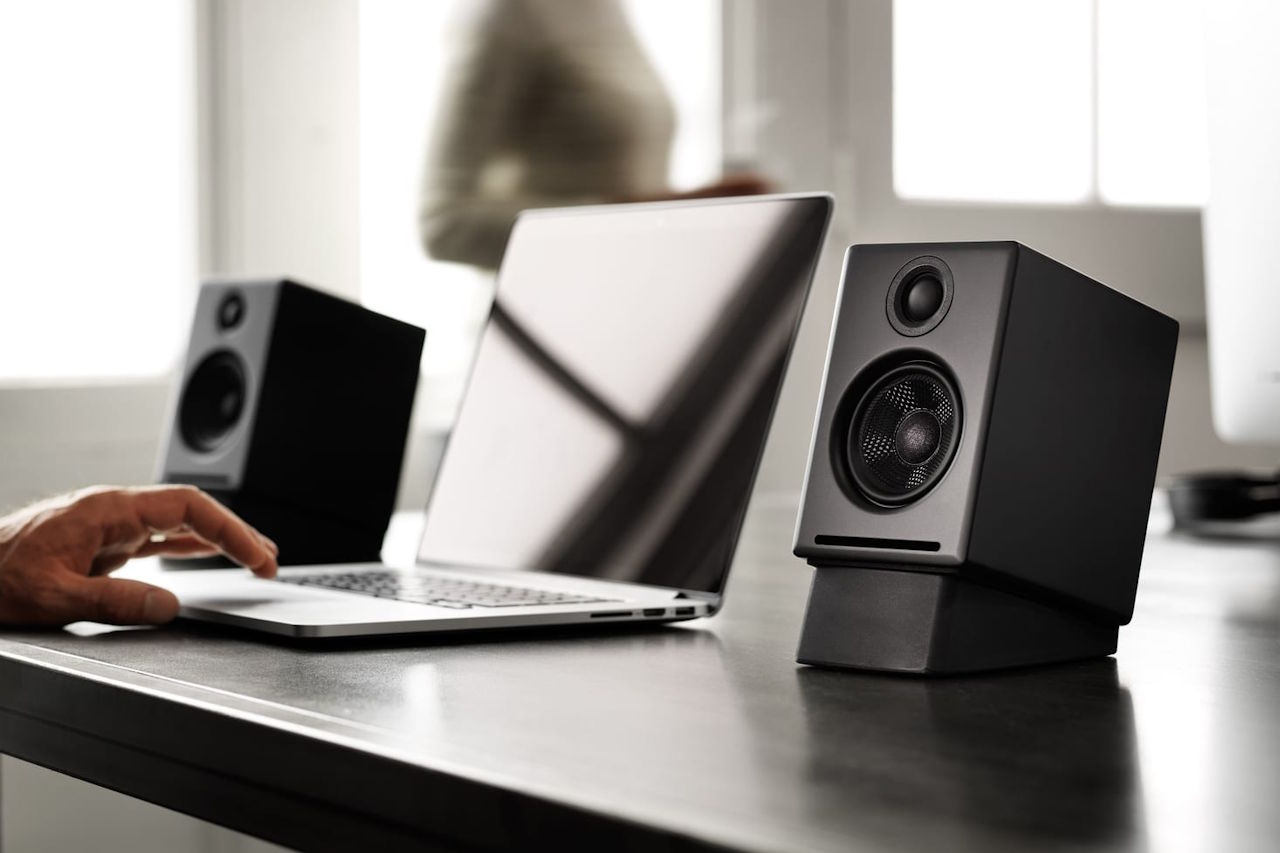
The HIFIMAN Sundara is a full-size, open-back planar magnetic headphone positioned as a reference-grade option for both audiophiles and studio professionals. Its core strengths are speed, tonal accuracy, and long-session comfort. Sitting squarely in the mid-tier planar category, the Sundara bridges the gap between entry-level planar headphones and significantly more expensive flagship models, offering high-end acoustic performance without excessive complexity or cost.
The intended audience includes critical listeners, mixing and mastering engineers, and music enthusiasts who prioritize neutrality and detail over boosted bass or consumer-style tuning. The Sundara excels in use cases such as high-resolution music playback, studio monitoring, and analytical listening, where accuracy and transient precision matter more than isolation or portability. Its open-back design reinforces this purpose, delivering a natural soundstage and realistic imaging that benefits both music enjoyment and production work.
What defines the Sundara within its category is its ultra-thin planar magnetic diaphragm, engineered to be approximately 80 percent thinner than earlier HIFIMAN designs such as the HE400 series. This results in faster response, improved micro-detail, and a wider effective frequency range. Complementing the acoustic design is a practical, durability-focused build that includes an all-metal headband, a weight-spreading suspension strap, and detachable dual 3.5mm connectors.
Together, these elements establish the Sundara as a balanced, performance-first headphone that emphasizes sound quality, comfort, and long-term reliability rather than added features or visual flair. So, stick around and read on the HIFIMAN Sundara headphones review to find out what makes it one of the top 10 best monitor headphones under $200 for audio production and editing.
Table of Contents
What are the key highlights of the HIFIMAN Sundara?
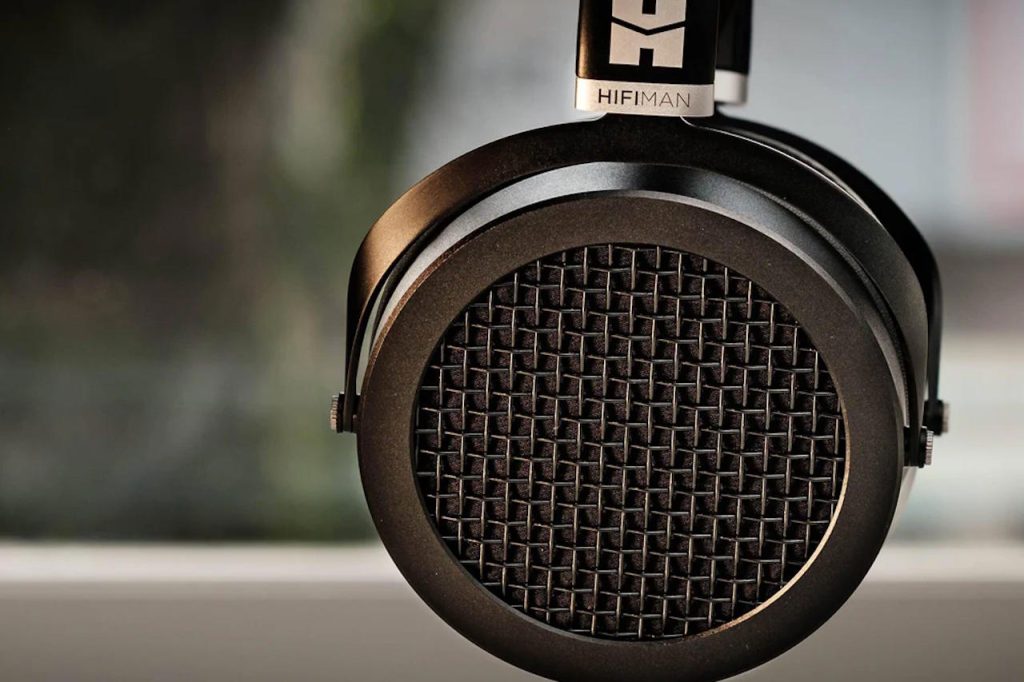
The Sundara skips added electronics and software features and focuses on acoustic engineering, comfort, and long-term usability.
- Ultra-thin planar magnetic diaphragm engineered to be 80 percent thinner than the HE400 series for faster transient response and improved detail
- Wide frequency range (6 Hz–75 kHz) supporting high-resolution audio playback with extended bass and treble reach
- Neutral, reference-style tuning suitable for critical listening, mixing, and mastering
- Open-back acoustic design that enhances soundstage width, depth, and spatial realism
- All-metal headband construction designed for durability and long-term daily use
- Suspension-style weight distribution strap that improves comfort during extended sessions
- Detachable dual 3.5mm cable system for improved reliability and easier replacement
How good is the design and build quality of the HIFIMAN Sundara?

The Sundara targets structural integrity and long-term use rather than luxury looks or flashy materials, which suits studio environments and serious home listening setups.
Overall Aesthetic
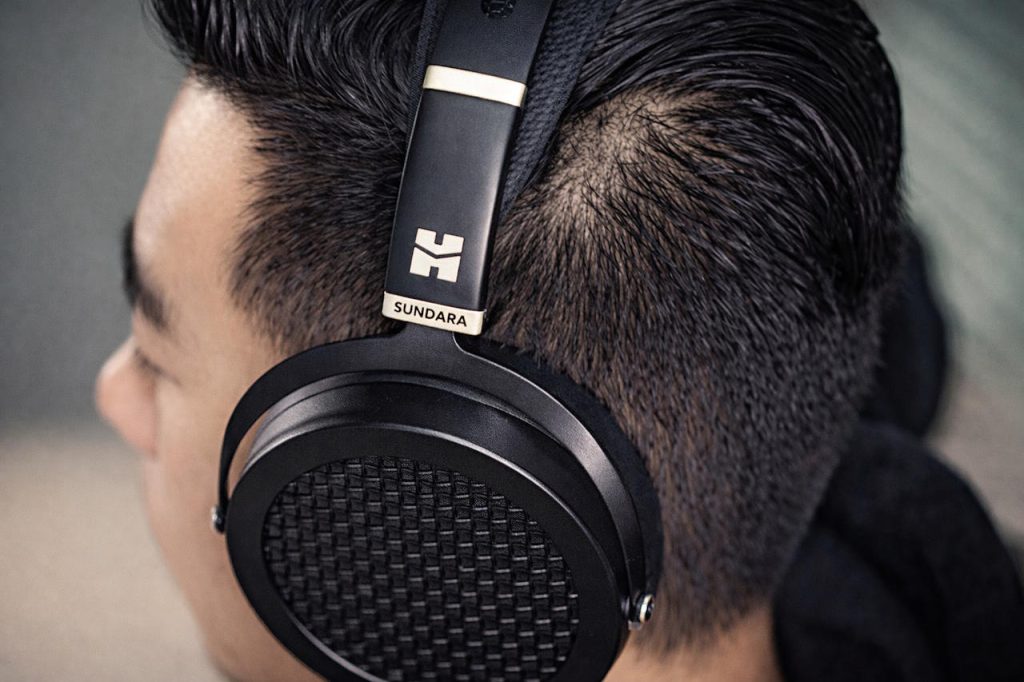
The design language of the Sundara is restrained and purpose-driven. It avoids aggressive styling in favor of a clean, professional appearance that aligns well with studio and audiophile environments. The matte black finish gives the headphones a modern, understated look while minimizing fingerprints and visible wear over time. Branding is subtle, reinforcing the Sundara’s positioning as a serious listening tool rather than a lifestyle accessory.
Material choices lean toward durability and function. Metal dominates the structural elements, lending the headphones a solid feel without appearing bulky. The overall silhouette remains slim for a full-size planar magnetic design, helping the Sundara look refined on the head despite its large over-ear form factor.
Construction & Durability
Construction quality is a strong point of the Sundara. The all-metal headband provides rigidity and long-term structural stability, reducing concerns about flex fatigue or cracking often found in plastic-heavy designs. The suspension-style headband system integrates securely into the frame, maintaining consistent tension while adapting to different head sizes.
The ear cup assemblies feel well-machined and securely mounted, with smooth rotation that allows the cups to sit naturally against the head. Hinges and joints operate cleanly, without looseness or audible creaking. The upgraded dual 3.5mm connectors at the ear cups improve cable longevity and make replacements straightforward, which is an important consideration for long-term ownership.
Is the HIFIMAN Sundara comfortable, and how does it fit?
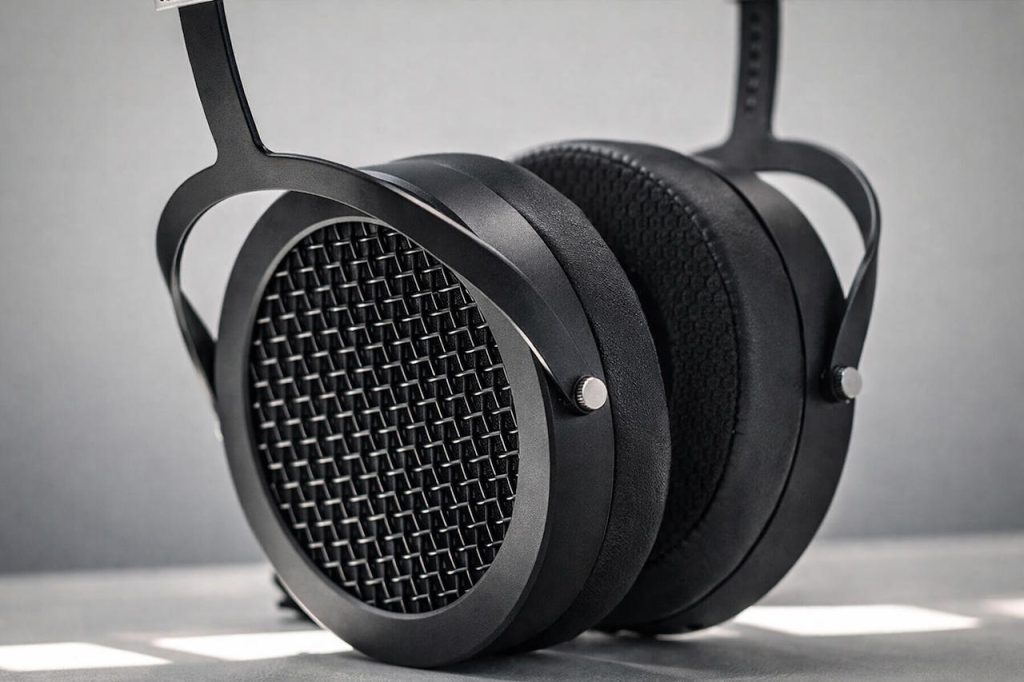
Comfort matters on a full-size planar magnetic headphone meant for long listening or studio sessions. HIFIMAN approaches comfort from an ergonomic standpoint rather than pure cushioning, aiming to reduce fatigue through balanced weight and controlled clamping force.
Headband & Clamping Force
The Sundara uses a suspension-style headband with a weight-spreading strap that adapts naturally to different head shapes. This design distributes the headphone’s mass evenly across the top of the head, preventing pressure hotspots that often develop during extended sessions. Adjustment is smooth and offers enough range to accommodate smaller and larger head sizes without feeling loose or unstable.
Clamping force stays conservative. The headphones sit securely without excessive lateral pressure, striking a balance between stability and comfort. This moderate clamp helps keep the ear cups properly sealed against the head while avoiding the “vice-like” sensation that can lead to discomfort over time.
Ear Cushions & Wearability
The ear cushions support long-duration use. They provide sufficient depth to keep the ears from contacting the driver housing, while the padding maintains its shape during prolonged wear. The materials offer reasonable breathability for an open-back design, though some warmth can build up during multi-hour sessions, as expected with full-size over-ear headphones.
What driver and acoustic design does the HIFIMAN Sundara use?

The planar magnetic driver system and the acoustic decisions around it shape the Sundara's speed, resolution, and tonal balance. HIFIMAN’s engineering here centers on precision and efficiency rather than sheer size or exaggerated tuning.
Driver Type & Configuration
The Sundara uses planar magnetic drivers built around an ultra-thin diaphragm that is approximately 80 percent thinner than the diaphragm used in the HE400 series. This reduced mass allows the diaphragm to start and stop more quickly, improving transient response and reducing distortion across the frequency spectrum. The result is cleaner attack, more accurate decay, and improved micro-detail, especially in complex musical passages.
The planar driver configuration spreads force evenly across the diaphragm surface, unlike traditional dynamic drivers, which push from a single point. This uniform motion contributes to the Sundara’s controlled bass response and consistent tonal balance from low to high frequencies. With a 32-ohm impedance and 94 dB sensitivity, the Sundara remains relatively easy to drive for a planar headphone, while still benefiting noticeably from higher-quality amplification.
Internal Acoustic Design
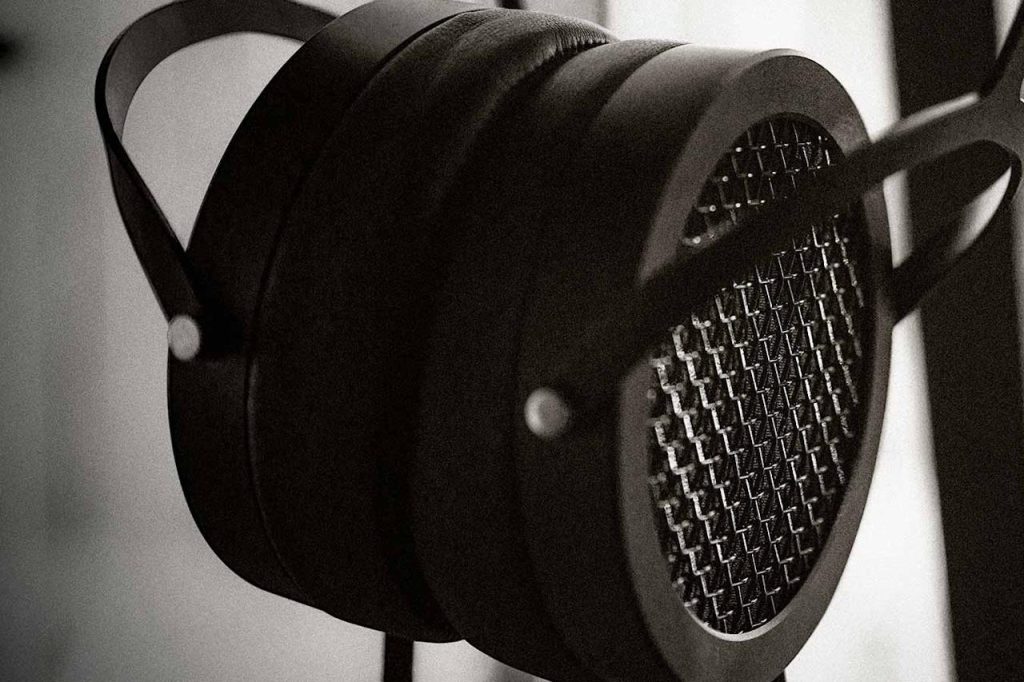
The Sundara features an open-back acoustic structure, allowing air to move freely through the ear cups. This design minimizes internal reflections and pressure buildup, which helps preserve clarity and natural timbre. The open architecture also plays a major role in the Sundara’s spacious presentation, supporting wider soundstage and more accurate imaging.
Internally, HIFIMAN carefully controls the diaphragm tensioning and damping to avoid excessive resonance while maintaining extension at both ends of the frequency range. The rigid ear cup housing supports this stability by reducing unwanted vibration, ensuring the planar driver operates as intended.
How does the HIFIMAN Sundara sound?
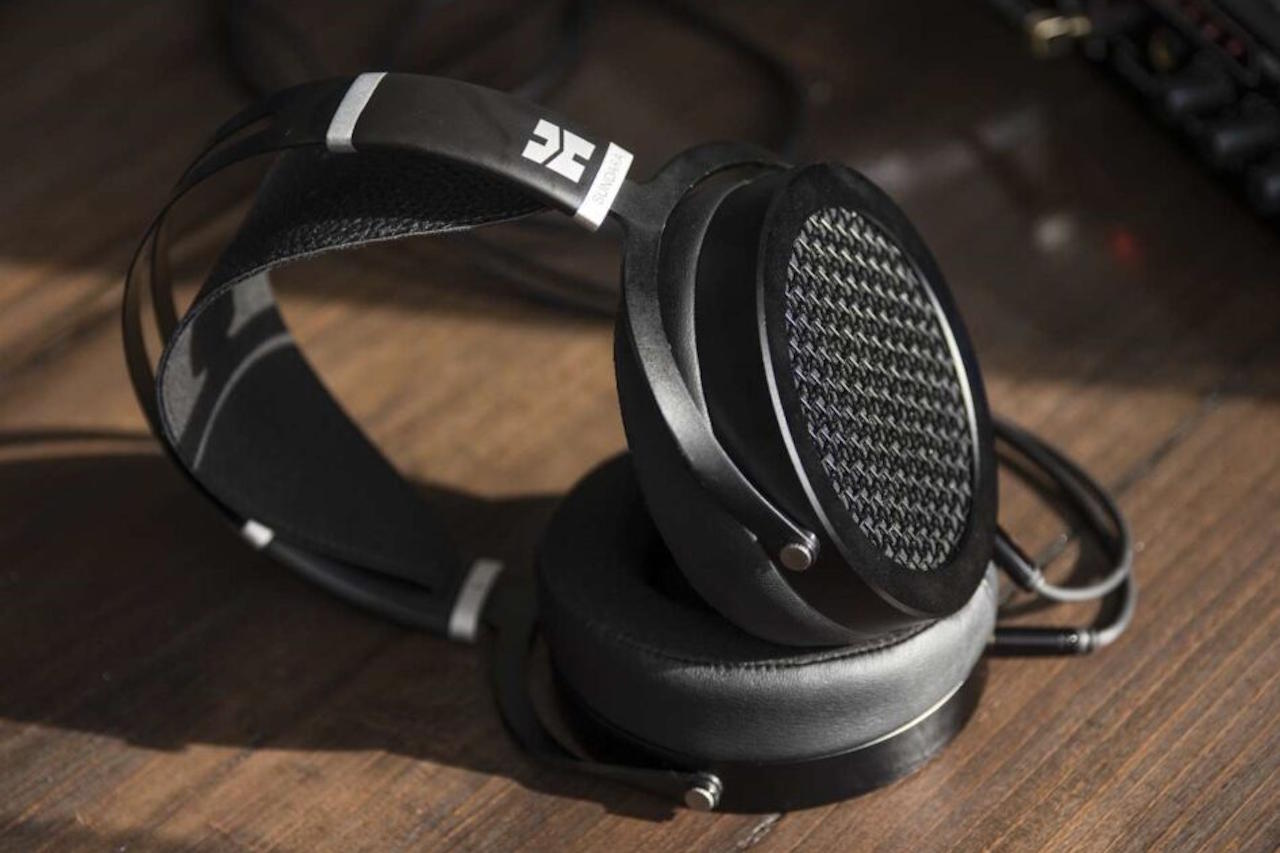
The Sundara has a clear reference intent, prioritizing balance, speed, and resolution over exaggerated emphasis.
Bass Response
Bass on the Sundara favors control rather than sheer quantity. Sub-bass extension reaches impressively low, delivering audible depth without bloom or looseness. The planar driver’s fast response keeps bass notes tight and well-textured, making it easy to distinguish individual low-frequency elements in complex mixes. Mid-bass remains clean and restrained, avoiding the punchy coloration common in consumer-tuned headphones. This makes the Sundara particularly effective for critical listening and low-end evaluation.
Midrange Performance
The midrange is the Sundara’s strongest asset. Vocals sound natural and well-positioned, with excellent clarity and minimal coloration. Instruments such as guitars, pianos, and strings come through with convincing body and separation, even in dense arrangements. The neutral midrange tuning makes the Sundara a reliable reference for mixing and mastering, as it avoids forwardness or recession that could misrepresent tonal balance.
Treble Performance
Treble is extended, detailed, and generally well-controlled. The Sundara retrieves fine high-frequency detail without sounding sharp or fatiguing during long sessions. Cymbals and upper harmonics are clean and articulate, with a smooth decay that avoids harshness. While revealing, the treble remains disciplined, rewarding high-quality recordings and well-matched source equipment.
Soundstage & Imaging
Thanks to its open-back design, the Sundara presents a wide and natural soundstage with good depth layering. Imaging is precise, allowing accurate placement of instruments and spatial cues. This spatial accuracy benefits both music listening and studio monitoring tasks where positional clarity is essential.
What connections and inputs does the HIFIMAN Sundara have?
Connectivity on the Sundara is straightforward. It works with both home audio chains and studio setups.
Wired Connectivity
The Sundara uses a detachable wired connection with dual 3.5mm connectors at the ear cups. This design improves durability by reducing strain on the cable and allows for easy replacement if wear occurs over time. The connectors fit securely, maintaining a stable signal path without looseness or intermittent contact.
The stock cable terminates in a standard 3.5mm plug, with an included adapter for broader compatibility. This makes the Sundara usable with a wide range of devices, including desktop DACs, headphone amplifiers, audio interfaces, and portable players.
With a 32-ohm impedance, the Sundara can reach listenable volumes from many sources, though higher-quality amplification noticeably improves dynamics and control. There is no balanced cable included by default, but the dual-entry design allows users to upgrade easily if their system supports balanced outputs.
What features and controls does the HIFIMAN Sundara have?

The Sundara takes a deliberately minimal approach to features, prioritizing acoustic purity and system scalability over onboard electronics. Everything about the Sundara lets the source and amplification chain define the final sound.
Physical Design–Driven “Controls”
There are no physical buttons, dials, or touch controls on the Sundara. Volume adjustment, playback control, and signal shaping are entirely dependent on the connected source equipment. This passive design eliminates potential signal degradation caused by internal circuitry and keeps the audio path clean, which aligns with the Sundara’s reference-oriented intent.
Amplification & Scalability
One of the Sundara’s most important functional traits is how well it scales with better amplification. While its 32-ohm impedance lets portable devices and entry-level interfaces drive it, pairing it with a quality DAC and headphone amplifier significantly improves dynamics, bass authority, and overall resolution. This scalability makes the Sundara suitable for users planning future upgrades to their audio chain.
Serviceability & Modularity
The detachable dual 3.5mm cable system enhances long-term ownership. Users can easily replace worn cables or experiment with aftermarket options without modifying the headphones. This modular approach supports maintenance and customization, extending the usable lifespan of the product.
Reference Tuning Consistency
The Sundara maintains a consistent, neutral tuning across different genres and playback levels. There is no built-in EQ or sound enhancement, ensuring that tonal balance remains faithful to the recording and the connected source. This consistency is especially valuable for studio work and critical evaluation.
Open-Back Acoustic Advantages
The open-back design functions as a core “feature” of the Sundara. It promotes natural airflow, reduces internal resonance, and contributes to the headphone’s wide soundstage and accurate imaging. The trade-off is a lack of isolation, reinforcing its intended use in quiet, controlled environments.
How does the HIFIMAN Sundara compare to other open-back headphones?

To contextualize the HIFIMAN Sundara review, we’re comparing it against three highly regarded open-back audiophile headphones that represent different performance tiers and tuning philosophies. The comparisons cover sound signature, technical performance, comfort, and value.
Audeze LCD-2 Classic vs HIFIMAN Sundara
The Audeze LCD-2 Classic and the HIFIMAN Sundara represent two distinct planar magnetic approaches. The LCD-2 Classic delivers deep, rich bass and a warmer tonal balance with a strong midrange presence, making it particularly engaging for rock, electronic, and orchestral music. The LCD-2 series is known for powerful, textured low frequencies and expansive sound.
By contrast, the Sundara leans toward a more neutral and controlled presentation, emphasizing clarity, speed, and detail rather than warmth. The Sundara’s planar magnetic design produces faster transient response and tighter bass control, while the LCD-2 Classic delivers thicker note weight and a heavier low-end impact. Comfort is another area of distinction. The Sundara is noticeably lighter and better suited for extended sessions, whereas the LCD-2 Classic prioritizes premium materials and a rich sound over long-term wearability.
| Feature | HIFIMAN Sundara | Audeze LCD-2 Classic |
|---|---|---|
| Driver Type | Planar Magnetic | Planar Magnetic |
| Sound Signature | Neutral, reference | Warm, rich |
| Bass Character | Tight and controlled | Deep and textured |
| Weight & Comfort | Lightweight, long-session friendly | Heavier, plush padding |
| Best For | Critical listening, studio work | Rich audiophile listening |
| Price | See Price | See Price |
Focal Clear vs HIFIMAN Sundara
The Focal Clear is a premium open-back dynamic headphone known for its forward, energetic presentation and speaker-like dynamics. Its tuning emphasizes punch, clarity, and midrange presence, which many listeners find immediately engaging. Imaging is strong, and the Clear delivers a sense of impact that dynamic driver enthusiasts often prefer.
Compared to the Sundara, the Focal Clear sounds more emotive and lively, while the Sundara focuses on neutrality and precision. The Sundara’s planar magnetic drivers excel at micro-detail and transient accuracy, whereas the Clear’s dynamic drivers provide stronger macrodynamics and a fuller midrange body. The Clear also includes a more generous accessory package with multiple cable options, while the Sundara keeps its design minimal and performance-focused.
| Feature | HIFIMAN Sundara | Focal Clear |
|---|---|---|
| Driver Type | Planar Magnetic | Dynamic |
| Sound Signature | Neutral, analytical | Dynamic, engaging |
| Midrange Character | Accurate and linear | Fuller and more expressive |
| Soundstage | Wide and natural | Wide with strong depth |
| Best For | Reference listening and analysis | Musical enjoyment and impact |
| Price | See Price | See Price |
Sennheiser HD 600 vs HIFIMAN Sundara
The Sennheiser HD 600 is a long-standing reference headphone praised for its natural midrange and smooth tonal balance. It remains a staple in studios due to its honest vocal reproduction and forgiving treble response. The HD 600 presents music in a more intimate and cohesive manner, which many engineers trust for tonal judgment.
In comparison, the Sundara offers greater perceived resolution and a more expansive soundstage. Its planar magnetic design delivers cleaner separation and more precise imaging, especially in complex arrangements. While the HD 600 emphasizes organic timbre and midrange warmth, the Sundara provides a flatter, more analytical response that benefits critical listening and detailed evaluation. Comfort differs as well, with the Sundara’s suspension headband reducing pressure during long sessions, while the HD 600 relies on lightweight construction and breathable pads.
| Feature | HIFIMAN Sundara | Sennheiser HD 600 |
|---|---|---|
| Driver Type | Planar Magnetic | Dynamic |
| Tonal Balance | Neutral and analytical | Warm and natural |
| Soundstage | Wider and more open | More intimate |
| Imaging Precision | High | Moderate |
| Best For | Detail-focused reference work | Natural tone and long listening |
| Price | See Price | See Price |
Who Should Buy the HIFIMAN Sundara Monitor Headphones?
The final decision in this HIFIMAN Sundara review comes down to listening priorities and environment. The Sundara is purpose-built for accuracy, detail, and long-term comfort rather than convenience or lifestyle features.
Buy HIFIMAN Sundara Headphones If:
- You want a neutral, reference-style planar magnetic headphone
- You listen critically and value clarity, speed, and tonal accuracy
- You work in audio production, mixing, or mastering
- You prefer an open-back design with natural soundstage and imaging
- You plan to pair your headphones with a dedicated DAC or amplifier
- You prioritize comfort for extended listening sessions
Don’t Buy HIFIMAN Sundara Headphones If:
- You need noise isolation for commuting or shared spaces
- You want wireless connectivity or smart features
- You rely on headphones for calls or gaming chat
- You prefer elevated bass or consumer-style tuning
- You need a compact or travel-friendly headphone
Bottom Line: HIFIMAN Sundara Review
The HIFIMAN Sundara is a balanced, performance-driven planar magnetic headphone that delivers excellent sound quality, comfort, and build reliability at its price point. It is best suited for listeners who value precision over convenience and are willing to invest in proper amplification to unlock its full potential.
Frequently Asked Questions
Common questions about the HIFIMAN Sundara's sound quality, comfort, amplification needs, studio use, and value.
What is the HIFIMAN Sundara best used for?
The HIFIMAN Sundara is best used for critical music listening, studio monitoring, mixing, and mastering. Its neutral planar magnetic tuning and wide frequency response make it ideal for evaluating recordings accurately rather than adding coloration or bass emphasis.
Does the HIFIMAN Sundara need a headphone amplifier?
The HIFIMAN Sundara can play from phones and laptops due to its 32-ohm impedance, but it performs noticeably better with a dedicated headphone amplifier. Proper amplification improves dynamics, bass control, and overall resolution.
Is the HIFIMAN Sundara open-back or closed-back?
The HIFIMAN Sundara is an open-back headphone. This design allows air to move freely through the ear cups, creating a more natural soundstage and accurate imaging, but it does not provide noise isolation.
How does the HIFIMAN Sundara sound compared to dynamic headphones?
Compared to dynamic headphones, the HIFIMAN Sundara offers faster transient response, cleaner bass texture, and more consistent detail across frequencies. Its planar magnetic driver delivers a more controlled and precise presentation, especially in complex music.
Is the HIFIMAN Sundara comfortable for long listening sessions?
Yes, the HIFIMAN Sundara suits extended use. Its suspension-style headband distributes weight evenly, and the moderate clamping force reduces pressure, making it suitable for multi-hour listening or studio sessions.
Can the HIFIMAN Sundara be used for gaming?
You can use the HIFIMAN Sundara for gaming in quiet environments. Its wide soundstage and accurate imaging help with positional awareness, but it does not include a microphone and is not ideal for noisy spaces.
What type of cable does the HIFIMAN Sundara use?
The HIFIMAN Sundara uses a detachable cable with dual 3.5mm connectors at the ear cups. This design improves durability and allows easy cable replacement or upgrades, including balanced cable options if supported by your equipment.
How durable is the HIFIMAN Sundara?
The HIFIMAN Sundara has an all-metal headband and reinforced components for long-term use. While it is not designed for portable abuse, it is well-suited for daily home and studio listening.
Is the HIFIMAN Sundara good for mixing and mastering?
Yes, the HIFIMAN Sundara is well-suited for mixing and mastering due to its neutral frequency response, detailed midrange, and controlled bass. It provides a reliable reference for evaluating tonal balance and spatial placement.
Is the HIFIMAN Sundara worth buying?
The HIFIMAN Sundara is worth buying if you want a high-quality planar magnetic headphone that prioritizes accuracy, comfort, and value. It delivers near-reference performance at its price point, especially when paired with a capable DAC and amplifier.
What do the HIFIMAN Sundara specs mean for you?
The Sundara's specs point to a headphone built for accuracy and long sessions. Here is what each number means when you buy.
- The diaphragm is 80 percent thinner than the HE400 series, so notes start and stop faster with cleaner detail.
- A 6 Hz to 75 kHz range supports high-resolution playback with extended bass and treble reach.
- A 32-ohm impedance lets phones and laptops drive it, but a dedicated amplifier improves bass control.
- With 94 dB sensitivity, it is relatively easy to drive for a planar headphone.
- Dual 3.5mm connectors at the ear cups let you replace a worn cable or move to a balanced one.