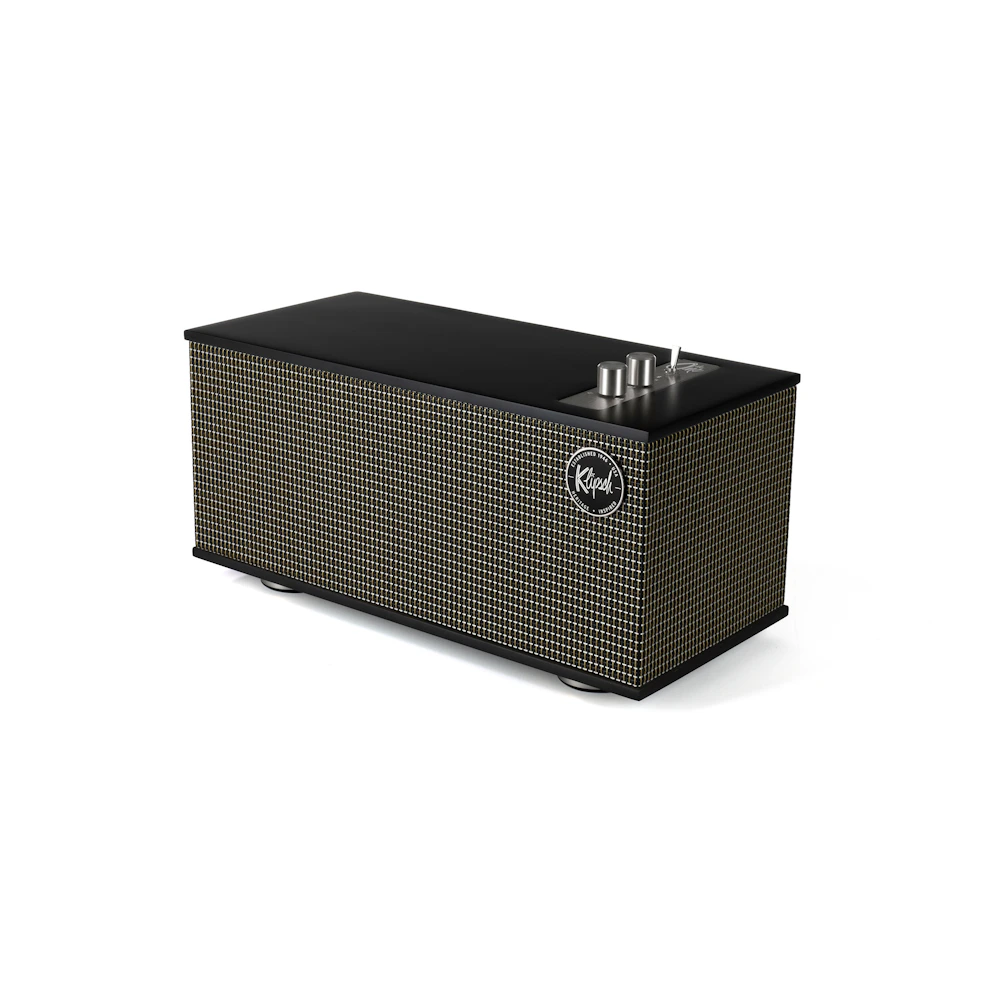
The Klipsch Heritage Wireless The One II is a good fit for a shelf, sideboard, or small office where appearance and simple stereo playback matter more than portability. It has a real-wood-veneer cabinet, physical controls, Bluetooth, and a 3.5mm input. The catch is that it is a mains-powered tabletop stereo, not a battery speaker. At current used and remaining-stock prices, it makes sense for a fixed listening spot; buyers wanting music outdoors or a deeper, wider presentation should look at a modern portable speaker or a larger Klipsch model instead.
Table of Contents
Short Verdict: A Charming Shelf Speaker, If You Do Not Need a Battery
| Best for | Bedrooms, offices, kitchens and small living rooms with an AC outlet nearby |
|---|---|
| Strongest feature | Physical volume, source and bass controls in a compact Heritage cabinet |
| Main compromise | No battery, Wi-Fi, app EQ, voice assistant or stereo-pairing feature |
| Sound character | Warm and punchy, with limited deep bass and a narrow listening window |
| Buy when | You find the exact The One II at a sensible price and want a fixed tabletop system |
Klipsch calls The One II a wireless shelf stereo because the source can be Bluetooth, but the speaker itself must remain plugged in. That makes it more comparable to a small powered stereo than to a JBL or Soundcore boombox.
What The One II Actually Is
Klipsch’s official The One II product page describes a 2.1-channel, bi-amplified design with Bluetooth 4.0 and a 3.5mm analog input. The manufacturer lists a real-wood-veneer finish, tactile switches and knobs, and a footprint just over one foot wide. The page is useful for identifying the model, but its “crystal clear” and “great bass” language is marketing, not a test result.
The exact hardware is clearer in Klipsch’s spec sheet and the matching owner’s manual. Crutchfield’s exact-model listing records two 2-1/4-inch full-range drivers, a 4-1/2-inch woofer, 60 watts of total system power, a 3.5mm input, and an AC adapter. It also confirms that the product is not battery powered and has no phono input. An online video title and some listings incorrectly associate The One II with a built-in phono preamp; the physical connection list does not support that claim.
The One II is also easy to confuse with The One (the earlier version), The One Plus, and The Three II. The Three II is larger and adds connections that change its use case. The One Plus is a newer, separate product. Check the model name and rear-panel photograph before buying an old listing, particularly when the seller uses “The One” as shorthand.
Sound and Listening Position
RTINGS’ exact-model lab review, published in January 2022 and updated in November 2023, gives the most useful reality check. Its measurements describe a boomy sound profile that adds punch to bass lines but can cloud vocals and lead instruments. The speaker also lacks the low-bass extension needed for deep cinematic rumble. It can play loudly for its size, though RTINGS found compression near maximum volume, so the final few steps on the dial are not free performance.
RTINGS also found a narrow, directional soundstage. The One II presents best to someone sitting in front of it; it is not an even 360-degree design for a group moving around a patio. The lack of a graphic EQ or presets means there is no app-based way to correct the voicing if the bass feels too thick. That is not a deal-breaker for casual radio, pop or background listening, but it is a meaningful limitation for a listener who expects neutral nearfield monitoring.
Techmoan’s hands-on video review of the exact The One II, uploaded November 24, 2021, is useful for the practical details rather than current pricing. The video treats it as a compact, mains-powered Bluetooth tabletop speaker and demonstrates the controls and inputs. A second exact-model comparison from Danny Pops, The One II or The Three II?, makes the size distinction clear: The One II is the compact option, while The Three II is the larger choice when scale and connections are priorities.
Place it with the front grille facing the main chair and leave a little room around the cabinet. It is small enough for a nightstand or bookcase, but the bass response will change with nearby walls and furniture. Avoid using it as a party speaker where listeners will stand behind it; the directivity is part of the design, not a setup fault.
Inputs, Controls and Placement
The physical interface is the reason to choose The One II over a feature-heavy smart speaker. The top panel has separate controls for volume, bass and treble, plus a source switch. Bluetooth 4.0 handles streaming from a phone, tablet or laptop, while the 3.5mm input accepts an analog source. There is no Wi-Fi streaming, voice assistant, USB audio, subwoofer output or speaker-pairing system. Klipsch’s manual is the right place to confirm the button sequence when an old unit is difficult to pair.
The cabinet is 12-11/16 inches wide, roughly 6 inches high and just over 5 inches deep according to Crutchfield’s product data. That is compact for a stereo system but not pocketable. Its 8.5-pound weight and AC adapter make it a “move between shelves” product, not something to carry to the beach. The finish and metal controls look more deliberate than the molded plastic used on many inexpensive Bluetooth speakers, but the cabinet offers no weather protection.
Crutchfield now marks its exact walnut listing no longer available. That does not make every remaining unit a bad buy; it does mean condition, power supply, and return rights matter more than the original list price. Ask for a photo of the rear panel, confirm the seller includes the AC adapter, and do not assume an attractive listing is the current The One product.
Availability and Ownership Risks
The current Klipsch regional page still identifies The One II, but stock and pricing vary by country. This guide found no stable US direct price to use as a timeless recommendation when it checked on September 12, 2026. Treat marketplace prices as dated snapshots. If the asking price approaches a current, supported speaker with a battery and newer Bluetooth hardware, the older The One II becomes a design purchase rather than a value purchase.
Recent exact-model owner evidence is thin. A September 1, 2026 r/Klipsch thread describes one owner’s Bluetooth audio dropping at low volume and returning when the owner raises the volume. It is a useful troubleshooting lead, not proof of a widespread defect. Other recent “The One” results refer to different Klipsch models or to a Wi-Fi-equipped version, so this review keeps them separate. Klipsch’s own product-page reviews also include an isolated report of a unit failing to power on after four years; again, that is one owner report rather than a reliability rate.
That evidence suggests a sensible used-buying checklist: test Bluetooth at quiet listening levels, test the 3.5mm input, turn every knob through its range, listen for hum, and verify that the unit powers on reliably after you unplug it. The simple feature set helps here because there is less software to troubleshoot, but it also means an old power-supply or amplifier problem can end the product’s useful life.
The One II Compared With Alternatives
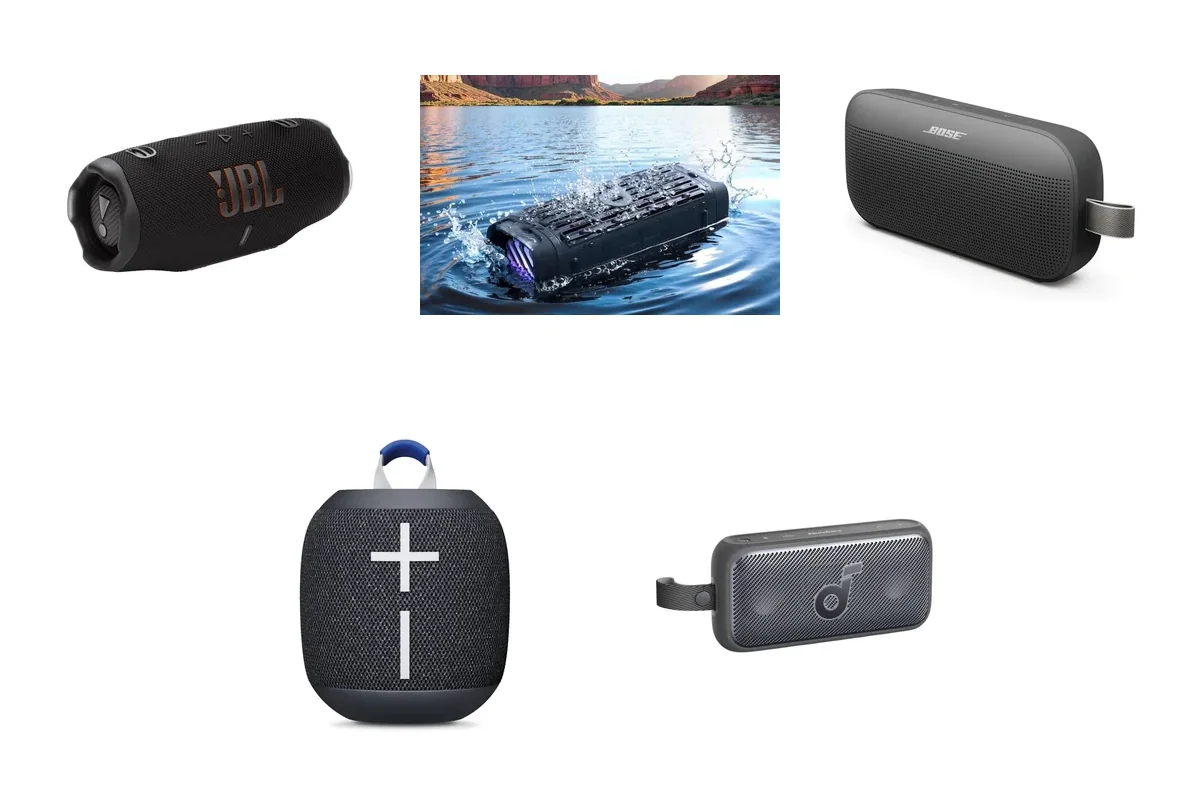
Choose The One II when the fixed shelf placement, tactile controls and Heritage styling matter more than modern connectivity. The portable Bluetooth speakers under $200 guide is a better starting point for a backyard, travel or battery-powered use case. Those speakers trade some cabinet styling for USB charging, weather resistance and easier movement.
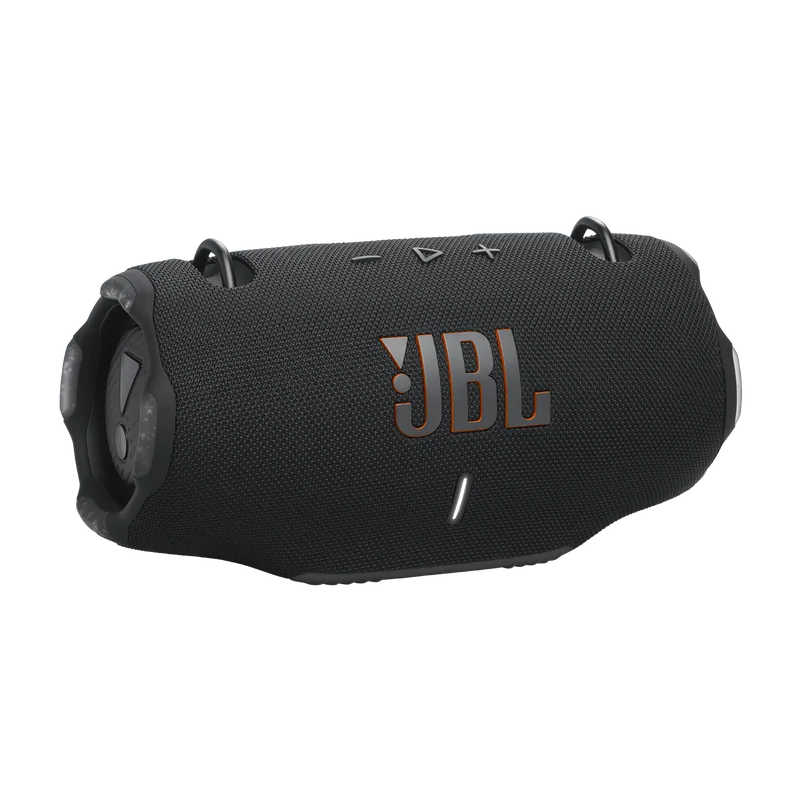
The larger The Three II is the more logical Klipsch alternative when you want more scale or a broader set of inputs. Do not treat its output or connections as The One II specifications. The JBL Xtreme 4 is a better fit for outdoor listening because it has a battery and a carry-oriented design, but it will not reproduce the same old-school shelf-stereo look.
The One II is worth considering as a compact powered stereo at a sensible, condition-adjusted price. It is a poor choice if “wireless speaker” means battery operation, multiroom audio or weather resistance to you.
Frequently Asked Questions
Does the Klipsch The One II have a battery?
No. Klipsch The One II uses an AC adapter. Bluetooth describes the audio connection, not battery operation.
Does The One II have a phono input?
No. The exact-model manual and connection list specify Bluetooth and a 3.5mm analog input. A turntable would need its own phono stage and a suitable analog output.
Is The One II a 360-degree speaker?
No. Independent testing finds a directional presentation that is strongest in front of the cabinet. Aim the grille toward the primary listening position.
Is the Klipsch The One II still worth buying?
It can be, if you want a fixed tabletop stereo and the price reflects its older Bluetooth hardware and discontinued-stock risk. At a higher price, a supported portable speaker or larger powered system offers more flexibility.